



Wearables, weighing health benefits and risks
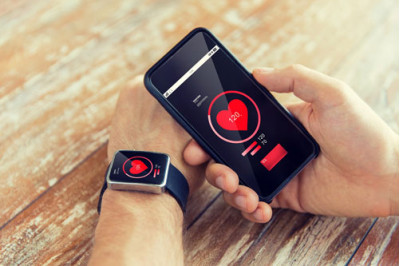
Wearables, weighing health benefits and risks
Many years ago I was an avid user of the Polar heart rate monitor, which I used to keep my heartrate in the desired 'zone' as well as to measure my recovery during strenuous bike rides. In the end I no longer replaced the meter when it no longer worked due to old age. Moreover, I was no longer a fanatic endurance athlete. Instead I spent most of my time in the gym.
Nevertheless, I have been thinking about it for a number of years to buy another heart rate monitor or some other measuring instrument with which you can almost literally keep the 'finger on the pulse. In this way I know that fitness-oriented people like to keep track of their health and estimated calorie requirement. The so -called 'fitbit' was the first of many different 'smart watches'.
This category of instruments is generally called a 'wearable'. Strictly speaking, a wearable is not even meant to collect your data about your health but an instrument that you wear on your body (wrist, poor, glasses) with which information can be collected.
Even your smartphone already collects certain data nowadays, this is usually the number of steps you are taking, provided you wear it with you all the time.
Wearables can be used to collect data on a user's health including:
- heart rate
- sleep patterns
- stress levels
- fertile periods
- energy score
- blood oxygen
- body composition
- ECG
- calories burned
- steps walked
- blood pressure
- release of certain biochemicals
- time spent exercising
- seizures
- physical strain
- body composition and water levels
My own interest in wearables was brought back to life a while ago when I learned that the American Minister of Health intends to make wearables so popular among the American population that in 4 years almost everyone will wear one to make them aware of a healthy lifestyle.
Recently there was an extensive online debate at the IMA (Independent Medical Alliance, formerly the FLCCC) in which the participants discussed the advantages and disadvantages of wearables.
Because not everyone is proficient in English, or even if you are, it is still useful to read the text here, the content follows below.
The wearables debate: weighing health benefits and digital risk
Host: Dr. Ryan Cole ; guests: Dr. Paul Marik, Dr. Kirk Milhoan, Dr. Mollie JamesWearables are on the rise—and they’re not just for counting steps anymore. With RFK Jr. recently stating that wearable devices are “a key to the MAHA agenda,” (Make America Healthy Again) questions are growing about what role these tools will play in the future of health.
In this episode, IMA Senior Fellow Dr. Ryan Cole hosts a timely discussion on the promises and perils of wearable health technology. He’s joined by IMA Co-Founder Dr. Paul Marik along with Senior Fellows Dr. Kirk Milhoan and Dr. Mollie James to explore the potential health benefits, data privacy concerns, and psychological impact of wearables, from fitness trackers to real-time biosensors.
Do wearables support better health? Or do they open the door to digital surveillance? Join us as we break down what users, clinicians, and policymakers need to consider in this evolving debate.
Wearable technology has evolved from simple step counters to sophisticated health monitoring devices capable of tracking everything from blood glucose to heart rhythms. What began in 1965 with Dr. Yoshiro Hatano’s “Manpo-kei” (10,000 steps meter) has transformed into a multi-billion dollar industry of smartwatches, fitness trackers, and continuous glucose monitors.
Now, as Secretary Robert F. Kennedy Jr. promotes wearables as “a key to the MAHA agenda,” declaring his vision that “every American is wearing a wearable within four years,” a fascinating debate has emerged.
The debate didn’t start with Kennedy’s recent congressional testimony, and it won’t end here. But our panel of IMA experts—representing diverse perspectives from critical care, cardiology, and integrative medicine—offers crucial insights into how we might navigate this evolving landscape.
The glucose revolution: a personal health breakthrough
Perhaps the most compelling case for wearables comes from continuous glucose monitoring (CGM), which has revolutionized diabetes management and metabolic health tracking. Dr. Paul Marik, a former type 2 diabetic, demonstrated the transformative power of real-time glucose feedback.“What you see here, which is truly astonishing actually, and when I was when I look at this, I look with amazement, you can see my glucose profile is completely flat. It’s completely flat.” – Dr. Paul Marik
Dr. Marik’s personal transformation illustrates how CGM technology enables precise dietary adjustments. Through continuous monitoring, he discovered that even low-glycemic foods like blueberries could spike his blood sugar, allowing him to optimize his diet and achieve a hemoglobin A1C of 4.8—lower than normal despite his previous diabetic diagnosis.
The technology’s precision extends beyond diabetes management. Dr. Mollie James explained how glucose monitoring reveals metabolic patterns affecting energy levels, sleep quality, and overall wellbeing. She noted that patients experiencing unexplained fatigue often show glucose spikes and crashes throughout the day.
“What I’m finding is when their blood sugars’ popping up and down, when it jumps about 40 points, that’s a cortisol spike… it’s the same thing as running from a lion. Your body doesn’t know the difference.” – Dr. Mollie James
Cardiac monitoring: Heart Rate Variability (HRV) post-COVID
The pandemic and subsequent vaccine rollout have created an unprecedented demand for cardiac monitoring devices. Dr. Kirk Milhoan, a pediatric cardiologist, explained how wearables have become essential diagnostic tools for detecting heart rate irregularities that might otherwise go unnoticed.“The game changer really to me has been what has happened since COVID in the COVID vaccines. We are seeing as cardiologists, we are seeing an enormous amount of inappropriate sinus tachycardia.” – Dr. Kirk Milhoan
Modern wearables have replaced cumbersome Holter monitors and rhythm monitors, allowing patients to capture irregular heart rhythms in real-time. Dr. Milhoan particularly endorsed the Kardia device, an FDA-approved $70-80 tool that can diagnose various arrhythmias including atrial fibrillation.
However, this monitoring capability comes with psychological considerations. While some patients find reassurance in normal readings, others become fixated on their devices, creating what Dr. Milhoan termed “monitor zombies”—individuals so obsessed with their readings that they lose sleep and develop anxiety.
Balancing health data with clinical expertise
Dr. James emphasized that successful wearable integration requires professional guidance rather than self-directed health management. Her approach involves using CGM data alongside comprehensive laboratory panels to identify underlying conditions that might be missed by glucose readings alone.“I tell them, as long as you’re using this as feedback and it’s a tool, keep using it. If it’s not a tool and it’s not guiding your choices, now that’s time to take a break.” – Dr. Mollie James
The key insight is that wearables work best as diagnostic tools with clear endpoints rather than permanent monitoring solutions. Once patients understand their metabolic patterns or achieve their health goals, continuous monitoring becomes less necessary.
Privacy, accuracy, and EMF concerns
The panel identified several critical limitations and concerns with widespread wearable adoption:Accuracy issues: Dr. Marik warned about false readings, particularly noting that high-dose vitamin C can cause falsely elevated glucose readings. Dr. James shared a concerning example of patients receiving vitamin C infusions who might be incorrectly treated with insulin based on CGM readings.
Data privacy: while Dr. Marik keeps his glucose data private on his iPhone, the panelists expressed concern about government and insurance company access to health data. Our panelists agreed the data “should” be private, but there’s ongoing speculation and debate about what will actually happen.
EMF radiation: When asked about EMF exposure from devices worn continuously against the skin, Dr. Cole noted that different devices emit varying levels of electromagnetic energy, with smaller devices like rings emitting less than larger devices like phones. He advised checking device specifications for radiation output levels to make informed decisions about usage. Does science know everything about potential radiation damage from these devices? Not yet, but the same goes for smartphones and other devices.
The measured life
The wearables debate reflects broader questions about technology’s role in human health and flourishing. While these devices offer unprecedented insights into our physiology, they also raise fundamental questions about privacy, dependency, and potential negative effects. This discussion is far from over.
