

Why everyone over 40 should use co-enzyme Q10 or ubiquinol
Oct 6, 2024ir. Yvana van den HorkHair, nails & skin, Liver & detox, Libido, Antioxidants, Vasodilation, Heart & cardiovascular health, Anti-aging, Opinion
Why everyone over 40 should use co-enzyme Q10 or ubiquinol
When I wrote about the positive effects of citrus bergamot on blood sugar balance, I also briefly touched upon its positive effects on cholesterol balance, which by many is equated to heart health. Upon which I received a comment from a friend: "why are you writing this? You should know cholesterol levels only have a limited relation to heart health!" Well, yes, you are right, I replied, but it is the 'consensus' among most people. "Maybe about time to counteract this consensus?".Which is why I'm devoting time today to supplements that truly support hearth health of which Q10 is the most important one, especially for those of us who are still taking statins, which unfortunately is quite a large percentage of senior citizens.
Coenzyme Q10 versus ubiquinol
Ubiquinol is the reduced version of coenzyme Q10 (CoQ10, Q10 or ubiquinone). They're actually the same molecule, but when co-enzyme Q10 is reduced it takes on two electrons, which turns it into what we call ubiquinol.In your body, this conversion occurs thousands of times every second inside your mitochondria — the "engine" of each cell in which energy is produced
The reason it does this flipping back and forth between these two forms of the molecule is that this is part of the process that helps us to change our food into energy.
This is very important to healthy functioning, and obviously important for all muscles, in particular your heart muscle, which works hardest of all the muscles.
In addition to converting food into energy, ubiquinol also has a number of additional functions.
Ubiquinol is a fat-soluble antioxidant, meaning it works in the lipid portions of your body, such as your cell membranes. It's one of the very few antioxidants that are fat-soluble.
Ubiquinol is also the only fat-soluble antioxidant that's actually generated within your body and doesn't have to be ingested from your food.
Why ubiquinol is a better choice for many
Ubiquinol production ramps up from early childhood up until your mid- to late 20s. By the time you hit the age of 30, it begins to decline. Young people are able to use co-enzyme Q10 supplements quite well, but older people do better with ubiquinol as it's more readily absorbed.Some people cannot convert ubiquinone to ubiquinol at all in their bodies, and they definitely need to use ubiquinol or they won't get any of the benefits.
If someone takes ubiquinone, the body very quickly will convert it to ubiquinol, because that's the preferred form. It will transport ubiquinone through the blood, as ubiquinol, into the tissues and eventually into the mitochondria.
But there are some people who lack the enzyme that helps to convert the Q10 to ubiquinol. That could be partly due to aging, but it’s also genetic.
There’s something called a single nucleotide polymorphism (SNP). What that means, practically, is that if this person takes a Q10 supplement their body can't convert it in a way that makes it usable. Those people in particular can benefit very much from taking ubiquinol, instead of ubiquinone.
Research has shown that Hispanic and Chinese populations are especially prone to having this single nucleotide polymorphism.
How to regenerate Q10 naturally
Interestingly, recent research shows you can improve your body's conversion of Q10 to ubiquinol by eating lots of green leafy vegetables, which are loaded with chlorophyll, in combination with sun exposure.Once chlorophyll is consumed it gets transported into your blood. Then when you expose significant amounts of skin to sunshine, that chlorophyll absorbs the solar radiation and facilitates the conversion of Q10 to ubiquinol.
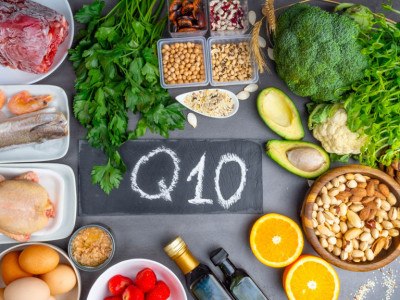
You can also improve absorption of Q10 from food or supplements by taking it with a small amount of healthy fat such as some olive oil, coconut oil or avocado. To optimize your body’s production of Q10, also be sure to eat plenty of:
- fatty fish low in contaminants, such as wild-caught Alaskan salmon, sardines, anchovies and herring
- grass fed beef and organic pastured poultry
- organic, grass fed or pastured organ meats
- sesame seeds
- broccoli
Ubiquinol combats free radicals in your mitochondria
About 90 percent or more of the reactive oxygen species (ROS) in your body are produced in your mitochondria. Using the analogy of the mitochondria as an engine, the combustion (metabolism) that takes place in there creates exhaust fumes — damaging byproducts.One of the functions of ubiquinol is to mop up those byproducts. When ubiquinol is lacking, the byproducts remain and begin damaging the cell. Ubiquinol is particularly beneficial for your heart health, a marker for which is C-reactive protein. When C-reactive protein is elevated it suggests you have a heightened risk for heart disease, as it's a marker for inflammation.
Two other markers for inflammation are gamma-glutamyl transferase (GGT), which is an early marker of heart failure, and NT-proBNP. There's an association between the levels of these two markers and ubiquinol as well. When ubiquinol is supplemented, both these markers go down and genes associated with them are downregulated.
Statin users are in dire need of Q10
A large amount of people over the age of 40 are taking a statin drug to lower their cholesterol. Statins work by inhibiting the enzyme HMG-CoA reductase, which is one of the facilitators of your body's production of cholesterol. But statins also impair production of Q10, and the resulting depletion can have very severe consequences.Many who take statins have the side effects of muscle pain, fatigue and memory loss to such a point that compliance becomes an issue; people don't want to be on statins anymore. It's been documented and recognized medically that these are real effects and that they're due to the statins. What's actually happening? The way a statin works is that it blocks your body's production of cholesterol.
We're always thinking about cholesterol from the diet while most people don't realize that cholesterol in the body comes from two places: from the diet and from your internal production of cholesterol. Cholesterol is quite important to your body, because cholesterol is one of the major components of cell membranes. It's also the precursor for all the sex hormones. It's not all bad. It's just bad when there's too much and that depends on what kind as well.
Besides shutting down your body's ability to produce ubiquinol, statin drugs also shut down the conversion of vitamin K1 to vitamin K2, which is critically important in many body functions, including heart health.
Impairing these three pathways — the production of cholesterol and Q10, and the vitamin K1 to K2 conversion has adverse effects on the production of energy and on cardiovascular health, and here's why: when you reduce your ubiquinol levels, the conversion of your food to energy becomes less efficient, which leads to lower energy, fatigue and muscle pains.
And the longer you're on a statin drug, the more ubiquinol-starved your body becomes and the more severe the side effects become. As it turns out, statins actually end up causing many of the problems the drugs promised to prevent. But that's not all!
Statins severely compromise your metabolism
Ketones are produced in the liver, and the enzyme that produces ketones is the same that produces cholesterol, namely HMG-CoA reductase. So when you're taking a statin drug, you also severely diminish your liver's ability to make ketones, thereby compromising your ability to benefit from a clean fuel (fat). In short, your metabolism becomes severely compromised.Even if you're taking vitamin K2 and ubiquinol, you still have to address the fact that you cannot make ketones, because you cannot take a ketone supplement. Ultimately, this has cardiovascular consequences as well, because your heart is the most mitochondrial-dense tissue in your body. If you deprive your cardiac tissue of fuel, by definition you impair your cardiovascular health.
Ubiquinol benefits heart failure patients
Heart failure is nearly at epidemic levels. There's a specific physiological condition called diastolic dysfunction where your ventricle hardens. As a result, your heart cannot properly refill with blood during diastole. This can eventually progress to heart failure. Unfortunately, many who have this condition don't even know it.Ubiquinol improves the ejection fraction, which is a measure of how well the heart is working in patients. This is one of the other fantastic benefits of ubiquinol.
When it comes to heart health, a more general benefit is that ubiquinol also acts as an antioxidant in your blood, where it prevents the oxidation of LDL cholesterol, thereby helping prevent atherosclerosis. In an older study, individuals who took a combination of Q10 and selenium daily for four years suffered fewer heart attacks, required fewer days in the hospital and had lower all-cause mortality. They also reported higher quality of life, compared to controls who received a placebo.
Remarkably, over the course of a decade — even though they’d stopped taking the supplements after four years — heart disease related deaths were nearly 50 percent lower in the original treatment group, and all-cause mortality was still 18 percent lower than controls. While Q10 is known to protect heart health all on its own, selenium aids your body in producing and accumulating Q10 by serving as a "booster."
Ubiquinol or Q10 also helps quell inflammation. Ubiquinol has been shown to have a positive effect on two inflammation markers, of which gamma-glutamyl transferase (GGT), is an early marker for heart failure. Levels of these markers are reduced and the genes linked with them are downregulated with ubiquinol supplementation.
This can lower your risk not only for heart problems but also any number of other conditions associated with chronic inflammation.
Q10 helps prevent statin-induced diabetes
By depleting your body of Q10, statin drugs not only increase your risk for heart problems, they also significantly increase your risk of diabetes. The higher your statin dose, the greater your risk of drug-induced diabetes: 1 in 498 people who are on a high-dose statin regimen will develop diabetes.Diabetic patients already have lower-than-normal Q10 levels. That’s because their body uses up much of its Q10 stores in an effort to combat diabetes-induced oxidative stress. When diabetics are prescribed statin drugs the further depletion of Q10 can be especially harmful.
Other health benefits of Q10
Research reveals ubiquinol and Q10 is helpful for an array of different conditions and diseases, including but not limited to:Traumatic brain injury. Recent animal research suggests ubiquinol has neuroprotective benefits that can improve your chances of recovery in case of a traumatic brain injury. The study in question explored the effects of ubiquinol on cerebral gene expression when administered prior to traumatic brain injury.
Parkinson's disease. High doses of Q10 may be beneficial in the early stages.
Statin-induced myopathy. Evidence shows Q10 lowers your risk of developing pain and muscle weakness associated with statin use.
Migraines. Q10 has been shown to ease headaches, including migraines, tension, cluster, menstrual and Lyme-related headaches.
Physical performance. Q10 is also popular with athletes. Since it’s involved in energy production, it may improve your physical performance. It may also be helpful for those with muscular dystrophy for the same reason.
Infertility. Q10 supplementation may also improve fertility in men and women. High levels of Q10 are found in semen, and has been directly correlated with sperm count and motility. Research also shows that a higher Q10 concentration in sperm cells helps protect sperm membranes from free radical damage.
Women who want to conceive need to be mindful of their mitochondrial health. Impaired mitochondrial performance created by suboptimal Q10 availability can drive age-associated oocyte deficits causing infertility.
Q10 combats negative effects of many drugs
Q10 supplementation also becomes important if you’re taking certain kinds of drugs, of which statins is but one. If you take any of the following medications you may benefit from a Q10 or ubiquinol supplement, as it can help combat the negative effects associated with these drugs: acid blockers or antacids, allergy medicines, anti-arrhythmic drugs, antibiotics, antidepressants, blood thinners, blood pressure drugs, ACE inhibitors, angiotensin II receptor antagonists, bèta-blockers, diuretics, cholesterol reducers (including fibrates), diabetes medications, psychiatric drugsSuggested dosing recommendations
Dosing requirements will vary depending on your individual situation and needs, but some general guidelines can still be made. As a general rule, the sicker you are, the more you need. The highest amount which was ever used in a research setting was 600 milligrams per dayfor severely ill people.If you're just starting out with ubiquinol, start with 200 to 300 mg per day. Within three weeks, your plasma levels will typically plateau to its optimum level.
After that, you can go down to a 100 mg/day maintenance dose. This dose is typically sufficient for healthy people.
If you have an active lifestyle, exercise a lot, or are under a lot of stress due to your job or "life" in general, you may want to increase your dose to 200 to 300 mg/day.
Remember, if you're on a statin drug you MUST take at least 100 to 200 mg of ubiquinol or Q10 per day, or more. To address heart failure and/or other significant heart problems you may need around 350 mg per day or more. Ideally, you'll want to work with your physician to ascertain your ideal dose. Your doctor can do a blood test to measure your Q10-levels, which would tell you whether your dose is high enough to keep you within a healthy range.
Co-enzyme Q10 or ubiquinol is also appropriate for those with other chronic diseases besides heart problems, such as diabetes, amyotrophic lateral sclerosis (ALS), chronic fatigue and autism for example. Ideally, you'll want to split the dose up to two or three times a day, rather than taking it all at once, as this will result in higher blood levels.
Other dosing guidelines, include:
- hypertension, 200 mg/day
- world class athletes who need extra ATP turnover, 300 to 600 mg/day
- regular athletes, 100 to 300 mg/day
- heart transplant or severe congestive heart failure (CHF), 300 to 600 mg/day in divided doses
- arrhythmia, 200 mg/day
- mitral valve prolapse, a combination of 400 mg magnesium and 100 to 200 mg of ubiquinol
Other important heart health supplements
Omega-3
Just some of the health benefits of maintaining an optimal or near optimal balance of omega-3 and omega-6 include reducing your risk of Alzheimer's disease, cognitive decline, autoimmune diabetes (Type 1 diabetes),eczema or psoriasis,tumor growth, major depressive disorder and other psychiatric disorders,and poor weight management.Balanced omega-3 to omega-6 levels also offer protection for people with amyotrophic lateral sclerosis (ALS), cognitive aging,and improved recovery after traumatic brain injury.
Researchers found that omega-3 supplementation reduced heart disease mortality, heart attack and coronary heart disease events.
Folate or 5-MTHF
Folate is the natural form of vitamin B9 that's found in food. Vitamin B9 is essential; your body cannot synthesize it so you must consume it.Folate is required for DNA synthesis, protein metabolism and red blood cell production.
Folate also supports fetal development, cognitive function during aging,lowering blood pressure and decreasing brain shrinkage. Deficiency can lead to depression, infertility, heart disease, anemia, muscle weakness and dementia.
Folate supplementation was associated with a reduced risk of stroke.
Conclusion
Coenzyme Q10 is used for energy production by every cell in your body. It also helps protect against cellular damage from free radicals.Coenzyme Q10 and ubiquinol, are among the most popular supplements for mitochondrial health. It’s also the number 1 supplement recommended by cardiologists to all patients.
Anyone taking a statin drug to lower their cholesterol must take a Q10-supplement to protect their health, especially their heart health, as statins deplete your body of Q10.
Taking a Q10 or ubiquinol supplement helps protect your mitochondrial membranes from oxidative damage, and has been shown to be helpful for a number of health conditions and chronic diseases rooted in mitochondrial dysfunction.
Ubiquinol is the reduced form of co-enzyme Q10. This is the form your body naturally uses, and research shows ubiquinol is superior for your health in a number of ways, primarily due to its superior bioavailability.
Ubiquinol also has neuroprotective benefits that can improve your chances of recovery in case of a traumatic brain injury.
To the main pageNext article
