

Health benefits of infrared light therapy
Health benefits of infrared light therapy
In our previous blog article I wrote about the dangers of excessive sunlight exposure because it may result in a sunstroke. In recent years, more and more attention has been paid to infrared light. When energy costs suddenly exploded two years ago, it was not uncommon to read about people who switched off the heating in their house and, instead, used a small infrared light panel for local heating.
These types of light panels almost always concern long -wolf infrared light (far infrared), while lamps used for therapeutic purposes, usually use short wave red or near infrared light.
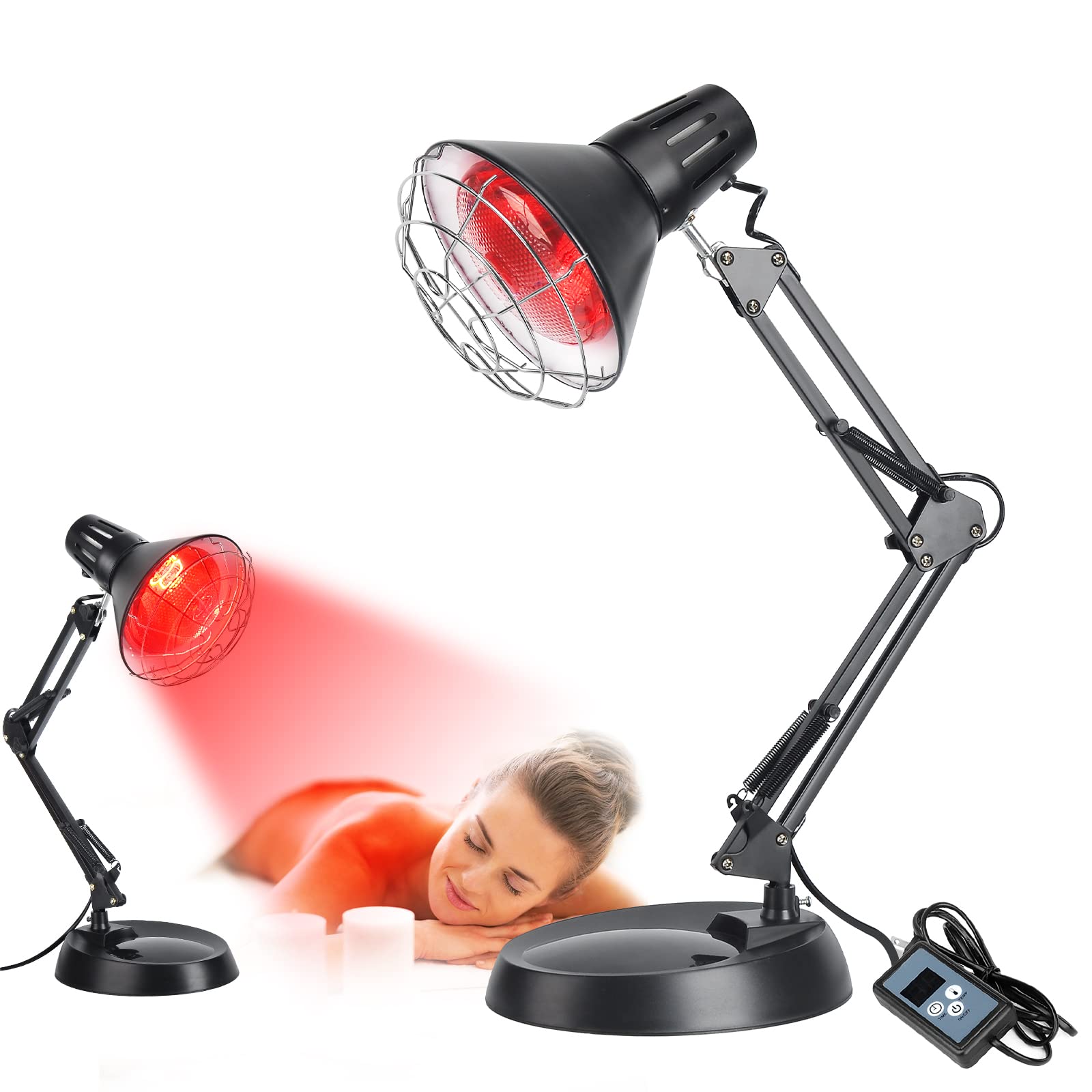
Recently I started using a near-infrared lamp with the hope that this would help with painful joints. Apart from the fact that it feels pleasant, I can't say that much about it yet because I don't use it faithfully enough. I did find it interesting enough to share insights about infrared light therapy with you, if only as a counterbalance for all panic stories about harmful effects of sunlight.
There are a lot of misconceptions about infrared light therapy products and whether they have any benefits.
Red Light Therapy vs Infrared Light Therapy : what’s the difference?
People often make the mistake of using red light therapy and infrared light therapy interchangeably.
It makes sense why this happens- they’re pretty similar. However, there is a difference.
While both use light to promote healing in your body, they differ in wavelengths. This translates into these lights penetrating into your skin at different levels, and therefore differing in their benefits to your body.
Specifically, red light has wave lengths between 600- 700 nanometers (nm), while (near) infrared light ranges from 700- 1000nm.
Meaning, that infrared light will penetrate deeper into your skin- which is ultimately what allows it to benefit your body in all the ways we’re going to share in a moment.
In this article we'll mostly discuss the benefits of infrared light.
Yet, here’s a brief list of the benefits of red light therapy:
- promotes skin rejuvination
- reduces inflammation
- helps wounds heal faster
- relieves some muscle pain
Research-backed benefits of Infrared Light Therapy for your health & beauty
4 Appearance-based benefits of infrared light therapy
Here are 4 scientifically proven ways infrared light therapy can help improve your physical appearance:
1. Improves your skin; gets rid of wrinkles: In a 2014 study, volunteers were given near-infrared light therapy twice a week for 30 sessions. By the end of this period, the results showed a significant reduction in wrinkles and roughness and a significantly improved complexion.
2. Has anti-aging effects: infrared light therapy offers several anti-aging benefits like boosting collagen production, improving circulation, rejuvenating the skin, enhancing skin elasticity, improving joint mobility in aging adults, and reducing muscle inflammation.
3. Helps with weight loss: in a 2015 study, the effectiveness of infrared light therapy was studied in helping sixty obese women lose weight. The results found that women who paired exercise with infrared light therapy were able to lose more weight than women who were in the exercise-only group.
4. Boosts hair growth: Infrared light therapy can help with male and female pattern baldness (Androgenetic alopecia) as well. It does so by stimulating the epidermal stem cells in your hair follicles and shifting them to the anagen (growth) phase.
This is why, many dermatologists recommend LLLT (Low-level laser therapy) as a supporting treatment for patients dealing with hair loss.
A 2013 study found that LLLT effectively promoted hair growth in both male and female patients who had androgenetic alopecia.
8 Health benefits of infrared light therapy
1 Improves your mood: infrared light therapy can also help improve some symptoms of anxiety and depression by boosting the production of endorphins and serotonin, reducing relaxing muscles, improving sleep quality, detoxifying the body, and boosting blood circulation.
A 2009 study tracked the mood and anxiety of 10 patients with major depression, anxiety, and a history of substance abuse before and after giving them near-infrared treatment. They found that patients showed significantly improved moods and lower levels of anxiety even after two weeks of receiving the treatment.
2 Helps detoxify your body: Sweating induced by infrared light gets rid of your body’s natural toxins. Additionally, the improved blood flow throughout your body allows your cells to get more oxygen and drain toxins stored by the lymphatic system.
3 Boosts your immune system: Infrared light therapy has also been proven to benefit your immune system in multiple ways. It does so by boosting the healing of wounds, increasing blood circulation, boosting energy production in your body’s cells, promoting the production of white blood cells, and detoxifying your body through sweating.
4 Relieves muscle pain, inflammation, stiffness, soreness, or fatigue: Infrared therapy also helps reduce muscle pain, inflammation, soreness, stiffness, and fatigue by improving blood circulation to the muscle (which increases the supply of oxygen to the muscle). Additionally, it helps reduce the production of pro-inflammatory molecules like cytokines, which also cause muscle stiffness. Finally, infrared light therapy also helps relieve lower back pain and improve joint mobility in aging adults.
5 Supports cardiovascular health: primarily, infrared therapy supports your body’s cardiovascular health by prompting the release of vasodilators in your body, which improves the flow of blood, nutrients, and oxygen throughout your body. Additionally, infrared therapy helps release nitric oxide in the body, which relaxes your blood vessels- making blood flow with reduced resistance.
6 Improves sleep quality: There are several ways through which infrared light therapy improves quality. Firstly, it does so by helping you reset your circadian rhythm (your body’s internal clock), which helps with things like disrupted sleep schedules. Secondly, it helps by alleviating any muscle pain, soreness, and inflammation in your body and relaxing your muscles. Additionally, things like improved blood circulation and melatonin production also lead to better sleep quality.
A 2023 study looked at existing academic literature on the impact of infrared lights on sleep quality and found infrared light therapy to be a viable method of improving overall sleep quality in both animals and humans.
Another 2023 study looked at controlled trials involving 598 patients suffering from sleep disorders induced by Alzheimer’s Disease and found that infrared light therapy significantly improved their sleep efficiency.
7 Supports wound healing & tissue repair: By improving overall blood circulation, inducing cells to produce more energy, and stimulating collagen production, infrared light therapy can also help you heal from your wounds and injuries faster.
8 Reduces Post-Operative Pain (orthopedic surgeries): A 2020 study measured the before and after pain and recovery levels of a group of patients who had recently undergone orthopedic surgery. Those who had received post-operative infrared therapy reported lower levels of pain and higher levels of post-op recovery in the short run than those who had not.
Types of Infrared Light Therapy & their benefits
The extent of the health benefits you receive will depend on the type of infrared light therapy you opt for.
Infrared light therapy is mainly categorized into three types:
- Near-infrared (NIR)
- Mid-infrared (MIR), and
- Far-Infrared (FIR)
These categories correspond to different wavelengths, which determine how deeply the light will penetrate your body (and by extension, the extent of the benefits you’ll receive). Here’s what you need to know about each of these three types.
Near-Infrared Light (NIR) therapy & its benefits
Near-infrared light has the shortest wavelength among the three at 700-1500 nanometers (nm).
Since this infrared type has the shortest wavelength, it penetrates the skin surface the most out of all three types- reaching muscles and tissues inside.
Key benefits: you practically get all of the benefits listed in the previous section including muscle pain relief, improved circulation, and boosted energy production in cells.
Mid-Infrared Light (MIR) therapy & its benefits
Mid-Infrared light (MIR) has wavelengths longer than near-infrared (NIR) but shorter than far-infrared (FIR); around 1500- 3000 nm. Since it has longer wavelengths than NIR, it penetrates less deeply; only reaching the tissue beneath the skin.
Key benefits: helps induce sweat and get rid of mild muscle aches by warming deeper tissues.
Far-Infrared Light (FIR) therapy & its benefits
Far infrared has the longest wavelengths of the bunch (around 3000- 10000nm), and it is only able to shallowly penetrate the skin’s surface.
Key benefits: Since FIR penetrates the surface of the skin, it induces sweat and helps eliminate toxins.
Most modern infrared therapy products today will allow you to switch between all three forms of infrared lights.
Are there any risks of infrared light therapy?
Generally speaking, infrared light therapy is safe. That said, misusing almost anything can pose a risk to your health and safety, including infrared light therapy products.
Here is a list of the main risks of misusing infrared light therapy products and how you can avoid them:
Eye burns & retinal damage: if you keep your infrared light therapy product too close to your eyes at high-intensity settings for prolonged periods, it can cause eye burns– and in some cases- irreversible retinal damage.
Thankfully, this is easy to avoid- all you need to do is: buy your infrared light therapy products from trusted brands, follow the manufacturer’s instructions for correct usage, and wear protective eyewear such as infrared therapy goggles.
Heat burns: infrared light therapy does not cause heatburns under normal usage. However, keeping your infrared light therapy device too close to your skin in high-intensity settings for prolonged periods can potentially cause burn marks.
All you need to do to avoid this is buy your infrared light therapy product from a trusted brand, follow the manufacturer’s usage guidelines, keep your device at an appropriate distance, and stop the session immediately if you’re facing any discomfort.
Dehydration: Infrared saunas make you sweat a lot. If that’s the therapy device you’re using, remember to drink one or two glasses of water before starting
your sessions. This will eliminate any risk of you feeling dehydrated after your session.
Summary
Infrared light therapy, distinct from red light therapy due to its deeper-penetrating wavelengths (700-1000 nm), offers numerous health and appearance benefits.
It improves skin by reducing wrinkles, promotes anti-aging through collagen production and enhanced circulation, aids weight loss, and supports hair growth.
Health benefits include improved mood, detoxification, boosted immunity, muscle pain relief, cardiovascular health, better sleep quality, faster wound healing, and reduced post-operative pain.
Infrared therapy is categorized into near-infrared (NIR), mid-infrared (MIR), and far-infrared (FIR), each with varying penetration depths and benefits.
While generally safe, risks like eye burns, heat burns, and dehydration can be avoided by following manufacturer guidelines, using protective eyewear, maintaining proper device distance, and staying hydrated.
Recent posts
- Daylight Saving Time: tips and tricks for a smooth adaptation
- Being a grandparent doesn't just bring joy but also rejuvenates your brain
- Wide awake at night but tired in the morning? How to cure insomnia!
- Fall prevention tips for elderly people
- How Heart Rate Variability can be an indicator of your well-being
- Biting insects, what causes them to be attracted to you and what can you do to repel them?
- How can athletes beat the heat with heat adaptation training?
- Health benefits of infrared light therapy
- How do you prevent a sunstroke or heatstroke?
- How to become super strong and muscular in a responsible way!
Author
Contents
Language for this blog

- Vestiging: Wageningen | Julianastraat 99 | 6707 DC | NL
- Telefoon: +31 (0)6 5107 9358
- Mail contact: orders@pasioonline.com
- Bestellingen worden gereed gemaakt voor verzending maandag t/m vrijdag tussen 9.00 en 16.00. Zaterdag tussen 10.00 en 14.00 uur. Bij verzending maken wij gebruik van PostNL en DPD. Afhalen alleen na afspraak en vooruitbetaald. Probiotica worden niet retour genomen.