



Gut health and sleep: can your microbiome keep you up at night?
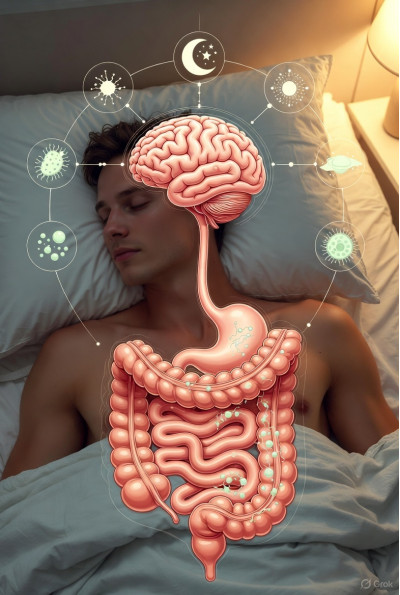
Gut health and sleep: can your microbiome keep you up at night?
By now, most of us will have become accustomed to an adapted day/night rhythm in which the sun sets way earlier than we were accustomed to just a few weeks ago and your sleep cycle is probably back to normal.
However, you may still want to tweak your sleep cycle a little bit or be more aware of sleep problems, so I thought it would be interesting to focus on one single aspect which influences your sleep quality few people know about.
That's the relationship between gut health and sleep.
But there's more, gut health also affects mood and vice versa, plus, there's a relationship with the circadian rhythm as well!
Is your gut causing sleepless nights?
You share your body with trillions of microorganisms, the bulk of which reside in your gut, including your stomach and small and large intestines. There, however, they are not restricted to influencing only the goings-on of your digestive process.
Far from it, these microorganisms, collectively known as your microbiome, influence your body's homeostasis daily and are intricately tied to other body systems via a number of complex pathways, including the gut-brain axis and a recently revealed gut-brain-bone marrow axis, the latter of which may influence your blood pressure, mood and more.
One of the most compelling avenues of study relating to your microbiome is how it relates to your sleep. It's already known that sleep influences your gut health, in part because lack of it makes it harder for you to control your impulses and manipulates hormones linked to food intake, causing you to eat more and crave unhealthy foods.
So skimping on sleep is a remarkably good bellwether of a poor diet, the latter of which can quickly take a toll on your gut health. Now researchers are asking whether the opposite also holds true and perhaps your microbiome influences your ability to sleep as well.
Can your microbiome keep you up at night?
Improving gut health could act as a new form of sleep therapy as gut health is indeed linked to sleep health.
The microbial ecosystem may affect sleep and sleep-related physiological functions in a number of different ways: shifting circadian rhythms, altering the body's sleep-wake cycle, affecting hormones that regulate sleep and wakefulness.
Researchers pointed out that changes in gut microbiota have long been linked to lifestyle behaviors such as diet, travel, exercise and disturbances to circadian rhythm.
Meanwhile, diseases once primarily attributed to lifestyle, such as obesity, heart disease and depression, are turning out to have increasing links to microbiota.
"Microbial-immune cross-talk" may be playing a role in obstructive sleep apnea, particularly in fatal cases.
Partial sleep deprivation is known to alter gut microbiome, and its composition is linked to cognitive flexibility. There is a link between sleep quality, composition of gut microbiome and cognitive flexibility in older adults, such that improving microbiome health may buffer against sleep-related cognitive decline in older adults.
Prebiotics affect REM and Non-REM sleep
Prebiotics, which act as food for the beneficial bacteria, or probiotics, in your gut, have already been found to influence sleep in animal studies.
A diet rich in prebiotics (started in early life) increases the growth of Lactobacillus rhamnosus and alleviates the stress-induced disruption of REM sleep, diurnal physiology and diversity of the gut micriobiome.
Given that sufficient NREM sleep and proper nutrition can impact brain development and function and that sleep problems are common in early-life, it is possible that a diet rich in prebiotics started in early-life could help improve sleep, support the gut microbiota and promote optimal brain/psychological health.
A researchers who experimented with prebiotics for five days, noticed a remarkable improvement in sleep quality. Prior to using prebiotics, 21% of time in bed was spent awake, which dropped to only this dropped to 8% after using prebiotics for only 5 days.
Cnsidering the many other benefits prebiotics add to your health, there's little harm, and potentially great gain, in adding more of them to your diet.
If you're interested in adding more prebiotic fiber to your diet to improve the health of your microbiome, and possibly your sleep, the following foods are good sources: apples, asparagus, bananas, beetroot, burdock root, cabbage, cashews, chicory root, colostrum, couscous, fennel bulb, garlic, grapefruit, green peas, Jerusalem artichokes, jicama, konjac root (glucomannan), leeks, nectarines, onions, persimmon, pistachios, pomegranate, seaweed, shallots, snow peas, tamarillo.
Could your diet improve both your sleep and your gut health?
Another common thread affecting both your sleep and your gut is your diet. One study evaluating the diets and sleep patterns of more than 4,500 people found distinct patterns:
1 Very short sleepers (less than five hours a night): had the least food variety, drank less water and consumed fewer total carbohydrates and lycopene (an antioxidant found in fruits and vegetables).
2 Short sleepers (five to six hours): consumed the most calories but ate less vitamin C and selenium, and drank less water. Short sleepers tended to eat more lutein and zeaxanthin than other groups.
3 Normal sleepers (seven to eight hours): had the most food variety in their diet, which is generally associated with a healthier way of eating.
4 Long sleepers (nine or more hours): consumed the least calories as well as less theobromine (found in chocolate and tea), choline and total carbs. Long sleepers tended to drink more alcohol.
If we eat badly, we sleep badly. If you wanted to improve sleep, you could try a gut-friendly regime by eating a broad and inclusive diet with real food, not processed.
It's likely that eating a varied, whole food diet is one key to normal, healthy sleep and gut health alike.
As for how to support a healthy microbiota, which could do more to improve your sleep than is currently appreciated, it isn't very complicated, but you do need to take proactive steps to encourage its health while avoiding factors known to cause harm.
How to nurture your gut microbiome
As for how to improve and maintain a healthy microbiome — which might do more to improve your sleep than is currently appreciated — it isn't very complicated, but you do need to take proactive steps to encourage its health while avoiding factors known to cause harm. This includes:
Do
- Eat plenty of fermented foods — Healthy choices include lassi, fermented grass fed kefir, natto (fermented soy) and fermented vegetables.
- Take a probiotic supplement if you don't eat fermented foods on a regular basis.
- Boost your soluble and insoluble fiber intake, focusing on vegetables, nuts and seeds, including sprouted seeds.
- Get your hands dirty in the garden — Exposure to bacteria and viruses can help to strengthen your immune system and provide long-lasting immunity against disease.
- Getting your hands dirty in the garden can help reacquaint your immune system with beneficial microorganisms on the plants and in the soil.
- Open your windows — For the vast majority of human history, the outside was always part of the inside, and at no moment during our day were we ever really separated from nature. Today, we spend most of our lives indoors. And, although keeping the outside out does have its advantages, it has also changed the microbiome of your home. Research shows that opening a window and increasing natural airflow can improve the diversity and health of the microbes in your home, which in turn benefit you.
- Wash your dishes by hand instead of in the dishwasher — Research has shown that washing your dishes by hand leaves more bacteria on the dishes than dishwashers do, and eating off these less-than-sterile dishes may actually decrease your risk of allergies by stimulating your immune system.
Avoid
- Antibiotics, unless absolutely necessary, and when you do, make sure to reseed your gut with fermented foods and/or a high-quality probiotic supplement.
- Conventionally raised meats and other animal products, as factory farmed animals are routinely fed low-dose antibiotics and GE grains loaded with glyphosate, which is widely known to kill many bacteria. This warning mainly applies in the US, not so much in the EU due to strict regulations.
- Chlorinated and/or fluoridated water — Especially in your bathing such as showers, which are worse than drinking it.
- Processed foods — Excessive sugar feeds pathogenic bacteria.
- Food emulsifiers such as polysorbate 80, lecithin, carrageenan, polyglycerols and xanthan gum also appear to have an adverse effect on your gut flora.
- Artificial sweeteners have also been found to alter gut bacteria in adverse ways.
- Agricultural chemicals — glyphosate in particular is a known antibiotic and will actively kill many of your beneficial gut microbes if you eat foods contaminated with it.
- Antibacterial soap — It kills both good and bad bacteria and contributes to the development of antibiotic resistance.
Findings from new research: how circadian rhythm shapes gut repair and digestive health
Your intestine replaces itself on a schedule, not by chance. Every day, cells rise, repair, and release in a rhythm that keeps your gut calm and resilient. Your body's 24-hour clock sets that pace. When you sleep late, eat at odd hours, or rack up red-eye flights, you throw off that timing. These disruptions don't just make you groggy — they reshape how your gut defends you.
Your gut barrier is your health frontline . When it falters, irritants pass through more easily, and you feel it as bloating, digestive upset, skin flares, or brain fog.
If you're a shift worker, a frequent traveler, a late-night snacker, or someone who scrolls under bright screens after dark, you sit in the highest-risk lane.
Add alcohol or ultraprocessed foods and the stress on that barrier spikes further.
Your daily choices flip the switches. Light in the morning, consistent sleep, predictable healthy meals, and fewer midnight scrolling sessions tell your gut to renew on time.
By understanding how this clock links to stem-cell-driven repair and what routines reinforce it, you can use that knowledge to steady digestion, mood, and energy without guesswork.
Your circadian rhythm directs gut stem cell renewal
The body's circadian rhythm (the 24-hour internal clock) directs intestinal stem cells to repair and renew the gut lining.
Researchers wanted to understand how timing systems inside cells coordinate with the cell cycle, essentially determining when cells divide, rest, or become specialized.
• Circadian rhythm decides what your gut cells become — the research showed that circadian rhythms control whether gut stem cells become absorptive cells, mucus-secreting cells, or other specialized intestinal cells.
This means your digestive lining isn't just renewing, it's renewing on a schedule, with each type of cell created at the right time to keep your gut barrier strong.
• Off-schedule days weaken your gut barrier - when your circadian rhythm and cell cycle fall out of sync, your gut barrier weakens and repair slows.
That translates to greater risk of intestinal permeability, or "leaky gut," inflammation, and digestive disorders. By keeping your daily routines aligned with natural light and dark cycles, you directly support these repair systems.
• Certain proteins act as timekeepers in this process, these proteins regulate when stem cells should divide and when they should pause.
Think of them as managers making sure construction crews work on schedule. If they're disrupted — through irregular sleep or late-night eating, for instance, the entire system falls behind.
• Enzymes decide where energy goes — The study also highlighted enzymes that act as bridges between the circadian clock and the cell cycle. These enzymes help cells decide how to use energy — whether to focus on repair or other functions. This ensures that your body doesn't waste resources and that gut renewal happens efficiently.
• Protect your circadian rhythm to prevent long-term problems — If these processes are disrupted, your intestines don't heal as quickly or as thoroughly. Over time, this raises your risk for chronic inflammation, autoimmune reactions, and even metabolic diseases. Understanding these findings empowers you to take control — by supporting your circadian rhythm, you improve not only digestion but also long-term resilience against disease.
Disrupted daily rhythms worsen digestive health
• Who pays the highest price for lost rhythm: people living with disrupted schedules — such as night-shift workers, frequent travelers, and those with inconsistent sleep routines. These groups face higher risks for digestive problems ranging from constipation and diarrhea to more serious conditions like inflammatory bowel disease and metabolic disorders.
• Everyday red flags in your digestion: when circadian clocks in your gut and brain fall out of sync, you feel the effects in everyday symptoms. Constipation, bloating, and unpredictable bowel movements become more frequent. For many, nutrient absorption declines, meaning the food you eat doesn't fuel your body as effectively.
• Circadian disruption makes your gut barrier leaky: this means toxins and bacteria slip through your intestinal wall into your bloodstream, triggering inflammation. This isn't just a digestive issue — it fuels systemic problems such as autoimmune conditions, fatigue, and brain fog.
• Lifestyle triggers make the damage worse: factors like alcohol intake and a highly processed Western diet were highlighted as "second hits" that intensify circadian disruption's damage. These foods and drinks multiply the stress on your gut lining, making it harder to heal.
• The long-term toll of ignoring your daily rhythm: people with long-term circadian disruption face higher risks of obesity and Type 2 diabetes.
Digestive inflammation also sets the stage for more severe illnesses, showing why even common sleep problems like insomnia, which disrupt your circadian rhythm, deserve attention.
Microbes set the tempo for stress and sleep
How do gut microbes influence stress responses and daily body clocks? How do those two systems talk to each other to shape brain and gut health?
There's a two-way communication network — covering nerves, hormones, immune signals, and microbe-made chemicals that affect mood, sleep, and digestion.
• Your microbes fine-tune your body's stress thermostat — The hypothalamic-pituitary-adrenal (HPA) axis — your core stress system — rises and falls across the day, and gut microbes tune those hormone waves; germ-free mice show exaggerated cortisol-like spikes after stress that normalize when microbes are restored, highlighting how flora steady stress output. In simple terms, a stable microbiome smooths your stress thermostat.
• Your gut's fast track to your brain — the vagus nerve — your gut-to-brain express lane — relays microbial signals in real time; several probiotic benefits disappear when the vagus is cut, which shows how live gut signals reach mood and behavior centers without delay. That means breath, meal timing, and microbiome support give you rapid routes to calm the system.
• Gut bacteria coach your immune system to calm inflammation and influence mood — the microbes in your gut send signals that help your immune cells know when to calm down. Without them, even your brain's cleanup cells don't fully mature. Certain bacteria that make butyrate — a beneficial compound fueled by fiber — are especially good at reducing inflammation and helping you handle stress more smoothly.
Studies also show that moving gut bacteria from stressed or depressed people into germ-free mice makes the animals anxious and depressed, with stress hormones running high. On the flip side, diets rich in "psychobiotics" or specific strains like Lactobacillus helveticus and Akkermansia muciniphila reduce stress and improve mood in both animals and people.
• Microbial fuel acts like time signals for your body clock — Your gut bacteria create substances such as butyrate and indoles that work like little clocks inside you. Butyrate helps reset liver timing genes, while indoles cool down immune overreactions and even aid nerve repair.
In plain terms, the food your microbes produce keeps your body's signals running on schedule.
• Your gut bacteria run on a daily schedule too — different groups of bacteria rise and fall at set times of the day, and your eating pattern drives those swings. When you eat during your active hours instead of late at night, you help your microbes stay on track, which keeps your metabolism and weight more stable even on a high-fat diet.
How to support your gut's natural rhythm
Your gut thrives on timing. The research makes it clear that when your internal clock and gut repair systems fall out of sync, the barrier that protects you from toxins and bacteria starts to break down.
That means your daily routines are not just about convenience — they're the switch that tells your gut when to heal, when to rest, and when to defend. If you've been struggling with bloating, unpredictable digestion, or even fatigue that feels like it never goes away, it's time to reset your rhythm and give your body the structure it needs.
Here are five steps to start with today:
1. Protect your sleep-wake cycle — go to bed and wake up at the same time every day — even on weekends. Your gut cells follow your brain's clock, and when you keep a steady routine, you tell your digestive system exactly when to repair itself. If you're a night-shift worker, use blackout curtains and consistent sleep windows to anchor your body.
2. Eat meals at regular times — space your meals consistently throughout the day instead of eating at random hours. When you eat late at night, you throw off the signals that tell your gut when to absorb nutrients and when to rebuild. Choose a set eating window that matches your lifestyle and stick to it — and stop eating at least three hours before bedtime.
3. Align with natural light — spend time outside in the morning daylight to reinforce your internal clock. Bright light in the first few hours of the day tells your body it's time to be alert, while dimming lights at sunset in the evening helps you wind down. This light exposure trains both your brain and gut clocks to stay in sync.
4. Avoid foods that stress your gut — ultraprocessed foods and alcohol act like accelerants for gut damage. If you're already off rhythm from travel or poor sleep, these foods multiply the stress. Avoid vegetable oils and other ultraprocessed foods, and replace them with whole, unprocessed meals that support repair — like vegetables, fruits, and grass fed beef.
5. Build rhythm into your routine — Think of your day as a cycle, not a checklist. Add small anchors — like morning movement, midday sunlight, and an evening wind-down ritual.
These daily cues make it easier to stay consistent, and over time, your gut learns to expect stability. That consistency is what keeps your gut health strong and inflammation under control.
Summary and conclusions
Your gut microbiome—trillions of microbes in your digestive tract—plays a far-reaching role beyond digestion, influencing sleep, stress, mood, and overall health through pathways like the gut-brain axis and circadian rhythms.
The article explores this bidirectional link: poor sleep disrupts gut diversity and promotes unhealthy eating, while an imbalanced microbiome can shift sleep-wake cycles, hormone regulation (e.g., cortisol), and REM/NREM quality, contributing to issues like insomnia, cognitive decline, and diseases such as obesity, depression, and sleep apnea.
Research highlights prebiotics (e.g., from apples, garlic, onions) as sleep enhancers, reducing wake time in bed by up to 60% in short trials and buffering stress-induced disruptions.
Diet patterns reveal short sleepers crave more calories and fewer nutrients, underscoring the value of varied, whole foods.
Circadian misalignment— from shift work, late eating, or blue light—weakens gut barrier repair via stem cell cycles, fostering "leaky gut," inflammation, and long-term risks like diabetes.
Gut microbes also fine-tune stress responses via the vagus nerve and compounds like butyrate, with "psychobiotics" (e.g., Lactobacillus strains) showing mood and sleep benefits.
Practical tips include fostering microbes with fermented foods, fiber, and nature exposure while avoiding antibiotics, processed foods, and irregular routines.
Aligning meals, light, and sleep supports gut renewal and resilience.
Gut-sleep synergy is key: the microbiome isn't just a digestion sidekick—it's a sleep architect.
Prioritizing gut health via prebiotics and rhythm-aligned habits could rival traditional therapies for better rest, especially in aging or stressed populations.
Prevention over cure: disruptions like erratic schedules amplify risks (e.g., leaky gut fueling autoimmunity), but simple resets—consistent sleep/meals, morning light, and microbe-friendly diets—build long-term defenses against inflammation, metabolic woes, and cognitive fog.
Takeaway: eat diversely (focus on the prebiotic list), minimize harms (e.g., no late-night snacking), and embrace routines that sync body clocks.
These low-effort changes promise ripple benefits: deeper sleep, steadier mood, and a fortified gut barrier. Start small—add one fermented food today—for outsized gains tomorrow.
