



Forest Bathing: how a Japanese tradition of spending more time with trees can help you find health and happiness
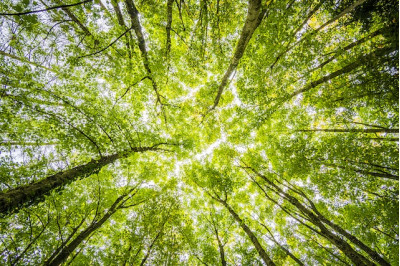
Forest Bathing: how a Japanese tradition of spending more time with trees can help you find health and happiness
I don't know about you, but each time September arrives, I'm struck with a feeling of melancholy when saying goodbye to the summer. While some days may be unbearably hot, it is also the time for seemingly endless warm & sunlit evenings. I hope you were able to soak up as many healing sunrays as you were able to and build up adequate amounts of vitamin D in your body to last you through the upcoming winter.
However, for many of us, it is not summer, but autumn that is their favourite time of year. While we are drawn to the ocean or mountains in summer, we are drawn towards the forest in autumn.
Somehow we feel better when we are in vicinity of trees. This improved feeling of wellness isn't just imaginary but has been scientifically proven to be healthy.
The first time I ever heard about 'forest bathing' was shortly after subscribing to MedCram, a medical education channel on Youtube which has been focused on COVID for 2 years on end. In one episode , dr Seheult summed up various protective methods we could use to stay healthy. One of his tips was not just to exercise outside, but also to spend time in the forest sitting quietly and smell the natural perfume released in the air. An activity for which the name 'forest bathing' had been coined, a direct translation of a Japanese habit with the same name.
You may watch his lecture here "Coronavirus Pandemic Update 56: What is “Forest Bathing” & Can It Boost Immunity Against Viruses?" published on April 15, 2020.
"A series of joint studies from Stanford University School of Medicine and several medical schools and institutions in Japan demonstrated that exposure to “phytoncides” released by trees and plants may boost immunity by increasing natural killer cell quantity and activity among other effects.
Dr. Seheult illustrates how these studies were conducted as exposure to forests (forest bathing) may fall into the category of additional things we can do (and that don’t cause harm) to potentially help prevent viral infections such as COVID-19."
links to the studies in chronological order: 2007, 2008, 2009
But instead of talking in-depth about those studies, I'd like to tell you about the how and why of forest bathing by introducing you to Qing Li who wrote "Forest Bathing: how trees can help you find health and happiness".
We all know how good being in nature can make us feel. We have known it for centuries. The sounds of the forest, the scent of the trees, the sunlight playing through the leaves, the fresh, clean air — these things give us a sense of comfort. They ease our stress and worry, help us to relax and to think more clearly. Being in nature can restore our mood, give us back our energy and vitality, refresh and rejuvenate us.But what exactly is this feeling that is so hard to put into words? I am a scientist, not a poet. And I have been investigating the science behind that feeling for many years.
In Japan, we practice something called forest bathing, or shinrin-yoku. Shinrin in Japanese means “forest,” and yoku means “bath.” So shinrin-yoku means bathing in the forest atmosphere, or taking in the forest through our senses.
This is not exercise, or hiking, or jogging. It is simply being in nature, connecting with it through our senses of sight, hearing, taste, smell and touch. Shinrin-yoku is like a bridge. By opening our senses, it bridges the gap between us and the natural world.
Never have we been so far from merging with the natural world and so divorced from nature. By 2050, 66% of the world’s population is projected to live in cities. According to a study sponsored by the Environmental Protection Agency, the average American spends 93% of his or her time indoors.
But the good news is that even a small amount of time in nature can have an impact on our health. A two-hour forest bath will help you to unplug from technology and slow down. It will bring you into the present moment and de-stress and relax you. Numerous studies I’ve conducted have shown that shinrin-yoku has real health benefits.
So how does one go about forest bathing?
First, find a spot. Make sure you have left your phone and camera behind. You are going to be walking aimlessly and slowly. You don’t need any devices. Let your body be your guide. Listen to where it wants to take you. Follow your nose. And take your time. It doesn’t matter if you don’t get anywhere. You are not going anywhere. You are savoring the sounds, smells and sights of nature and letting the forest in.
The key to unlocking the power of the forest is in the five senses. Let nature enter through your ears, eyes, nose, mouth, hands and feet. Listen to the birds singing and the breeze rustling in the leaves of the trees. Look at the different greens of the trees and the sunlight filtering through the branches. Smell the fragrance of the forest and breathe in the natural aromatherapy of phytoncides.
"....when people are in nature, they inhale aromatic compounds from plants called phytoncides. These can increase their number of natural killer cells, a type of white blood cell that supports the immune system and is linked with a lower risk of cancer. These cells are also believed to be important in fighting infections and inflammation, a common marker of disease.
In one study, researchers found that people who took a long walk through a forest for two days in a row increased their natural killer cells by 50% and the activity of these cells by 56%. Those activity levels also remained 23% higher than usual for the month following those walks."
Taste the freshness of the air as you take deep breaths. Place your hands on the trunk of a tree. Dip your fingers or toes in a stream. Lie on the ground. Drink in the flavor of the forest and release your sense of joy and calm. This is your sixth sense, a state of mind. Now you have connected with nature. You have crossed the bridge to happiness.
When it comes to finding calm and relaxation, there is no one-size-fits-all solution – it differs from person to person. It is important to find a place that suits you. If you love the smell of damp soil, you will be most relaxed where the natural landscape provides it. Then the effects of the forest will be more powerful. Maybe you have a place in the countryside that reminds you of your childhood or of happy times in the past. These places will be special to you and your connection with them will be strong.
When you have been busy at work all week, it can be hard to slow down. You may have been rushing around so much you no longer know how to stand still. Walking with a guide who is a trained forest therapist can help you feel more comfortable and find the right environment to fit your needs. In one of my favorite forests, Iinan Furusato-no-Mori, the forest-therapy program includes guided walks. Doctors are on hand to offer general health assessments. When you arrive, you are given a physical health check and a psychological questionnaire. The therapist then works out the best walking plan for you.
But it is just as easy to forest-bathe without a guide. And there are many different activities you can do in the forest that will help you to relax and to connect with nature. Here are some of the things people do: forest walking, yoga, eating in the forest, hot-spring therapy, T’ai chi, meditation, breathing exercises, aromatherapy, art classes and pottery, Nordic walking and plant observation. It doesn’t matter how fit – or unfit – you are. Shinrin-yoku is suitable for any level of fitness.
You can forest-bathe anywhere in the world – wherever there are trees; in hot weather or in cold; in rain, sunshine or snow. You don’t even need a forest. Once you have learned how to do it, you can do shinrin-yoku anywhere – in a nearby park or in your garden. Look for a place where there are trees, and off you go!
You may have thought the practice of forest bathing is an ancient Japanese tradition. Think again!
Background of forest bathing (shinrin-yoku) in Japan.
Japan, the island nation in the far east has a unique culture that has withstood the test of time. It is also a country that has been at the forefront of technological adoption and advancement and is counted among the most developed nations of the world. And yet this progress and development is not bereft of challenges.Japan is known for one of the most demanding work environments in the world. In fact they have even coined a specific term for death by overwork (Karoshi). The performance pressure from jobs is so high, that there’s very little time left for a personal life. An interesting consequence of this culture is the fact that the marriage rates in Japan have fallen drastically in the last 30 years.
The urban cities of Japan have a hyper digital culture and a peculiar obsession with technology. In the age of internet many Japanese people are spending more time online and having fewer social interactions. It is leading to higher incidents of anxiety and stress. Depression and loneliness are also on the rise.
The country also lies on a seismic fault line, being prone to devastating earthquakes and tsunamis, such that the Japanese have had to face a disproportionate amount of trauma.
Fortunately, over 70% of Japan is still covered in forests. The Japanese Ministry of Agriculture, Forestry and Fisheries came up with the idea of shinrin yoku in the early eighties. Shinrin yoku stands for a forest bath, or enjoying the forest atmosphere in order to relax. Due to the relentless Japanese working culture, the stress levels of Japanese employees was running rampant already then and the forestry department saw a wonderful possibility that would benefit the stress levels of people and increase demand for forest cover needed by the forestry department. And so shinrin yoku / forest bathing was born.The Japanese, who were under the stress of competitive metropolitan life, were lured into the healing atmosphere of the forests to engage in different relaxing activities .
Forest Zen
There is something to be said about the central role that Zen Buddhism plays in Japan. Zen Buddhism encourages the practitioner to learn to gather one’s scattered mind and stabilise one’s attention so that it can be easier to see things more clearly and with a new perspective. When some space is created between our experiences and how we react to these experiences, we are able to respond with greater wisdom and care.While traditionally, Buddhist monks in India, China and later in Japan, traversed long distances to meditate in nature, in the recent decades the idea of headspace creation has become known as restoration in psychology. Apparently our recovery from stress starts within minutes of entering a green space. When the physical body has started to calm down – blood pressure stabilises, stress hormones in our blood decrease, muscle tension decreases – the mental health benefits also kick in. We start thinking more clearly, our feelings of vitality increase and our mood starts to lift. The urbanite can now exhale a sigh of relief, as the time needed in nature has been narrowed down to just 20 minutes a day in order to manage our mental health.
The simple act of sitting and focusing on your breath can be quite difficult if you are not in the proper frame of mind. Keeping your thoughts in control or maintaining your awareness on one particular object is a very challenging task for beginners. A large number of people give up meditation due to a frustrating experience in their initial attempts. That’s why the role of a good teacher becomes so important in this journey of learning mindfulness and meditation.
However, when you are immersed in a forest bath it becomes easier to reach a peaceful state of mind. By paying attention to our senses and moving in the forest mindfully we can not only get all the benefits of meditation for our mind, but also boost our immunity and create good health for our body. It’s because we are guided by the greatest teacher of all – Nature.
Benefits of forest bathing meditation
- Learn to switch off unwanted thoughts.
- Feel less angry, anxious and sad.
- Increase self worth and confidence.
- Overcome fear, self doubt and a wavering mind.
- Avoid stress and burnout.
- Get better sleep and rest.
- Strengthen the ability to control cravings, give up addictions.
- Find peace and happiness in the present moment.
- Build empathy. Improve relationships.
- Find answers for important questions and decisions.
Forest Bathing exercise
You can practise forest bathing in any safe nature space. The main principles are to go in silence and go slow. Use your senses to find things in nature that bring you peace and happiness. Through nature connection activities and sense exercises, you can alter your mood and energy levels resulting in a host of benefits. Recommended time for forest bathing is at-least 2 hours a week.Stages of a forest mind
Attention: Beginners and young children start with simple activities which focus on objects in nature to hold our attention and slow us down. By directing and controlling our attention we are training to control the direction of our thoughts and feelings.Awareness: Once we are able to reach a calmer state of mind, we can grow our awareness. In the depths of the forest, one can sense the cycle of transformations that all life goes through. Things that we were. Things that we are yet to become. Just like a seed in the ground. Like a child in the womb. Growing our awareness is growing our connection to all life.
Answers: Our mind gets a much deserved rest so that it can apply itself with renewed energy and come up with surprisingly creative solutions. It begins to ask the right questions rather than simply seeking answers. The forest provides the light to spark new insights and learning which can give us a deeper understanding of life. It is the beginning of a journey into self discovery.
Not everyone has an access to a forest in their backyard. In fact most people who live and work in cities will have to travel a fair amount to get close to the woods. But nature is all around us. You can consider trying out tree bathing and the sense based exercises in any urban park near you.
For people who are unable to go out into the urban parks, or are restricted due to disability, the sense based nature therapy activities can be carried out even in the confines of the their house. Just bring elements of nature indoors. You can use your creativity to build the nature connection even in a closed enclosure.
Forest Bathing works best as a form of prevention and a way to retain a healthy mind and body. It is not a replacement for medical advice or counselling for those who are seriously ill. However under a trained therapist, Forest therapy can be an important part of their treatment as well as recovery. Many people keep coming back after one time “exposure” .
Forest bathing has shown positive results across age-groups – from children to the elderly. It’s extremely helpful for parents as well as working professionals. As a company welfare program, forest bathing can be used for employee recreation, new employee training, and mental health management. However, as Prof. Dr. Iwao Uehara points out, it may not work for people who feel uncomfortable in the outdoor environment.
Our mental health is a very precious gift. For most people, the real value of our mind only becomes clear when things fall apart. Once a person becomes affected by any mental health issue, the road to recovery can take a lot of time, effort and money. Finding the right help and guidance is not easy and on top of that there is still a lot of social stigma attached to mental disorders.
A large portion of the human evolution has taken place in nature. Nature connection is intrinsic to our behaviour, and is inscribed into our genetic code. It’s only during the last 200 years or so, that we have reduced our interaction with the outdoors. Going back to nature can bring us to a heightened state of sensory awareness and a feeling of alert calm. It is akin to a feeling of returning home and gives spontaneous rise to peace and happiness.
The story of Japan teaches us that material wealth and economic progress are not enough to create a healthy, happy life. To create health and happiness one needs to prioritise them over materialistic pursuits and actively work towards achieving a balanced life. And this whole process of giving form to a beautiful life, starts by listening to the state of your mind. After all, the state of your mind, designs the state of your life.
Feel inspired?
The practice of guided forest bathing has not expanded to Northern America but also to Europe. You will probably be able to find one in your country as well.
Germany: https://www.waldbaden-ries.de/waldbaden/
Belgium: https://www.bosbadenvlaanderen.com/
NL: https://forestbathingnederland.nl
If you want to try this by yourself, it just so happens there's an international 'Forest Bathing Day' celebrated on every 2nd Saturday of September with the next one being Saturday September 10, 2022.
