- Office: Wageningen | Julianastraat 99 | 6707 DC | NL
- Phone: +31 (0)6 5107 9358
- Business hours: Mon-Sun 09.00 - 16.30
- Mail contact: orders@pasioonline.com
- All orders ship Monday through Friday from 9am-16pm. Saturday 10am-14pm. We ship via PostNL and or DPD. Pick-up orders only pre-paid. Probiotics are subject to a no-return policy.

Mon-Fr 9a.m.-6p.m.
Forced vegetarianism?! What mistakes should you avoid when starting a plant-based diet
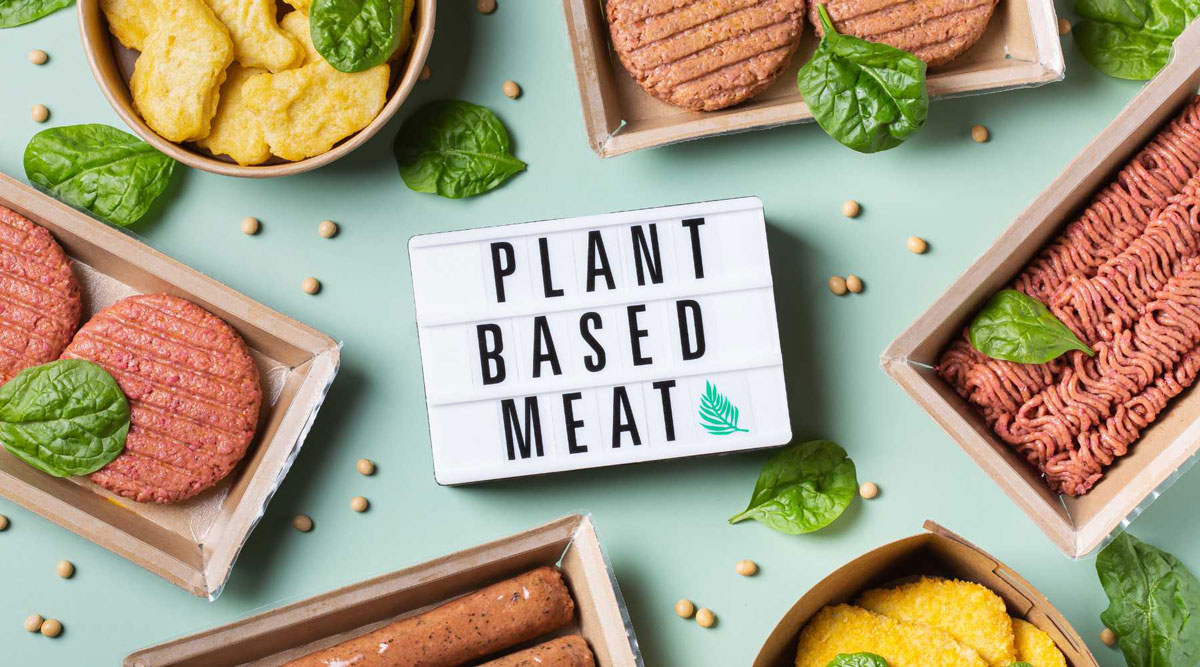
Forced vegetarianism?! What mistakes should you avoid when starting a plant-based diet
As a former vegetarian, I often worry about the carefree attitude of many vegans on the need to responsibly supplement essential nutrients that are missing from most vegan foods. When I do happen to speak to a vegan, my concerns are at best dismissed, saying they consume adequate amounts of protein and obtain extra vitamin B12 in other ways. However, most of the time vegans have no idea what I am talking about.
I am not the only one who is worried about the lack of (conditionally) essential nutrients: our colleagues at Power Supplements have created Vega Booster, a wonderful dietary supplement that specifically supplements the missing 'meat nutrients', including creatine, beta-alanine, taurine, carnitine and of course vitamin B12.
There are also other nutrients that will be deficient in a vegan diet, such as omega-3 fatty acids and a number of minerals like zinc and iron.
Unfortunately, Power Supplements also suffers from the same phenomenon, namely that vegans seem to be blind and deaf to the lack of important meat nutrients they suffer with this lifestyle.
Now you will think: what do I care, after all, I am not a vegan! Exactly, that does not apply to us either, but it could very well happen that all of us will be forced to give up a lifestyle with a large intake of animal proteins.
First of all, there is the combination of skyrocketing inflation and ever-increasing energy costs due to the stupid decision to stop using gas in the Netherlands and not to compensate for this energy shortage by immediately building multiple nuclear power stations. After all, no matter how nice the idea is to get energy from wind energy and solar panels, these are expensive, pollute the environment and horizon, are unfriendly to animals and produce so-called 'wobbly current'.
In addition, it is becoming increasingly difficult for farmers to practice their profession: legislation and regulations are becoming increasingly complicated, while they have to compete with cheaper eggs, chicken and meat from abroad, where legislation is more flexible or enforcement is not as strict. Dutch farmers in particular are having a hard time because the requirements imposed on them with regard to nitrogen deposition are absurdly strict compared to legislation in other countries.
A third phenomenon is that more and more companies and institutions are deciding to no longer offer animal protein to their employees, residents or visitors.
Apart from that, it has been warned for decades that meat in particular will become increasingly expensive because too much demand is being made on valuable groundwater and primeval forests are being cut down for soy cultivation.
In short, even if we do not want to change our meat-rich eating habits immediately, we will have to. In that case, it is useful to know how we can best embrace a low-meat diet.
Recent posts
- Daylight Saving Time: tips and tricks for a smooth adaptation
- Being a grandparent doesn't just bring joy but also rejuvenates your brain
- Wide awake at night but tired in the morning? How to cure insomnia!
- Fall prevention tips for elderly people
- How Heart Rate Variability can be an indicator of your well-being
- Biting insects, what causes them to be attracted to you and what can you do to repel them?
- How can athletes beat the heat with heat adaptation training?
- Health benefits of infrared light therapy
- How do you prevent a sunstroke or heatstroke?
- How to become super strong and muscular in a responsible way!
Author
Contents
Language for this blog

- Vestiging: Wageningen | Julianastraat 99 | 6707 DC | NL
- Telefoon: +31 (0)6 5107 9358
- Mail contact: orders@pasioonline.com
- Bestellingen worden gereed gemaakt voor verzending maandag t/m vrijdag tussen 9.00 en 16.00. Zaterdag tussen 10.00 en 14.00 uur. Bij verzending maken wij gebruik van PostNL en DPD. Afhalen alleen na afspraak en vooruitbetaald. Probiotica worden niet retour genomen.
© 1998 - 2026 Mungotedo LLP.