



Wind turbines and health: how unhealthy are they and how can you prevent a wind farm from being built in your neighborhood?
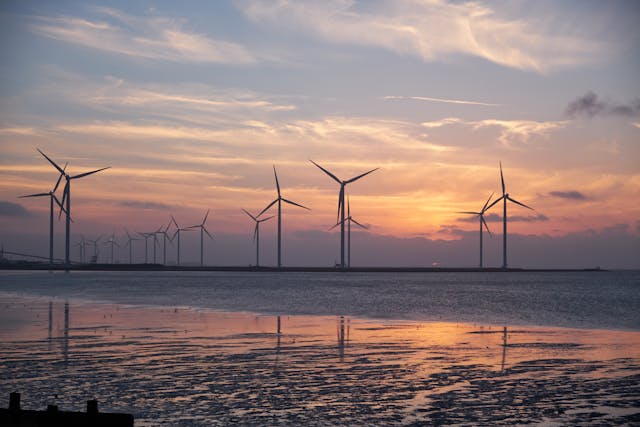
Wind turbines and health: how unhealthy are they and how can you prevent a wind farm from being built in your neighborhood?
A few days ago, it was in the news that Dr. Gommers, who became famous during the corona pandemic, sounded the alarm about the construction of wind turbines at a relatively short distance from his own home.
"Wind turbines make noise, cause vibrations, create shadow flicker and Bisphenol A (chemical substance) is released into the environment when the wind turbine blades wear out. Place wind turbines at least two kilometers away from residents".
Coincidentally, earlier this month I had also listened to a long interview by Jorn Luka with Bert Weteringen who wrote the book 'Windhandel'. [lit: Wind trade , but it is also used colloquially to describe 'crazy speculation']
Finally, Marianne Zwagerman came up with a video report about the presentation of an extensive report by Elze van Hamelen that she wrote on behalf of Clintel. In short, this theme is alive.
To my surprise, there is little to be found directly online apart from this audio information. Most official scientific information speaks disparagingly of 'annoyance' and even sneers at the 'nocebo effect' which amounts to 'it's all in the mind'.
It is best to order the (Dutch) report yourself in paper format or request a free pdf copy by leaving your email address on their registration page.
I am sharing with you the extensive summary of this report, which did not even address another worrying aspect of building wind turbines: the incredible amount of balsa wood that is cut down for this purpose, particularly in Ecuador, which threatens an entire ecosystem, including the indigenous population.
Summary The Windmill Drama
Residents throughout the country are confronted with wind farm plans near their homes. They feel overwhelmed by this. The plans appear to have a long history, which seems to be open to little opposition. Clintel asked investigative journalist Elze van Hamelen to map out what is going on around the construction of industrial wind turbines on land.
This is a complex dossier: there are administrative, legal, scientific and technical issues at stake, all of which are linked to each other in a political process in which a lobby has a dominant position. It is a challenge for the average citizen to get a grip on this.
Below is a brief summary of the most important findings from the report.
Policy and politics: citizens are systematically excluded from effective consultation
The plans for the large-scale roll-out of a weather-dependent energy supply have their origins in agreements that were made at a supranational level in 1992, with the adoption of the UN Climate Convention. The requirements set by this convention are translated into national legislation via the EU. The legislation is then elaborated at polder tables, for example into the Climate Agreement (2019) and the RES Regions (Regional Energy Strategy).
The decision-making for the UN Convention, the Climate Agreement and the RES does not take place via parliament. There is even no legal basis for the RES consultations. Ministries, energy companies, social organisations and local government are present at the polder tables; the average citizen is not aware of this and is excluded from effective consultation on policy that has far-reaching consequences for their living environment.
The law does not protect the citizen: a noise standard to enable the installation of wind turbines
The existing standards for industrial noise pollution are an obstacle to the ambitious plans for more wind on land. In order to enable the installation of industrial wind turbines, a separate standard for wind turbines was introduced in 2011 with the Activities Decree. Instead of measuring noise levels on site, operators are allowed to calculate an annual average noise load. The turbines are idle for part of the time, the rest of the time they are free to cause nuisance far beyond previously accepted standards. The Minister of Housing and Spatial Planning was aware that the new standard was not enforceable, feasible or verifiable, and that the standard did not protect citizens. This information was not shared with the House of Representatives.
Science: increasing evidence of serious health damage caused by industrial wind turbines
Since the beginning of the construction of wind turbines in the 1990s, local residents have been reporting complaints such as sleep problems, headaches, migraines, tinnitus, irritability and concentration problems. The pattern of complaints has come to be known by doctors and in common parlance as ‘wind turbine syndrome’. In addition to normal noise, wind turbines also cause low-frequency noise, which is noticeable but not audible to everyone. This low-frequency noise appears to be the cause of the health complaints.At the same time, the necessary large-scale field studies that demonstrate damage caused by wind turbines are being neglected. Nevertheless, scientific evidence of health damage caused by wind turbines has been accumulating in recent years: the turbines do indeed appear to cause sleep problems, with all the consequences that entails, and the low-frequency pressure waves can aggravate existing heart complaints. Children may be at risk of permanent learning and developmental delays.
A science monopoly of the RIVM keeps essential knowledge away from decision-makers and in legal cases
When making decisions, administrators, judges and politicians rely on the reports of the RIVM (Dutch National Institute for Public Health and the Environment). The RIVM does not conduct field studies itself, but produces literature studies that are not subject to peer review. In these studies, the RIVM appears to be very selective with existing science. Important studies are not included and conflicts of interest in the studies used are not reported transparently. As a result, decision-makers are not properly informed about the state of science and the risks to public health.Scientific knowledge about risks to birds, bats and insect populations, and chemical pollution of soil and groundwater is lacking
According to research by Wageningen University, wind turbines may have a greater impact on bird populations than previously expected. Research from Germany shows that wind turbines may have adverse effects on insect populations and thus on food supply. The turbine blades consist of toxic materials, including large quantities of bisphenol A and plastics. In all these areas, knowledge is lacking for a correct risk assessment.In the context of precaution, this should be mapped out before further large-scale roll-out of wind on land takes place.
Knowledge about safety risks of mega wind turbines is lacking
The wind turbines that are now being planned are no longer 75-100 metres high, like the old turbines, but have heights of up to 280 metres. This is almost as high as the Eiffel Tower. Last year, there were three incidents with blade breakage of such mega turbines at sea. There are indications that because of their size, the new mega turbines have considerably more quality problems than the smaller older models. Because they yield more, the larger models are chosen for land. The blade breaks spread thousands of pieces of glass fibre, bisphenol A-containing material and other chemicals over a large area. That soil is not suitable for grazing animals or growing food. There may also be health risks, because of homes near the wind turbines.Nuisance leads to lawsuits, but the administrative court protects the wind industry
The serious nuisance caused by wind turbines, which regularly makes headlines, leads to many lawsuits. For ten years, the rulings of the Council of State provided cover for the wind industry.
Rulings by the European Court lead to a breakthrough: when introducing new standards, the consequences for the environment and health should have been mapped out by means of an environmental impact assessment (EIA). This is evident from the provisions of the Strategic Environmental Assessment Directive (SEA Directive) from 2001. Because these studies were not carried out, the permits that were granted on the basis of the Activities Decree were issued unlawfully.
According to the Court, the unlawful situation must be remedied, but the Council of State is looking for various ways to maintain the annual average noise standards of the Activities Decree.
New wind turbine standards are being written by a consultancy firm that maintains close ties with the wind energy sector
A EIA study for determining new wind turbine standards should rectify the unlawful situation. The study is being outsourced by the Ministry of Infrastructure and Water Management to Arcadis. This is a consultancy firm that carries out many assignments for the wind industry. They then do not conduct any research, for example into the health risks and the consequences of low-frequency noise, but rely on literature studies by the RIVM, after which they then state that there is no reason to assume that wind turbines cause damage to health, and that further research is therefore not necessary.The new wind turbine standards are legally contestable
The EIA study forms the basis for the new wind turbine standards that will be announced in the autumn of 2024. Because the process of the EIA study has now been completed, but essential gaps in knowledge have not been filled by research, the requirements of the SMB Directive have still not been met. As a result, the new wind turbine standards, like the standards from the Activities Decree, do not comply with the law. The permits issued under these standards are therefore legally contestable, because they are unlawful.The feasibility of the energy transition with solar and wind energy is highly debatable
Careful governance requires prior knowledge of facts in order to be able to make a good assessment of interests in policy choices. Quantitative knowledge of facts is lacking in policy documents. The technical feasibility, financial costs, use of space and the consequences for the economy and prosperity of the energy transition are insufficiently quantified to be able to make informed choices. This knowledge must first be provided before the energy transition train continues to thunder.Toolkit for concerned citizens
Because citizens are systematically excluded from effective consultation and are not protected by law, taking action against wind farms is a major challenge. The best chances exist by entering into discussions with the municipality and province at a very early stage of policy formation, and actively monitoring all plans relating to the living environment. In some cases, wind farm plans are postponed or cancelled. It has not (yet) happened that permits for existing wind farms have been withdrawn. Successful residents groups inform their fellow citizens and surrounding businesses, where governments and operators fail to do so. In this report we offer a toolkit for citizens who are concerned about existing and new wind turbines and want to take action against them.Will wind energy become a new 'benefits scandal'?
[The 'benefits scandal' refers to the Dutch childcare benefits scandal , see https://en.wikipedia.org/wiki/Dutch_childcare_benefits_scandal in which thousands of families were driven into financial hardship. ]The problems surrounding the rollout of onshore wind threaten to escalate into a drama like the benefits scandal. The number of people who experience serious inconvenience from wind turbines – serious meaning that they cannot live their normal lives due to lack of sleep and health complaints – has increased from 1,500 people in 2009 to an estimated 28,000 in 2019. With the proposed expansion of mega wind turbines on land, which will be located closer to residential areas than before due to a lack of space, these numbers will increase sharply. The government assumes that 8-9% of people will be seriously affected around wind turbine parks. There are two miscalculations here.
Firstly: relatively small turbines have so far been located in somewhat sparsely populated areas. The new mega turbines will be placed next to densely populated neighbourhoods and villages. The number of people with complaints will therefore increase enormously. We are talking about parents who have to report sick for a long time due to sleep problems, or even become disabled, and about children with learning disabilities, and possibly permanent damage to their (brain) development. Secondly: the real percentages for serious nuisance are closer to 30% than to 8-9%.
The citizens concerned do not feel heard, run into walls at every government counter and are not protected by the law.
Call for a moratorium
Given the above, the Clintel foundation calls for a pause. We ask for reflection on the policy pursued, the collection of necessary information for making informed policy decisions, and a broad public debate. That is why we advocate a moratorium on the further roll-out of onshore wind until this knowledge has been gathered, and a debate has been held on the costs, benefits and consequences of the long-term energy transition.Recent posts
- A case of overreach and hubris: dare to face reality
- We are moving to a new store!
- Living with less stress by adopting a slow-living lifestyle
- Christmas and New Year's Greetings
- How to separate chaff from the wheat: can we trust mainstream media and bought scientists?
- About the emotional bond with your pet, a memoriam for Birgit
- Wind turbines and health: how unhealthy are they and how can you prevent a wind farm from being built in your neighborhood?
- Freedom of speech: 20 years after the assassination of Theo van Gogh, censorship is worse than ever.
- Normalcy, or how not to worry too much about the measles
- The WHO and its Pandemic Treaty: how will it affect our freedom?
Author
Contents
Language for this blog

- Vestiging: Wageningen | Julianastraat 99 | 6707 DC | NL
- Telefoon: +31 (0)6 5107 9358
- Mail contact: orders@pasioonline.com
- Bestellingen worden gereed gemaakt voor verzending maandag t/m vrijdag tussen 9.00 en 16.00. Zaterdag tussen 10.00 en 14.00 uur. Bij verzending maken wij gebruik van PostNL en DPD. Afhalen alleen na afspraak en vooruitbetaald. Probiotica worden niet retour genomen.