
- Office: Wageningen | Julianastraat 99 | 6707 DC | NL
- Phone: +31 (0)6 5107 9358
- Business hours: Mon-Sun 09.00 - 16.30
- Mail contact: orders@pasioonline.com
- All orders ship Monday through Friday from 9am-16pm. Saturday 10am-14pm. We ship via PostNL and or DPD. Pick-up orders only pre-paid. Probiotics are subject to a no-return policy.



Mon-Fr 9a.m.-6p.m.
Why do we celebrate carnival? Spiritual and practical reasons to celebrate carnival and practice Lent.
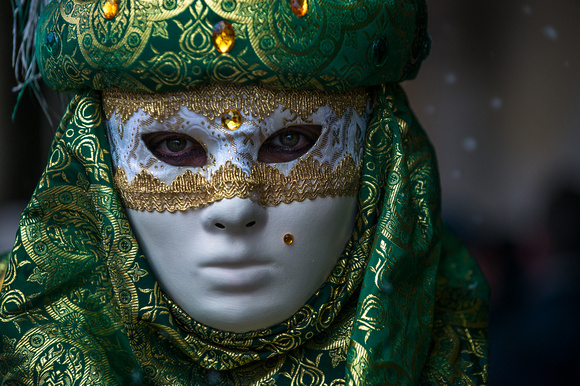
Why do we celebrate carnival?
Spiritual and practical reasons to celebrate carnival and practice Lent
Now we are in the midst of Carnival, it made sense to me as a true Southerner to explain the phenomenon to those who don't have an idea where it is all about.Canival is celebrated in the period preceding Lent, mostly starting on Saturday and finishing on Shrove Tuesday, which is also known as Fat Tuesday or Mardi Gras, because it is the last day on which you can still indulge in fattening foods and alcohol.
The highlight of the carnival is the Sunday parade, for which floats are towed through the streets on which people are all dressed up, oftentimes wearing very intricate costumes. In my home region of Noord-Brabant, a lot of floats would mock local as well as national political issues.
From the anthropological point of view, carnival is a reversal ritual, in which social roles are reversed and norms about desired behavior are suspended. By wearing masks and costumes, it is much easier to make sure this happens and people also experience a heightened sense of social unity.
For those that are most actively involved in carnival, the actual season starts on November 11, the date when the council of Eleven (Elferrat) is chosen. That day is chosen not so much because it is the 'fools number' day, but because November 11 is 40 days before December 21 or midwinter.
While almost everyone knows what Carnival involves, very few actually know what Lent is. If you are among them, you are not the only one.
Lent is the short form of an old English and current Dutch word for spring and is probably also related to the word 'lengthening' (of days in spring).
For Christians, and specifically Catholics, Lent is the practice of fasting observed in the period before Easter.
Fasting is a loosely interpreted term here as it mostly doesn't involve complete abstinence from food, but instead of giving up indulgences for the period of Lent. Some give up on everything considered 'sinful' and others promise to give up one specific vice for Lent, such as alcohol, tobacco, candy, junkfood, sex or more recently also abstinence from social media like Facebook, Twitter or Instagram.
It is these habits that are increasingly also adopted by non-religious people, oftentimes also synchronized with friends who fast for religious reasons.
How long is Lent, and when does it start?
Lent technically lasts for 40 days, which gets lengthened to a bit over 6 weeks due to the fact that most Sundays are excluded from the fast as Sundays are seen as feast days. At least that's how it is done among Catholics. For Eastern Orthodox religion, the Sundays are included.
The period of 40 days mirrors the story of how Jesus spent 40 days of fasting and praying in the desert.
Fasting for 40 days wasn't something only Jesus did in the bible, there were others too: Moses, Elijah and the Hebrew people all spent 40 days without (much) food.
To know when Lent starts, you need to know the date of Easter. This sounds more tricky than it is, because if you have a lunar calendar, it is actually quite easy to determine. Easter starts on the 1st Sunday after the 1st Full Moon after March 21, resulting in an Easter that is never celebrated before March 22 nor after April 25.
Once you know that date, simply count back 46 days to Ash Wednesday , the start of Lent.
In contrast to Christmas for which the period of Advent is a period of joyful anticipation, Lent is a period in which people recognize their own mortality and acknowledge the sinfulness that marks earthly life.
Ash Wedneday is a day in which people are reminded of their own mortality and the start of a season in which people deny themselves the comfort of (fast) food or some other thing they cherish.
Some people who observe Lent don’t fast at all, electing instead to add a spiritual practice during the 40 days, such as regular church attendance, prayer, alms giving to poor people or donating money to charity or performing community service.
The most notable and well-known practice is abstinence from meat on Fridays, sometimes in addition to giving up something else for Lent. Some Catholics fast from meat every Friday throughout the year, in a mini-observance of Jesus’s death every week.
While less strict Catholics may only fast from meat on Fridays during Lent, every Christian is encouraged to skip meat on Good Friday. Fish is permitted, which has to do with the biblical story of how sea creatures and birds were created on the Fifth Day and land animals and humans on the Sixth Day.
Orthodox Christianity is far more strict about the fast. During Lent Orthodox Christians abstain during week days from meat, fish, eggs, dairy products, olive oil, and alcohol
Interestingly, Lenten practices are why we have Easter eggs — the faithful would abstain from eggs and dairy during Lent, but in the days before refrigeration, the dairy then would spoil.
Eggs, however, keep fresh much longer and would still be good when it was time to break the fast.
Once chocolate became affordable for the masses, people also chose to abstain from chocolate during Lent. Shortly thereafter, chocolate eggs also became part of the Easter tradition.
Do you have to be Christian to fast during Lent?
No. But your purpose for fasting will probably differ, depending on your motivation to join the fast.
Christianity is hardly the only religion in which fasting is part of the yearly observance. Muslims observe a month of sunrise-to-sunset fasting during Ramadan, and Jewish observers may also mark high holidays with fasts, particularly Yom Kippur. Fasting is a big part of Hinduism, Buddhism, and many other religious traditions.
When it comes to this specific period of Lent, just as how Christmas is a replacement of the pre-Christian midwinter celebration,both Carnival and Lent also predates Christianity.
Around the period of Carnival, meat which was preserved from the traditional period of slaughter in November, started to spoil. Thus it was better to eat the meat before it started to spoil and have a party to celebrate the return of the sun right in between midwinter (December 21) and spring (March 21).
This turning point right in between seasons is used in many cultures to celebrate. Winter spirits needed to be driven out in order for the summer to return. Carnival can thus be regarded as a rite of passage from darkness to light, from winter to summer: a fertility celebration, the first spring festival of the new year. Among Germanic tribes, the fertility goddess Nerthus was worshipped by hauling an image around on a ship with wheels and accompanied by a procession of people in animal disguise and men in women's clothes. Indeed, very much like a float in contemporary Carnival.
Why fasting?
For most religious people it’s about the whole human experience, which includes the body. Fasting reconnects the body to the emotions, mind, and soul, often by interrupting our autopilot mode and recognizing the ways we self-medicate that might be destructive to our souls.
That’s probably why even some nonreligious people have picked up on Lent as a way to reclaim the best part of religious traditions.
This sentiment is echoed by everyone from atheists to lifestyle bloggers, who find the observance of Lent — without the religious aspects — helpful for developing self-control and hitting the reset button, in a manner similar to the observance of New Year’s resolutions.
That it falls so close to the New Year is part of the appeal: It’s a convenient time to pick up those broken resolutions again.
Even when you don't feel like fasting in order to reconnect spiritually, there are still other reasons to practice fasting. If only because it may be a way to get rid of the extra weight that we accumulated during the winter season.
To be continued ....
Recent posts
- A case of overreach and hubris: dare to face reality
- We are moving to a new store!
- Living with less stress by adopting a slow-living lifestyle
- Christmas and New Year's Greetings
- How to separate chaff from the wheat: can we trust mainstream media and bought scientists?
- About the emotional bond with your pet, a memoriam for Birgit
- Wind turbines and health: how unhealthy are they and how can you prevent a wind farm from being built in your neighborhood?
- Freedom of speech: 20 years after the assassination of Theo van Gogh, censorship is worse than ever.
- Normalcy, or how not to worry too much about the measles
- The WHO and its Pandemic Treaty: how will it affect our freedom?
Author
Contents
Language for this blog

- Vestiging: Wageningen | Julianastraat 99 | 6707 DC | NL
- Telefoon: +31 (0)6 5107 9358
- Mail contact: orders@pasioonline.com
- Bestellingen worden gereed gemaakt voor verzending maandag t/m vrijdag tussen 9.00 en 16.00. Zaterdag tussen 10.00 en 14.00 uur. Bij verzending maken wij gebruik van PostNL en DPD. Afhalen alleen na afspraak en vooruitbetaald. Probiotica worden niet retour genomen.
© 1998 - 2026 Mungotedo LLP.