

Why are bees so important? Why are they disappearing? What is propolis?
Why are bees so important? Why are they disappearing? What is propolis?
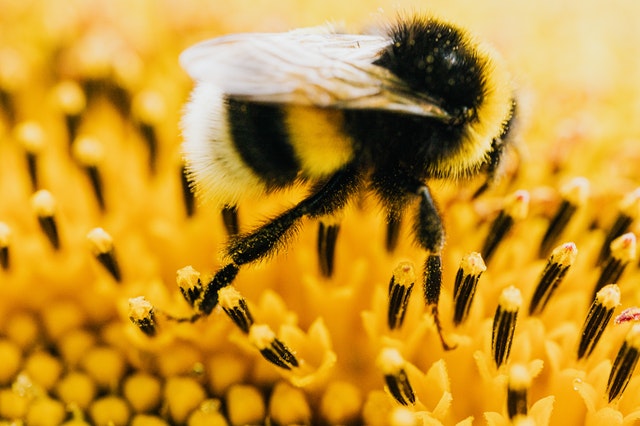
As most of us will know, many flowering plants need to be pollinated by insects of which the best known pollinator is the humble (bumble) bee.
The other day I was reminded of how crucial these bees are when I heard on a podcast how they are trying to cultivate vanilla orchids in the Netherlands and subsequently harvest vanilla beans.
The researcher told the journalist how cultivating the orchid is not the most complicated part, but in order to make them grow vanilla beans, each flower needs to be pollinated by humans.
As if this isn't difficult enough, the task is made even more complicated because this orchid, just like many other orchids only bloom for a very short period of 6 hours on a single day each year! Knowing this, it is no longer a miracle why real natural vanilla is so expensive.
Vanilla orchids
In case you wondered, the vanilla orchid originates from Mexico, where just one single very special bee species called the Melipona bee, is capable to pollinate this native flower.
Because of a specific tissue in the flower that actually covers the stem, the flower is unable to self-pollinate. To make it even more complicated, the pollen on a vanilla orchid is incredibly tough to access. As such, your everyday honeybee cannot reach the pollen.
Because vanilla orchids are now grown in many locations across the globe (mostly in sub-tropical and warm tropical climates), it became necessary to introduce manual pollination. Without human intervention, the vanilla orchids may have faded away and become extinct.
Manual pollination process is extremely labor-intensive, and because the Melipona Bee is only found in Mexico, for every other country that grows vanilla, manual pollination is required.
Manual pollination was invented in the mid-1800s by Edmond Albuis on the remote island of Réunion at the young age of just 12 years. To date most still use this very specific method using a tooth pick (videos can be found on YT).
Causes of honey bee population decline
It is almost unimaginable how many crops rely on bees and other insects to be pollinated.
Imagine how shocking it is to find out how in the past two years 45% of all beehive keepers'colonies in the USA suddenly disappeared.
Most recent evidence points to a combination of factors as the culprit including, parasites and pests, pathogens, poor nutrition, and sublethal exposure to pesticides.
Parasites
Parasites, and the diseases they carry, are the main threat to the lives of honey bees. The most dangerous parasite threatening beehives currently is a mite with a descriptive name: Varroa destructor.
Commonly known as Varroa mites, these parasites often infect bees before they can even emerge as adults. Their parasitic relationship with the bees is similar to that of ticks and mammals; the main issue lies in the diseases the mites carry, such as 'Deformed Wing Virus'. When a hive is already weakened, a Varroa mite infestation can wipe it out.
Other parasites involved in collapsing hives include the small hive beetle, Aethina tumida; and Nosema spp., a microsporidian gut parasite.
Diseases
Weakened immune systems leave hives susceptible to bacterial and viral diseases as well. Two of the most well known diseases to infect bees are American Foulbrood and Deformed Wing Virus.
American Foulbrood affects larvae less than a day old, preventing them from surviving until adulthood, while Deformed Wing Virus is transmitted through Varroa mites and prevents the bees from being able to fly.
Poor nutrition
Some human farming practices are making it more challenging for the bees to forage a well-balanced diet, such as monoculture farming. This is when only one crop is grown on a piece of land, and it limits the bees’ diet to one type of pollen for extended periods of time.
Think of it as if a human was limited to eating only strawberries for three months— not very healthy! These malnourished bees are more susceptible to chemical pesticides, parasites, and pathogens, as their immune systems aren't as strong.
Pesticides
Pesticides are also a contributing factor to honey bee decline.
The most studied chemical culprit is a class of pesticides called 'neonicotinoids'. These are systemic pesticides, meaning the plant takes them into its vascular system, and spreads it to all tissues resulting in less runoff.
These pesticides are effective after only one application, and affect only invertebrates and less dangerous to humans, birds, livestock, etc. They're very popular.
In theory, the pesticide shouldn't affect bees, who are eating the pollen and nectar, not the plant's tissue.
However, trace amounts are also found in pollen grains. Bees bring pollen back to their hives for food - one pollen grain with trace chemicals wouldn't be an issue, but they accumulate to critical levels within the beeswax.
Pesticides also interfere with bee communication, which is almost entirely reliant on chemical and physical signals.
They may alter the bees' foraging behavior, communication, and larval development.
Pesticides lower the bees' immune systems, weakening the hive and leaving it wide open to parasitic infection.
Would we starve without bees?
Only 10%-15% of all human food sources are pollinated by honey bees. So we would not starve but we may get tired of eating the same type of foods.
Most major crops such as corn, wheat, rice and soybeans are wind pollinated. Light weight pollen blows through the air to other blossoms. They do not need insects to aid in pollination.
Farmers that grow almonds, apples, apricots, black berries, cherries, peaches, plums, raspberries, strawberries and more rely on honey bee pollination for which they usually call in the help of professional beehive keepers.
What is bee propolis?
While most people will be familiar with bee products such as honey and bees wax, there is another less well known and very interesting product, called propolis.
Propolis is a resinous substance that bees produce from materials collect from tree buds. Rich in flavonoids, a class of antioxidants, propolis has a long history of use as a natural treatment for a host of health problems.
Research shows propolis has many healing properties, including antimicrobial, anti-fungal, anti-viral, anti-inflammatory, and anti-tumor qualities.
Found in small quantities in honey, propolis is widely available in supplement form. Propolis is also used as an ingredient in certain medicinal products applied directly to the skin, such as ointments and creams. In addition, propolis is sometimes found in nasal sprays and throat sprays, as well as in mouthwash and toothpaste.
Propolis is touted as a natural treatment for the following health problems and conditions:
- acne
- bacterial infections
- burns
- canker sores
- colds
- cold sores
- diabetes
- giardiasis
- herpes
- inflammation
- influenza
- peptic ulcer disease
In addition, propolis is said to stimulate the immune system and prevent tooth decay.
Health benefits of bee propolis
Although few clinical trials have tested the health effects of propolis, there's some evidence that propolis may offer certain benefits.
Cold sore treatment
Topically applying propolis may help heal cold sores. Extracts of propolis possess virus-fighting effects that may help knock out against herpes simplex virus type 1, the virus that causes cold sores.
Genital herpes treatment
Applying a propolis-based ointment may help treat sores related to genital herpes.
In an experiment with participants treated with either a propolis ointment or acyclovir, the outcome was better for propolis, leading to the conclusion how a propolis ointment is more effective in healing sores related to genital herpes.
Burn treatment
In another study, a propolis-based skin cream promoted the healing of minor burns just as well as the more commonly used medicinal cream with silver sulfadiazine.
What's more, propolis appeared to offer greater anti-inflammatory benefits than silver sulfadiazine did.
Gastrointestinal disorders
Research suggests propolis can help treat gastrointestinal disorders, including ulcerative colitis, gastrointestinal cancers, and ulcers. Components in propolis, including caffeic acid phenethyl ester (CAPE), artepillin C, kaempferol, and galangin, have been shown to effectively eliminate pathogens, including H. pylori.
The research, however, is limited to animal studies and cell cultures.
Cavity control
Propolis may help fight cavities. In laboratory research, scientists found that compounds found in propolis helped inhibit the growth of Streptococcus mutans, an oral bacteria known to contribute to the development of cavities.
The study suggests that propolis may also help stop Streptococcus mutans from sticking to the teeth.
Diabetes management
Findings from animal-based research indicate that propolis may aid in the treatment of diabetes. Treatment of diabetic rats with propolis helped lower blood sugar levels and reduce cholesterol. Sadly, these results have not yet been replicated in human studies.
Possible side effects
Do not use propolis if you have asthma or are allergic to bee by-products (including honey), conifers, poplars, Peru balsam, and salicylates.
Propolis may slow blood clotting and increase the risk of bleeding in people with bleeding disorders or during surgery.
Comparison to beeswax and honey?
Bees make propolis from beeswax, saliva, and plant materials gathered. In the hive, propolis is used as a glue to close up small gaps, while beeswax is used to fill larger holes. While propolis is made from beeswax, they are not the same.
A small amount of propolis may be found in certain kinds of honey. Since heat can destroy the healing qualities of propolis, stick to raw honey which is unfiltered and unpasteurized.
Recent posts
- Essential nutrients for optimal thyroid function
- Importance of iodine for thyroid and general health
- Two important supplements to combat diabetes: Alpha Lipoic Acid and vitamin D
- Role of vitamin K: what's the difference between the various forms?
- Why everyone over 40 should use co-enzyme Q10 or ubiquinol
- Citrus bergamot, a powerful antioxidant which reduces inflammation and improves blood sugar levels
- Microdosing HHC : what is it, and why is it popular?
- Why is vitamin B5 important for our health? The versatile functions of pantothenic acid or pantethine in our body
- Why you need to think about supplementing vitamin D3 with vitamin K2
- The dangers of paracetamol overdose ; what are safe natural alternatives?
Author
Contents
Language for this blog

- Vestiging: Wageningen | Julianastraat 99 | 6707 DC | NL
- Telefoon: +31 (0)6 5107 9358
- Mail contact: orders@pasioonline.com
- Bestellingen worden gereed gemaakt voor verzending maandag t/m vrijdag tussen 9.00 en 16.00. Zaterdag tussen 10.00 en 14.00 uur. Bij verzending maken wij gebruik van PostNL en DPD. Afhalen alleen na afspraak en vooruitbetaald. Probiotica worden niet retour genomen.