



There's a connection between tumors and viruses. Is there also a connection between tumors and vaccines?
There's a connection between tumors and viruses. Is there also a connection between tumors and vaccines?
During the COVID-pandemic quite a few of us, have turned to alternative news sources for medical information. For me, there were 4 main medical sources where I turned to most: dr John Campbell, drBeen as well as the good doctors from FLCCC and to a lesser extent , dr Seheult from MedCram.
Among those 4 sources, John Campbell masters the art of conveying information in ways that are understandable for the general public.
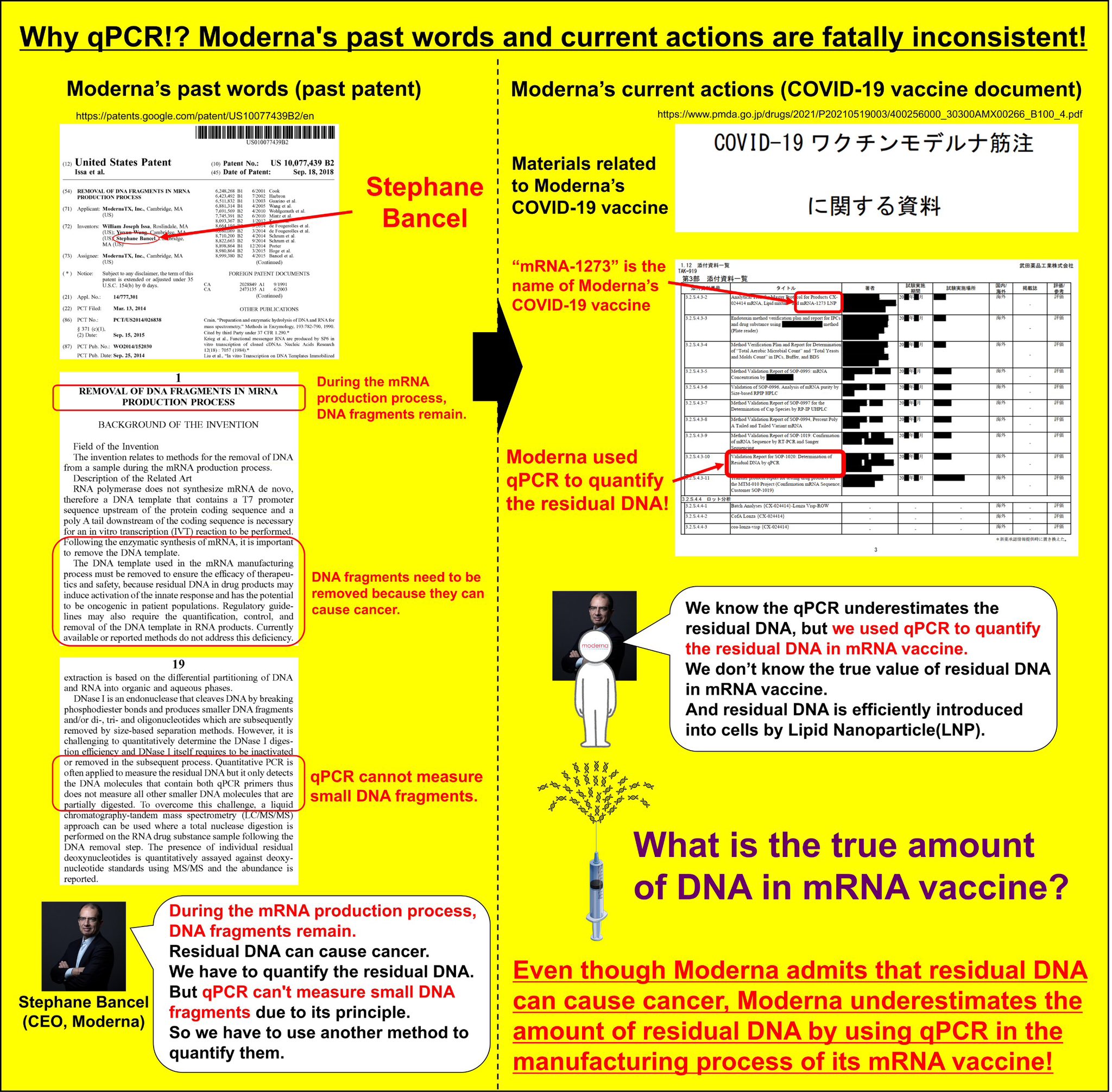
For those who have followed the news regarding the vaccination program closely , it has become apparent, most batches have been polluted by DNA fragments. As you probably know, DNA is inside each of our cells inside mitochondria, where the information comes from to create proteins.
Since DNA is inside each and every cell, we ingest lots of it daily without causing any harm. However, it is an entirely different matter when those DNA fragments are brought inside a lipid envelope which contains a mRNA-vaccin.
Apparently these DNA-fragments can become oncogenic and induce tumours.
The best way for you to find out, is to listen to the conversation between dr John Campbell and professor Dalgleish in one of their latest discussions titled "Chronic Inflammation and cancer" (or go to Rumble in case the video disappears)
A major part of their discussion which lasted well over an hour is an explanation of the relationship between cancer and viruses, which was extremely interesting to listen to especially since they talk about boosting T-cell response with bacteria which can both ward of viral infections as well as prevent tumor growth. A method dr. Dalgleish developed himself.
A few months ago dr. Dalgleish also informed us about the relationship between covid-vaccines and cancer : "Cancer after vaccines"
Since at the moment there still no official articles which appeared in mainstream media or scientific journals discussing remission of tumours, which apparently is mostly seen for melanoma tumors, I decided to focus on the general topic of the relationship between cancer and viruses.
Armed with this information, it will be easier for you to understand the information given to you in the highly recommended episodes.
Viruses that can lead to cancer
Viruses are very small organisms; most can’t even be seen with an ordinary microscope. They are made up of a small number of genes in the form of DNA or RNA surrounded by a protein coating. A virus must enter a living cell and take over the cell’s machinery in order to reproduce and make more viruses. Some viruses do this by inserting their own DNA (or RNA) into that of the host cell. When the DNA or RNA affects the host cell’s genes, it can push the cell toward becoming cancer.
In general, each type of virus tends to infect only a certain type of cell in the body. (For example, the viruses that cause the common cold only infect the cells lining the nose and throat.)
Several viruses are linked with cancer in humans. Our growing knowledge of the role of viruses as a cause of cancer has led to the development of vaccines to help prevent certain human cancers. But these vaccines can only protect against infections if they are given before the person is exposed to the cancer-promoting virus.
Human papillomaviruses (HPVs)
Human papillomaviruses (HPVs) are a group of more than 150 related viruses. They are called papillomaviruses because some of them cause papillomas, which are more commonly known as warts. Some types of HPV only grow in skin, while others grow in mucous membranes such as the mouth, throat, or vagina.
All types of HPV are spread by contact (touch). More than 40 types of HPV can be passed on through sexual contact. Most sexually active people are infected with one or more of these HPV types at some point in their lives. At least a dozen of these HPV types are known to cause cancer.
While HPV infections are very common, cancer caused by HPV is not. Most people infected with HPV will not develop a cancer related to the infection. However, some people with long-lasting infections of high-risk HPV types are at risk of developing cancer.
HPV infections of the mucous membranes can cause genital warts, but they usually have no symptoms. There are no effective medicines or other treatments for HPV, other than removing or destroying cells that are known to be infected. But in most people, the body’s immune system controls the HPV infection or gets rid of it over time.
HPV and cervical cancer
A few types of HPV are the main causes of cervical cancer, which is the second most common cancer among women worldwide. Cervical cancer has become much less common because the Pap test has been widely available for many years. This test can show pre-cancer in cells of the cervix that might be caused by HPV infection. These pre-cancer cells can then be destroyed or removed, if needed. This can keep cancer from developing.
Doctors can now also test for HPV as part of cervical cancer screening, which can tell them if someone might be at higher risk for cervical cancer. Nearly all individuals with cervical cancer show signs of HPV infection on lab tests. Even though doctors can test for HPV, there is no treatment directed at HPV itself. If the HPV causes abnormal cells to start growing, these cells can be removed or destroyed.
HPV and other cancers
HPV also has a role in causing some cancers of the penis, anus, vagina, vulva, and mouth and throat.
Smoking, which is also linked with some of these cancers, may work with HPV to increase cancer risk. Other genital infections may also increase the risk that HPV will cause cancer.
Vaccines against HPV
Vaccines are now available to help protect children and young adults against infection from the main cancer-causing HPV types. HPV vaccination can help prevent more than 90% of HPV cancers. These vaccines are approved for use in females and males and are given as a series of injections (shots).
The vaccines can only be used to help prevent HPV infection – they do not stop or help treat an existing infection. To be most effective, the vaccine series should be given before a person becomes sexually active (has sex with another person).
Recommendations for HPV vaccination
HPV vaccination works best when given to boys and girls between ages 9 and 12.
Children and young adults age 13 through 26 who have not been vaccinated, or who haven’t gotten all their doses, should get the vaccine as soon as possible. Vaccination of young adults will not prevent as many cancers as vaccination of children and teens.
HPV vaccination is not recommended for persons older than 26 years.
Epstein-Barr virus (EBV)
EBV is a type of herpes virus. It is probably best known for causing infectious mononucleosis, often called “mono” or the “kissing disease.” In addition to kissing, EBV can be passed from person to person by coughing, sneezing, or by sharing drinking or eating utensils. Most of us are infected with EBV by the end of our teen years, although not everyone develops the symptoms of mono.
As with other herpes virus infections, EBV infection is life-long, even though most people have no symptoms after the first few weeks. EBV infects and stays in certain white blood cells in the body called B lymphocytes (also called B cells). There are no medicines or other treatments to get rid of EBV, nor are there vaccines to help prevent it, but EBV infection doesn’t cause serious problems in most people.
EBV infection increases a person’s risk of getting nasopharyngeal cancer (cancer of the area in the back of the nose) and certain types of fast-growing lymphomas such as Burkitt lymphoma. It may also be linked to Hodgkin lymphoma and some cases of stomach cancer. EBV-related cancers are more common in Africa and parts of Southeast Asia. Overall, very few people who have been infected with EBV will ever develop these cancers.
Hepatitis B virus (HBV) and hepatitis C virus (HCV)
Both HBV and HCV cause viral hepatitis, a type of liver infection. Other viruses can also cause hepatitis (hepatitis A virus, for example), but only HBV and HCV can cause the long-term (chronic) infections that increase a person’s chance of liver cancer. In the USA, less than half of liver cancers are linked to HBV or HCV infection. But this number is much higher in some other countries, where both viral hepatitis and liver cancer are much more common. Some research also suggests that long-term HCV infection might be linked with some other cancers, such as non-Hodgkin lymphoma.
HBV and HCV are spread from person to person in much the same way as HIV — through sharing needles (such as during injection drug use), unprotected sex, or childbirth. They can also be passed on through blood transfusions, but this is rare because donated blood is tested for these viruses.
Of the 2 viruses, infection with HBV is more likely to cause symptoms, such as a flu-like illness and jaundice (yellowing of the eyes and skin). Most adults recover completely from HBV infection within a few months. Only a very small portion of adults go on to have chronic HBV infections, but this risk is higher in young children. People with chronic HBV infections have a higher risk for liver cancer.
HCV is less likely to cause symptoms than HBV, but it is more likely to cause chronic infection, which can lead to liver damage or even cancer since most of the people who have chronic HCV infections don’t even know they have it.
To help find some of these unknown chronic HBV and HCV infections, it is recommended that all people 18 years of age or older get tested for HBV and HCV at least once during their lifetime, and that some groups of people get tested at a younger age and/or more often.
If an infection is found, treatment and preventive measures can be used to slow liver damage and reduce cancer risk.
Both hepatitis B and C infections can be treated with drugs. Although they don’t cure the disease, they can lower the risk of liver damage and might lower the risk of liver cancer as well.
There is a vaccine to prevent HBV infection, but none for HCV. The HBV vaccin is recommended for all children and adults up to age 59, as well as those who are older and at risk of HBV exposure. This includes people infected with HIV, men who have sex with men, injection drug users, people in certain group homes, people with certain medical conditions and occupations such as health care workers.
Human immunodeficiency virus (HIV)
HIV, the virus that causes acquired immune deficiency syndrome (AIDS), doesn’t appear to cause cancers directly. But HIV infection increases a person’s risk of getting several types of cancer, especially some linked to other viruses.
HIV infects and destroys white blood cells known as helper T-cells, which weakens the body’s immune system. This might let some other viruses, such as HPV, thrive, which might lead to cancer.
Many scientists believe that the immune system is also important in attacking and destroying newly formed cancer cells. A weak immune system might let new cancer cells survive long enough to grow into a serious, life-threatening tumor.
HIV infection has been linked to a higher risk of developing Kaposi sarcoma and cervical cancer. It’s also linked to certain kinds of non-Hodgkin lymphoma, especially central nervous system lymphoma.
Other types of cancer that may be more likely to develop in people with HIV infection include anal cancer, Hodgkin disease, lung cancer, cancers of the mouth and throat, some types of skin cancer, liver cancer. Some other, less common types of cancer may also be more likely to develop in people with HIV.
There is no vaccine to prevent HIV. But there are ways to lower your risk of getting it, such as not having unprotected sex or sharing needles with someone who has HIV. For people who are at high risk of HIV infection, such as injection drug users and people whose partners have HIV, taking medicine is another way to help lower your risk of infection.
For people already infected with HIV, taking anti-HIV drugs can help slow the damage to the immune system, which may help reduce the risk of getting some of the cancers above.
Other viruses
There are more viruses which can cause cancer, but those are much rarer.
A short summary should suffice:
- human herpes virus 8 (HHV-8) causing Kaposi sarcoma.
- human T-lymphotrophic virus-1 (HTLV-1) causing lymphocytic leukemia and non-Hodgkin lymphoma called adult T-cell leukemia/lymphoma (ATL)
- Merkel cell polyomavirus (MCV) causing Merkell cell carcinoma
- Simian Virus 40 (SV40) (possibly as the relationship has only been proven in lab animals) causing mesothelioma (a rare cancer of the lining of the lungs or abdomen), as well as some brain tumors, bone cancers, and lymphomas.
Final remarks
Sofar the only official relationship between tumors and vaccines is a positive one.
While it is very promising to see how ever more vaccines are developed to prevent cancer, I'd be extremely wary of any vaccine which is going to be developed using the mRNA technique, given how contamination with DNA fragments are oncogenic by themselves. Fortunately those mRNA vaccines are still non-existent, but they are rapidly being developed when we don't halt the process.
There are other ways to prevent cancer. Adopting a healthy lifestyle (diet, movement, stress avoidance) will not prevent everything, but goes a long way. It would also be lovely when more money would go towards research of methods used by dr Dalgleish which are not used as it is too cheap!
Recent posts
- Better fit and fat than lazy and thin? Fit at every size, yet 'fat but healthy’ is a myth!
- Gut health and sleep: can your microbiome keep you up at night?
- Is chewing gum bad for your health? Chewing gum exposes us to microplastics and may ruin dental health
- Radiation from wearable devices, is it a reason for concern?
- Diabetes and heart disease , how they are related and what can you do about it?
- Acute versus chronic pain: what's the difference and how to get rid of it or learn to cope with it?
- How common are spinal or foot abnormalities?
- Why are fertility rates declining around the world?
- What virus have I been affected by? What is the best way to deal with a viral infection?
- On anosmia, the loss of your sense of smell and how to regain the sense of smell naturally
Author
Contents
Language for this blog

- Vestiging: Wageningen | Julianastraat 99 | 6707 DC | NL
- Telefoon: +31 (0)6 5107 9358
- Mail contact: orders@pasioonline.com
- Bestellingen worden gereed gemaakt voor verzending maandag t/m vrijdag tussen 9.00 en 16.00. Zaterdag tussen 10.00 en 14.00 uur. Bij verzending maken wij gebruik van PostNL en DPD. Afhalen alleen na afspraak en vooruitbetaald. Probiotica worden niet retour genomen.