

Reduce, reuse , recycle, waste no more
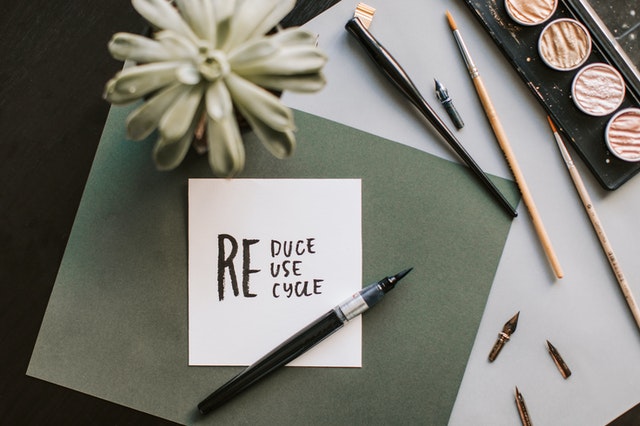
Reduce, reuse , recycle, waste no more
Behemoth companies lead to massive amounts of waste
In the past week we were alerted to shocking news on how much is wasted in British distribution centers of Amazone. Items in perfect condition are thrown away because they simply do not sell within a set time limit.
Likewise the vast majority of returned goods are thrown away because it is deemed to be more efficient than to resell or even gift away.
We fear the same is going on in most other distribution centers around the world from this behemoth company as well as in our national equivalent, BOL.
In a short movie gone viral it is portrayed how the future might look like when platform economies take over. It was made to make people stop and think about where and how to spend their hard earned money and if possible, to buy local or from smaller entrepeneurs.
The movie has since then been removed from YouTube but some other websites have saved the video, such as in this one by Martin Jonadolfsson.
A short time later, another video a Dutch stand-up comedian Arjen Lubach went viral as well, criticizing platform economies.
Shop with small businesses
If anything positive has resulted from the past lockdown it is the growing tendency of people to shop at small businesses more often. At least, this is what happened for fresh foods from the greengrocer, bakery and butchershop.Small business owners do things differently. They know their customer by name and customers are not forced to do impulse purchases, but are given honest advice which leads to less returns and as a result, less waste.
Here at Pasío we don't stop at trying to reduce the amount of waste by what and how we sell products, but also by trying to limit the use of plastic in our packaging. A few years ago , we started to use paper to fill up lighter parcels.
Since we still receive air cushions from the manufacturer of most supplements we buy, those are being recycled for larger parcels or very vulnerable products in order to protect the content.
Products that fall out of grace are being sold at a great price before they officially expire or gifted away to returning customers as a 'thank you' for their purchases. In our own webshop we also add a few other goodies that we deem useful as gifts, e.g. a netipots for nasal irrigation, which we deem to be invaluable to people fighting colds or sinus infections.
How about saving on delivery?
It is far more efficient for courier services to deliver multiple parcels at one pick-up location than to deliver parcels individually.This is why the price for pick-up delivery is always lower then delivery to your own home-address. Most people however will not be bothered to choose pick-up delivery unless there's an incentive to do so. At the moment we experiment with a small extra fee for home delivery.
Plastic and cans as environmental waste
One of the eye sores for anyone visiting a communal playground or seashore is the vast amount of small plastic bottles and soda cans thrown away rather than taken home or deposited into a waste bin.You will rarely find bigger plastic bottles or glass beer bottles because people have to pay a deposit for larger bottles and therefore, money can be earned by taking them back to the vendor. As of July 1, deposit money is also required for smaller bottles and cans. It took years of lobbying by environmental action groups before the law was finally implemented.
The reasons why it took such a long time was the hesitation of the vendors to take back plastic bottles and cans for recycling. At the moment, recycling is more costly than producing new bottles.
Sorting out garbage
One reason why recycling is problematic is that it is difficult to sort garbage properly at specialized waste centers.Though the sorting process becomes more sophisticated, the actual process often requires manual labour.
This is why it is important to sort and recycle waste yourself as a consumer and if possible sort food waste as well.
Given the gigantic amount of plastic soup in the oceans, plastic waste is the hardest type of waste for our environment.
However on indiviudal level, most people find it difficult to sort and recycle food waste.
Quite a lot of people do not even bother to throw out food waste in a separate food waste bin, but throw it into the residual waste bin.
How to recycle food waste at home
Even people who have made a commitment to recycling are often uncertain about what to do with their food waste. But food can be recycled just as efficiently as plastic or aluminum, and with a little research you can learn how to do it right in your own home.Composting is the primary method of food recycling, and if we practice it religiously we can return a significant portion of the nutrients we waste back to the Earth, where they can do so much good for plants, animals and people.
What is food waste?
Ideally, we would like to eat all the food we purchase and prepare. But there is inevitably a certain amount that will be discarded, either because we leave it on our plates or because it spoils, decays, or is otherwise damaged or ruined before we get the chance to eat it.
The food we waste at home is obvious, but it is only the final source of food waste. Food is wasted in massive quantities at each step of the food chain:
in harvesting
transportation
processing
packaging
retailing
Anywhere that food is produced or handled, some of it is bound to be lost, ruined or thrown away, even before it makes its way into our shopping carts, cupboards and refrigerators.
On a global basis, at least one-third of all the food we produce (1.3 billion tons) goes to waste. In wealthy countries about 40 percent of food purchased ends up being discarded, and virtually all of this wasted food can conceivably be recycled.
Why do households waste food?
No one sets out to waste food. But impulsive shopping habits, sloppy storage practices, inefficient meal planning, shortsighted preparation strategies and a general lack of attention to detail can undermine our best intentions, and the result is often profligate food waste.In short, people waste food because they don’t create a sensible plan to reduce food waste, or to make sure they purchase only what they need and no more.
Why should we recycle food waste?
Recycling is one of the three R’s which define a sustainable lifestyle (the other R’s being reusing and reducing). In order to ensure we do our bit to reduce the effects of climate change and global warming, we need encourage small recycling habits at home.One of these small habits, that actually requires very little effort or input, is recycling our leftover foods and food waste. Doing this has the potential to drastically reduce the volume of garbage going to landfill, and can also save us money (as it can replace some things like a fertilizer and compost which have to be bought otherwise).
Even though, recycling of food waste does not directly reduce food waste, it can at least redeem our bad habits and prevent valuable nutrients from being lost forever.
Benefits of recycling food waste
The benefits of recycling food waste include:Decreased demand for landfill space. Each year tons of uneaten food ends up in landfills, where it is usually too densely packed to biodegrade efficiently, meaning it will pile up just like other forms of garbage. Organic waste accounts for nearly 50 percent of the garbage we create and that is a percentage that could be dramatically reduced if we all got serious about our food-recycling practices.
Lower production of potent greenhouse gases. As food waste slowly breaks down, it releases methane, a greenhouse gas that is 25 times as potent as carbon dioxide. Landfills account for about 20 percent of the methane released into the atmosphere each year, but recycling food waste has the potential to cut that number down a good bit.
Improved sanitation. Organic waste is smelly, sticky and unpleasant to look at. It can draw rats and act as a breeding ground for maggots, flies, mosquitos and other creatures that pose health risks to humans and animals.
Reversal of soil depletion. It is an inevitable fact of nature: unless the nutrients in plants are returned to the soil, the soil will gradually lose its fertility and productive capacity over time. Compost returns nutrients to their place of origin, and the more compost that is available the richer and more fertile the earth it is mixed with will become.
Reduction in the need for artificial fertilizers and pesticides. Compost is profoundly rich in nutrients, and when farmers or gardeners have ample supplies available their need for artificial fertilizers declines precipitously. Another interesting fact about soil augmented with compost is that it tends to produce plants that are naturally resistant to insect infestations.
Better home gardens. If you choose the DIY composting approach, you’ll have a steady supply of rich and fertile humus to add to your garden, replenishing soil that might otherwise lose its capacity to support flowers, tomatoes, peas, onions or any other crop you’d like to grow.
What happens to recycled food?
When organic matter is stored in a compost pile or bin, it will be colonized by a multitude of beneficial microorganisms, including bacteria, fungi, actinomycetes and protozoa.These creatures process and digest the organic matter as a source of energy, releasing nitrogen, sulfur and phosphorus as byproducts. Plants rely on these nutrients to grow healthy and strong, and this is what gives compost its soil-regenerating capacity.
In addition to microbes, larger life forms including worms, snails, beetles, centipedes, ants, sow bugs and mites can also survive quite nicely in the midst of decaying organic matter, and their vigorous activity helps breaks up compost so oxygen can filter through it to fuel continued decomposition.
After about three months, the composting process should be complete. What will be left behind is dark, nutrient-rich humus, which is entirely composed of organic matter despite its soil-like appearance.
Practical ways to recycle food waste at home
What can you do to reduce your food waste and save money? It’s simple. There are three easy ways to recycle food waste.#1 Composting your food scraps
Composting is probably the most popular method of home food recycling, and involves controlling the decomposition process of food waste to ensure that it is turned into useful and reusable products.You can compost in a number of ways.
One is to participate in local composting initiatives, putting your food waste into plastic bins you buy yourself or that are provided by local governments or the recycling companies they contract.
If your community currently has no such program, you should call city hall and ask why not, and if they have no plans to undertake organic recycling any time soon you should start a petition to encourage them to change their minds.
As a second alternative, you can build or purchase your own compost bin at home, and begin adding your food scraps to it starting right away.
You can find instructions on how to compost correctly in many places, and you’ll be delighted to discover that it is incredibly easy to make your own nutrient-rich humus at home.
#2 Using a worm farm to recycle leftovers
Using a worm farm to recycle your food scraps is similar to composting, but involves the addition of earth-worms to the composting system. This is done via a specialised ‘worm-farm’, which can be purchased online or from any home improvement or garden store.The worms will break down any of your food waste and other organic matter into fertile compost which you can reuse on your garden. They are extremely efficient, being able to eat and process their own body weight every single day.
They are also a good option for people with limited space or who don’t have a garden, as they can easily be put into a corner or in the basement.
#3 Donating unused food
If you have unused food which is still in good condition, then you could consider donating it to your local food bank or to a homeless shelter rather than throwing it away.
A simple action like this has two benefits: not only does it reduce landfill mass, but it also provides cheap, accessible food for the homeless and for other people who would be unable to afford good nutrition otherwise.
How can we reduce food waste?
Much of the food we waste can be recycled, and that is a good thing.
But if we, as a society and as individuals, could find ways to reduce the amount of food we waste, it would benefit us even more than recycling.
If we were wasting less we could get by with less, and that would mean:
Less stress on soil, and therefore less soil depletion and desertification
Slower depletion of fisheries and marine resources
Less reliance on factory farming practices to meet our collective caloric needs
Reductions in fossil fuel usage and the production of carbon dioxide and methane
Reduced quantities of food in landfills
Significant savings on food bills.
Would you like to cut down on the amount of food waste? Here are some tips that can help you make it happen:
Eat all leftovers the next day, and never cook so much that this is impossible.
Make two or three trips to the store each week instead of just one, so food won’t be stored for excessive periods.
When you do go shopping, always make a list ahead of time, and don’t depart from it unless you forgot something vital.
Avoid the temptation to buy food in bulk, or based exclusively on price discounts (it’s not a bargain if half of what you buy gets thrown out!).
Don’t go shopping when you’re hungry, you’ll almost inevitably buy more than you really need.
Serve food in smaller helpings, instead of filling your plate from the get-go (you can always go back for more if you’re still hungry).
Increase your daily portion of fruits and vegetables, it will be good for your health and it will help ensure your perishable items are consumed more quickly.
Keep refrigerators well-organized and never more than about half-full.
If you have extra food, give it away to friends, family or neighbors, they’ll appreciate the gesture and you’ll avoid having to throw things away.
Food waste occurs because of thoughtlessness and a lack of organization, and if you take steps to correct your bad habits you’ll be delighted to discover how easy it is to reduce your food waste.
Recent posts
- A case of overreach and hubris: dare to face reality
- We are moving to a new store!
- Living with less stress by adopting a slow-living lifestyle
- Christmas and New Year's Greetings
- How to separate chaff from the wheat: can we trust mainstream media and bought scientists?
- About the emotional bond with your pet, a memoriam for Birgit
- Wind turbines and health: how unhealthy are they and how can you prevent a wind farm from being built in your neighborhood?
- Freedom of speech: 20 years after the assassination of Theo van Gogh, censorship is worse than ever.
- Normalcy, or how not to worry too much about the measles
- The WHO and its Pandemic Treaty: how will it affect our freedom?
Author
Contents
Language for this blog

- Vestiging: Wageningen | Julianastraat 99 | 6707 DC | NL
- Telefoon: +31 (0)6 5107 9358
- Mail contact: orders@pasioonline.com
- Bestellingen worden gereed gemaakt voor verzending maandag t/m vrijdag tussen 9.00 en 16.00. Zaterdag tussen 10.00 en 14.00 uur. Bij verzending maken wij gebruik van PostNL en DPD. Afhalen alleen na afspraak en vooruitbetaald. Probiotica worden niet retour genomen.