


Nuclear danger and iodine: why are emergency tablets with potassium iodide needed and what is the role of iodine for our health?

Nuclear danger and iodine: why are emergency tablets with potassium iodide needed and what is the role of iodine for our health?
One of the perks of the internet is an ability to make friends from all over the world.One of those friends is a young mom in Romania with a 18 month old baby, who asked me for advice: "I am panicking a bit about the current situation. Our government gave all the young population here those tablets with potassium iodide in case of a disaster with the Ukraine nuclear power plant, because our country is so close they told us to take those tablets if it happens. They gave us a tablet even for our baby, but my worries are if those tablets are really safe to take, my big concern is regarding the baby of course and the dosage as they told to take a half tablet for babies 1 month old to 3 years, a really big difference of age... and to us adults two tablets at once, with really no differences about weight. "
Her question made me realise the situation is more worrisome then most of us realize as it hadn't really made any headlines in our national news. There is a war raging in Ukraine and one of the side-effects is how the care needed to keep nuclear power plant running smoothly has been sorely neglected or totally absent. Therefore the Romanian government decided to hand out potassium iodide tablets to its population, just in case a disaster would strike.
So I set myself to finding out more about the how and why of using potassium iodide. While I did know its function is to prevent radioactive iodide being absorbed by our body and more specifically our thyroid, I didn't know how much was really needed nor that iodide is not just important for our thyroid but for our overall health as well.
While it may not have made the headlines, some people are better informed than others, which means the demand for iodide did go up.
Our good doctor John Campbell also did a special on the topic: "Radiation risk to Europe"
In case you think to simply order iodide from PasioOnline.com think again, this is not your usual supplemental iodide, but a very high yet not toxic overdose of iodide, which is contra-indicated for any other use than in case of an emergency and only obtainable as prescription-only at your pharmacy.
Warning from a reputable Dutch information database on nutritional supplements
Ever since the war started in Ukraine, demand for iodine supplements has increased. However, there is a big difference between iodine tablets provided on government advice and iodine supplements. In the event of a nuclear disaster or attack, taking an iodine tablet will saturate the thyroid gland with stable iodine to prevent the absorption of radioactive iodine and thus lower the risk of developing thyroid cancer. This applies to children, pregnant women and adults up to the age of 40; from the age of 40 there is hardly an increased risk of thyroid cancer due to exposure to radioactive iodine, while there are some risks associated with such a high dose of iodine.Regular iodine supplements are not useful to protect the thyroid against nuclear radiation. An iodine supplement is therefore no substitute for the iodine tablets as prescribed to prevent radioactive fallout damage.
One would have to take as many as 433 capsules (with 150 micrograms of iodine) to achieve the correct dosage for children aged 3-12 years (65 mg); children over 12 years old and adults should even take 866 capsules (130 mg).
Apart from this, it is of course always useful to ensure that the iodine intake is adequate.
Iodine is crucial for health and iodine deficiency is quite common.
A more detailed analysis was given on a thyroid patient organisation in Canada:
Potassium iodide (KI) dosing in a nuclear emergency
Concerns about a possible nuclear accident in the Ukraine are fuelling interest in dosing potassium iodide (KI) to protect the thyroid gland.
An acute overdose of potassium iodine (KI) protects the thyroid gland from harm during a nuclear emergency.
Iodine vs. risk of radioactive iodine
Iodine is essential for thyroid gland health. Thyroid glands concentrate iodine and use it to synthesize thyroid hormones. T4 (thyroxine) hormone has 4 iodine atoms per molecule, and T3 (triiodothyronine) has 3 iodine atoms per molecule.
However, radioactive iodine in the environment poses a risk of thyroid cancer:
“The Chernobyl nuclear accident in 1986 exposed populations of Belarus, Ukraine, and the Russian Federation to internal radiation from radioactive iodines deposited in the thyroid, resulting in sharp increase in pediatric and adolescent thyroid cancer, mainly PTC [papillary thyroid cancer].”
“In the event of a nuclear emergency, KI is effective in reducing the threat of thyroid cancer to residents at risk of inhaling or ingesting radioactive iodine.”
Are you in the “zone” of proximity to a nuclear reactor?
The concern is mainly for those living or working in the “primary zone” within 16 km from a nuclear reactor at the time of an accident that releases radioactive iodine into the air.
The “secondary zone” of risk is considered within 80 km of a nuclear reactor.
In the “primary zone” of these plants, pills should be pre-distributed by authorities, or the residents are told they have to pick them up.
The “secondary zone” is an 80km radius, where pre-distribution of KI is not considered necessary. Concerns about being in the “secondary zone” of 2 power plants
Effective emergency dose required
Most emergency iodide tablets contain 50-65mg of potassium iodide, while the recommended daily iodine intake is 150 mcg.
Why such a high dose of >600x the recommended daily intake in adults?
One needs a dose high enough to block radioactive iodine from entering the thyroid and causing cancer.
Why have age-specific doses?
Risk of damage from nuclear radioactive iodine is higher in younger age groups, because they have a higher yearly cancer risk per unit of radiation dose, and a longer time span for cancer to occur.
Some European countries had exempted adults over 40 from KI dosing “in case of contra-indications as iodine allergy, disturbance in thyroid function or thyroiditis”
The risk of radiation-induced thyroid cancer in persons over 40 is extremely low and decreases with age, while the risk of side effects from taking KI increases with age as the incidence of thyroid diseases is higher.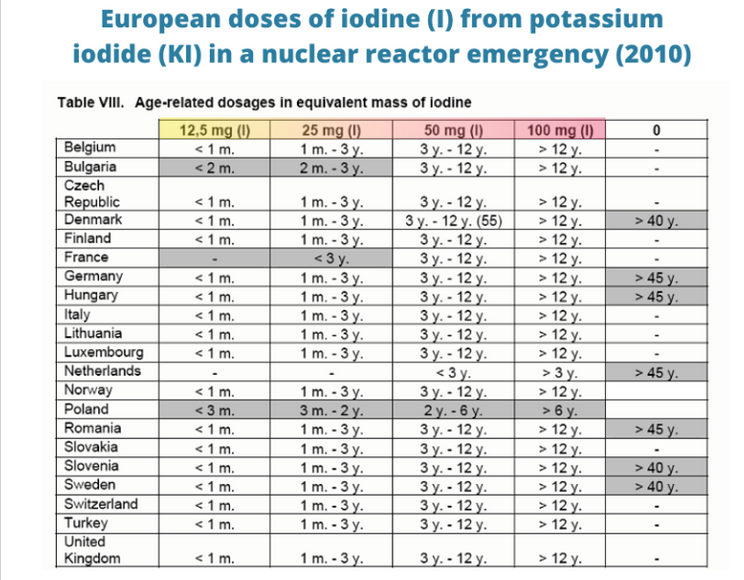
Effective emergency dose timing
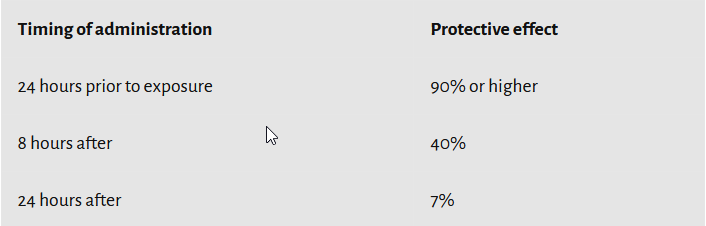
The timing of the acute iodine overdose matters, because thyroids behave differently under acute vs. chronic overdose.
Dosing too soon OR too late are both ineffective.
The radioactive iodine-blocking dose of KI needs to be in place before exposure to radioactive iodine (I-131). But the dose should not be taken more than 24 hours before exposure or its effectiveness is reduced.
Therefore, wait for the signal that your region is affected.
KI dosing should only be done when directed by the government, when radioactive iodine levels are significant due to an emergency.
“If the radioactive iodine released by nuclear power facilities enters the human body through inhaling or ingestion it, approximately 10-30% of the amount incorporated will accumulate in the thyroid gland within 24 hours of contamination.
As the result of exposure to radiation from this radioactive iodine, thyroid cancer or other diseases may develop in four years to a few decades.”
Duration of dosing
The number of doses and the time between doses may vary based on exposure duration.
Usually only one dose is required.
The second intake is sometimes only envisaged for the most radiosensitive population, i.e. newborns, young children, pregnant and breast feeding women,” and may exclude persons over 40.
In situations where multiple doses are required, the total cumulative dose over many days is usually limited to <1g (<1000 mg).
The risks of dosing high quantities of iodine
While preventing iodine deficiency is important, it’s equally important not to err on the side of iodine excess.
Unfortunately, it has become trendy in some health communities, even some thyroid patient communities, to overdose iodine. Recommendations for overdose often show a callous disregard for its health risks.
Patients with thyroid disorders are quite vulnerable to disinformation and peer pressure to try iodine excess as a solution for chronic hypothyroid symptoms during therapy. They are often not aware that it may hinder or distort the function of their remaining healthy thyroid tissue.
People with thyroid nodules are sometimes told online that they can melt away their nodules with high doses of iodine. Many do not realize that some nodules can become toxic under acute iodine dosing, and there are better, more scientific approaches, such as non-toxic doses of selenium and myo-inositol.
If iodine overdose works well for a patient, they will sometimes become evangelists who persuade their peers to try it, without awareness of the real dangers it poses to their peers who may have genetic predisposition to thyroid autoimmunity or pre-existing diagnoses of Hashimoto’s, atrophic thyroiditis, or Graves’ disease.
Ingestion of greater than 1,100 mcg of iodine per day (Tolerable Upper Limits for iodine) is not recommended and may cause thyroid dysfunction.
During pregnancy and lactation, the recommendations for the upper limit vary and range from 500-1,100 mcg of iodine daily.
In particular, infants, the elderly, pregnant and lactating women, and individuals with pre-existing thyroid disease are susceptible to adverse effects of excess iodine intake and exposure.
The public is advised that many iodine, potassium iodide, and kelp supplements contain iodine in amounts that are up to several thousand times higher than the daily Tolerable Upper Limits for iodine.
The American Thyroid Association (ATA) advises against the ingestion of iodine and kelp supplements containing in excess of 500 mcg iodine daily for children and adults and during pregnancy and lactation.
Chronic iodine intake in amounts greater than the Tolerable Upper Limits should be closely monitored by a physician.
There is only equivocal data supporting the benefit of iodine at higher doses than these, including a possible benefit for patients with fibrocystic breast disease.
There is no known thyroid benefit of routine daily iodine doses in excess of the U.S. RDA.”
Why caution about iodine doses >500 mcg per day?
It’s based on many decades of research from scientists all over the world. Research includes iodine consumption in regions like Norway, Japan and Korea where people often ingest iodine from seaweed.
Risk of iodine-induced HYPOthyroidism
Iodine overdose is a treatment for hyperthyroidism for a reason. Excess can temporarily block iodine uptake into the thyroid gland.
Leung & Braverman explain that “The underlying mechanism of iodine-induced hypothyroidism remains unclear,” but could be due to “a damaged thyroid as a result of previous pathological insults.”
They go on to list the conditions that increase risk of hypothyroidism induced by excess iodine:
“Susceptible patients include those with autoimmune thyroid disease; a previous history of surgery, I or antithyroid drug therapy for Graves disease; subacute or postpartum thyroiditis;
In Japan, “chronic exposure to excess iodine” can result in “adaptive mechanisms” like “delayed onset congenital hypothyroidism” in an infant after ingesting too much seaweed in pregnancy, and “smaller thyroid glands” in Japanese schoolchildren with high urinary iodine levels. Autoimmune hypothyroidism was found to be 12.1% in regions with iodine-rich seaweed consumption but 2.3% in other regions of Japan, among people who tested negative for thyroid antibodies.
Risk of iodine-induced HYPERthyroidism
It does not require a massive iodine overdose to induce a state of thyrotoxicosis from a hypersecreting thyroid gland. It could simply arise due to eating too much seaweed:
“Individuals who consume large amounts of seaweed regularly are also exposed to the risk of iodine-induced hyperthyroidism. Several reports are available describing diet-induced thyrotoxicosis in patients consuming seaweed-containing foods or beverages.
It is wise not to be iodine-deficient before taking your KI overdose. Get your RDA of 150 mcg per day, which can be found in approximately 1/2 a teaspoon of iodized salt.
“Iodine-induced hyperthyroidism (thyrotoxicosis) is most frequently observed following iodine supplementation in individuals who had previously experienced severe iodine deficiency.
A plausible explanation of this phenomenon can be the thyroid stimulating hormone (TSH) hyperstimulation of the thyroid gland, which may occur as an adaptive response to the iodine-deficient conditions and results in autonomous growth and function of thyrocyte clusters.
When iodine intake increases, these nodules may synthesize an excessive amount of thyroid hormones.
The mechanism consists of escape phenomenon when high doses of iodine are used for thyroid hormone synthesis, which can lead to severe thyrotoxicosis.
Risk vs. benefit must be reassessed in an emergency.
The risk of health side effects associated with taking KI is very low for all age groups with regular thyroid function.
For people who have thyroid disorders (e.g., Graves’ disease, iodine deficiency/sensitivity and auto-immune thyroiditis), there is an increased risk of side effects. People who face an increased risk of side effects should consult a doctor or nurse prior to taking KI.
Overall, the benefit of taking the pill during a nuclear emergency far outweighs the risk of side effects. ”
Summary
If the risk of exposure to environmental radioactive iodine is very low in your region, it is wise to avoid iodine overdose and just ensure you get your recommended intake per day.
If you receive public health notification that exposure is imminent in your region, have your KI tablets on hand to initiate an acute loading dose at the right time.
If you are over 40, assess your health risk based on the factors above, consulting with your doctor as needed.
Now you know why the dosage for emergency intake is so high and there are substantial risks to taking an overdose, you also want to know why a normal and adequate intake of iodine is important.
Prevalence, consequences and treatment of iodine deficiency
Iodine is indispensable for health: it promotes healthy thyroid function and is essential for normal metabolism, growth and development. Iodine is a building block of thyroid hormones and therefore essential for their production.In addition, iodine is important for the health and function of oral and gastric mucosa, skin, breast tissue and salivary glands. There is also research available showing that iodine is important as an antioxidant and for the functioning of the immune system.
Iodine: essential trace element
The body can use two forms of iodine: a molecule made up of two iodine atoms (molecular iodine, I2) and iodide (usually bound to sodium or potassium). In the soil, iodine also occurs as sodium (per) iodate.Dietary iodine, mainly in the form of I-, is absorbed in the stomach and small intestine.
The body contains 15-20 mg of iodine, of which about 30% is stored in the thyroid gland.
In addition, there are various other tissues that have iodine pumps to actively transport iodine from the blood into the cell. The remaining iodine can be found in breast tissue, salivary glands, central nervous system, skin, part of the eye, cervix, ovaries, placenta, prostate and gastric mucosa.
The presence of iodine in mammary gland tissue is related to foetal and neonatal development.
Iodine is a so-called trace element because it is essential for humans to ingest daily, but only in very small amounts. For the daily required amount of iodine, humans are completely dependent on nutrition and supplementation. Seaweeds are the richest source of iodine, but also saltwater fish, crustaceans and shellfish, and to a lesser extent eggs, avocados, asparagus, spinach, olives, nuts, butter, coconut oil, dairy and iodized products (salt, bread, ready-made ready meals) contain iodine.
For supplementation, in addition to the synthetic potassium iodide, (organic) knotweed or kelp is also used. These natural forms of iodine are safer to use than potassium iodide because of its delayed release.
Functions of iodine
In the thyroid gland, iodine is essential for the production of the thyroid hormones thyroxine (tetra-iodothyronine, T4) and tri-iodothyronine (T3) and contributes to normal thyroid function. Thyroid hormones are necessary for growth, nervous system development and resting metabolism.Thyroid hormones play a central role in the regulation of fat, protein and carbohydrate metabolism, heart rate and body temperature. As much as 30% of the total amount of iodine is located in the thyroid gland.
Here it lies, bound to the protein thyroglobulin, stored in the form of thyroid hormones and precursor substances of thyroid hormones (mono-iodothyronine, di-iodothyronine). The thyroid produces ten times more T4 than T3; under the influence of a selenium-dependent enzyme, T4 is converted into the biologically more active T3.
Growth and development
Iodine is important for the normal growth and development of children. Iodine deficiency during pregnancy and growth can lead to impaired physical and mental development, which can manifest itself in short stature, delayed or delayed bone development or puberty, infertility, neurological and cognitive impairments, and even miscarriages and stillbirths. During pregnancy, iodine requirements are increased due to increased thyroid hormone production, delivery of iodine to the foetus via the placenta, and increased urinary excretion. The iodine requirement is also higher during lactation because iodine is released into breast milk.Antioxidant
From an evolutionary point of view, iodine is a very important antioxidant. Seaweed absorbs iodide from seawater because of its antioxidant effect (especially dry seaweed has to fight many oxygen radicals) and therefore has many times higher iodine concentrations than its environment.Based on research, it is assumed that iodine also acts as an antioxidant in humans and animals and that iodine fulfils this role in the tissues outside the thyroid gland in which iodine is found. Iodine can neutralize reactive particles such as hydroxyl radicals and hydrogen peroxide by donating an electron. Iodine can also iodine free unsaturated fatty acids in the cell membrane, making them less vulnerable to oxidative stress and preventing lipid peroxidation.
Research shows that the antioxidant capacity of molecular iodine is ten times greater than that of vitamin C and 50 times greater than that of potassium iodide.
In iodine-deficient tissues, the concentration of malondialdehyde, a biological marker for oxidative stress, rises.
Immune system
Iodine has strong antibacterial, antiviral and antifungal activity.In the mouth, stomach and intestines, iodine plays a role in defence as part of the innate immune system.
Cells in the mucous membrane of the gastrointestinal tract absorb iodine from the bloodstream and also release it to the mouth saliva, gastric mucus and stomach acid, in which iodine and iodine metabolites have strong antimicrobial activity and attack microorganisms such as fungi, bacteria and viruses.
The thymus and immune cells such as leukocytes and mast cells also have the capacity to absorb iodine. Depending on the context, iodine and iodine metabolites are used to activate or inhibit the immune response.
In the presence of extracellular antigens such as bacteria or fungi, iodine enhances phagocytosis (the process by which the membrane of the phagocyte encloses pathogens. A phagocyte is a specialized cell of the innate immune system that clears out foreign particles such as pathogens) and causes activated neutrophils granulocytes (a type of white blood cell) are attracted to the site of inflammation. In addition, under the influence of iodine, the production of cytokines that play a role in the activation and differentiation of regulatory T helper cells and anti-inflammatory (M2) macrophages.
In response to intracellular antigens (viruses), iodine activates the antiviral immune response (cellular immunity*), activating immune cells such as natural killer cells and macrophages to kill and clear the infected cells.
In this context, the effect of iodine supplementation in people with mild to moderate COVID-19 has been studied in Pakistan. The results of this will hopefully be published soon. Animal and human research suggests that iodine may also activate an antitumor immune response.
Iodine deficiency
Globally, iodine deficiency is a major problem, especially in areas where soil iodine levels are low.According to a WHO report from 2007, 56% of the European and 37% of the Dutch population has an iodine deficiency.
In the Netherlands, iodine intake appears to have decreased by an average of 35% between 2006 and 2015.
In 2008, government policy on the fortification of bread, bread substitutes and other bakery products with iodine was modified, which contributed to this decline.
In addition, people have generally started to eat less bread because of the perceived adverse effects of gluten in bread. One has to eat four slices of bread prepared with baker's salt to get 100 mcg of iodine; a lot of people don't get this.
Moreover, organic bread often does not use iodized salt and many people bake their own bread. Since iodine deficiency in pregnancy has a major impact on the development of the child, but mild iodine deficiency also has repercussions on health, attention to iodine status and iodine supplementation is of the utmost importance.
The recommended daily allowance of iodine has been set at 150 mcg for adults and 200 mcg during pregnancy and lactation.
For children aged 0-10, the recommendation ranges between 70 and 130 mcg.
This is based on the minimum amount needed for thyroid function and the prevention of goiter (enlarged thyroid) and dwarfism.
Symptoms and consequences of iodine deficiency
An iodine deficiency is difficult to recognize, as the characteristics can vary widely. In an adult it can even take years before an iodine deficiency is recognized. Since iodine is crucial for the thyroid function, the thyroid gland is able to drastically increase the absorption of iodine from the blood in the case of insufficient iodine intake compared to a normal situation.In that case, the iodine released during the breakdown of thyroid hormones is also reused more efficiently.
All this leads to reduced excretion of iodine with the urine. Severe and/or long-term iodine deficiency causes symptoms of reduced thyroid function (hypothyroidism: including fatigue, coldness, slower metabolism, weight gain, memory loss, difficulty concentrating, constipation, sluggishness, puffy face, dry hair, hair loss, dry skin, slow heart rate, depression, oedema , enlarged thyroid gland, thyroid nodules (lumps), decreased fertility).
Iodine deficiency can also cause dwarfism, goiter, hyperthyroidism, cyst formation in the breasts, uterus, or ovaries. In babies and children, iodine deficiency leads to impaired growth and development.
An iodine deficiency is also associated with a higher risk of thyroid, prostate and breast cancer.
Painful (benign) lumps or cysts in the breast (fibrocystic mastopathy) can be a sign of an iodine deficiency. The complaints, painful and tense breasts, stiff and irregular tissue and fluid loss from the nipples, are often the worst just before menstruation, when cell proliferation takes place in the breast tissue under the influence of hormones.
Iodine supports the process of programmed cell death (apoptosis) and can therefore cause the disappearance of fibrocystic breast tissue.
Determining iodine deficiency
With adequate iodine intake, 90% of iodine is excreted, mainly in the urine. Urine iodine concentration is a measure of recent iodine intake. An iodine level in urine of 100-200 mcg/l (in pregnant women 150-250 mcg/l) indicates that the iodine intake is sufficient; at an iodine level below 100 mcg/l, the iodine intake is insufficient. In addition to the iodine content in the urine, the size of the thyroid gland and the content of thyroid hormones (free T3 and free T4) in the blood provide an indication of the iodine status.An enlarged thyroid is often an early symptom of an iodine deficiency, while abnormal blood levels of thyroid hormones may indicate a long-term or severe iodine deficiency.
Dosage and safety
The total daily intake of iodine from food and dietary supplements by adults should be between the recommended minimum (adequate intake) of 150 mcg and the upper tolerable limit (UL, upper limit) of 600 mcg, taking into account iodine intake from food, drugs and multivitamins /mineral preparations.
For pregnant and lactating women, the AI is 200 mcg/day.
When supplementing, it is best to choose a natural iodine supplement based on seaweed, which has been found to be safer than a synthetic variant because of the delayed release, and which is standardized on the amount of iodine.
When iodine supplementation is used, the selenium status must be in order. Selenium is necessary for the conversion of T4 to T3 and for the conversion of T3 to the inactive T2.
In a selenium deficiency, reverse T3 (rT3) is formed instead of T3, which reduces thyroid function.
In people with thyroid disorders such as Graves' disease, Hashimoto's disease and hypothyroidism, iodine supplementation is not recommended.
Iodine supplementation may cause iodine-induced hyperthyroidism in these cases. However, this belief is refuted by some doctors.
A deficiency of iodine can also play a role in severe thyroid disorders. However, it is important to use iodine supplementation with policy and to look carefully at any other shortages, such as selenium.
In Hashimoto's disease, iodine supplementation should be avoided, at least as long as the treatment has not yet been set up properly and the blood values are abnormal.
In people with reduced thyroid function as a result of an iodine deficiency, with thyroid nodules (lumps) or goiter, iodine supplementation is indicated.
In these cases, iodine supplementation should be built up gradually and combined with selenium. Deficiency of other micronutrients such as vitamin A, selenium, zinc, iron and vanadium can lead to a decrease in thyroid hormone synthesis and enhance the effects of an iodine deficiency.
Certain raw foods contain phytonutrients called goitrogens, which can negatively affect iodine metabolism and thyroid function, including soy, cassava and broccoli.
Fluoride and bromide have a structure similar to that of iodine and can therefore hinder the absorption of iodine in the thyroid gland.
Alternatives to using massive dosage of iodide
When you live in close proximity of a nuclear plant (less than 100km) a large dose of potassium iodide is really the best antidote. However, when you live much further away and/or are well over the recommended age limit (<45 years) it may be useful to think of other methods to protect yourself against radiation.For what it's worth, it is recommended by reputable sources to ingest chlorella.
Clinical studies and medical researches have showed that toxins such as arsenic, mercury, lead, pesticides, insecticides, cadmium, uranium, PC.B, radio active materials etc. have been successfully detoxified from the human body; chlorella cell walls binding to and absorbing these toxics substances and then escorting them safely out of the body.
Recent posts
- Essential nutrients for optimal thyroid function
- Importance of iodine for thyroid and general health
- Two important supplements to combat diabetes: Alpha Lipoic Acid and vitamin D
- Role of vitamin K: what's the difference between the various forms?
- Why everyone over 40 should use co-enzyme Q10 or ubiquinol
- Citrus bergamot, a powerful antioxidant which reduces inflammation and improves blood sugar levels
- Microdosing HHC : what is it, and why is it popular?
- Why is vitamin B5 important for our health? The versatile functions of pantothenic acid or pantethine in our body
- Why you need to think about supplementing vitamin D3 with vitamin K2
- The dangers of paracetamol overdose ; what are safe natural alternatives?
Author
Contents
Language for this blog

- Vestiging: Wageningen | Julianastraat 99 | 6707 DC | NL
- Telefoon: +31 (0)6 5107 9358
- Mail contact: orders@pasioonline.com
- Bestellingen worden gereed gemaakt voor verzending maandag t/m vrijdag tussen 9.00 en 16.00. Zaterdag tussen 10.00 en 14.00 uur. Bij verzending maken wij gebruik van PostNL en DPD. Afhalen alleen na afspraak en vooruitbetaald. Probiotica worden niet retour genomen.