- Office: Wageningen | Julianastraat 99 | 6707 DC | NL
- Phone: +31 (0)6 5107 9358
- Business hours: Mon-Sun 09.00 - 16.30
- Mail contact: orders@pasioonline.com
- All orders ship Monday through Friday from 9am-16pm. Saturday 10am-14pm. We ship via PostNL and or DPD. Pick-up orders only pre-paid. Probiotics are subject to a no-return policy.

Mon-Fr 9a.m.-6p.m.
Natural immunity suffers because of deficiencies
Natural immunity suffers because of deficiencies
Dear reader
We hope to be back again by next week and present to you an article on natural immunity. Over the past few weeks it has become clear how natural acquired immunity against SARS-COV2 offers far better and longer lasting immunity than the entire range of vaccines do.
However, there's always a very small risk of getting very ill when you do contract SARS-COV2 and an even smaller amount of patients will suffer longterm or not survive.
While most of us will know the risks are larger when suffering from heart disease, diabetes or are overweight, and to some extent how lack of vitamin D will raise our chances to become more ill, few of us are aware of the importance of other micronutrients.
Just this week, a Belgian researcher was interviewed who discovered how nearly every single severely ill patient suffering from COVID-19, who didn't survive the disease, wasn't just deficient in vitamin D3, but also in the less well known minerals zinc and selenium. Almost everyone will remember how much attention was given to HCQ, which actually was little more than a zinc ionophore, that is, making sure zinc would enter cells.
Far less is known about selenium, except that it is know to be a mineral that used to be present in our soil, but no longer is. Now it appears that it is no longer a coincidence that incidence of severe COVID-19 was rather low in Finland, which has had the policy to add selenium to fertilizer in order to enrich the crops growing on them and the cattle feeding on them.
In the Netherlands we take a different approach : selenium is added to forage fed to cattle.
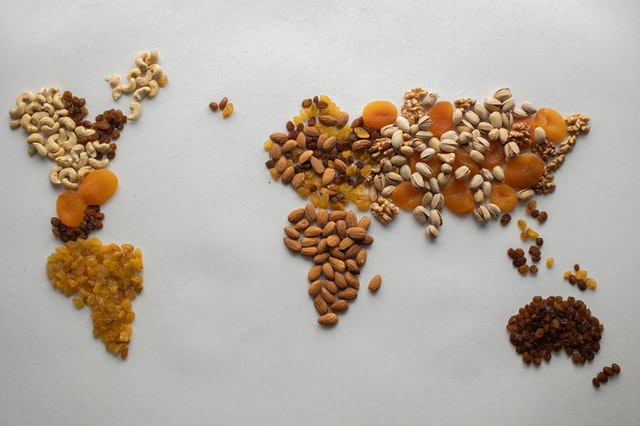
As a result, both meat and dairy contains adequate amounts of selenium. The richest natural sources of selenium though are nearly all found in nuts, more specifically brazil nuts and sunflower seeds and to a lesser extent in peanut(butter).
More information here: Hospital food is making you sick
Recent posts
- Essential nutrients for optimal thyroid function
- Importance of iodine for thyroid and general health
- Two important supplements to combat diabetes: Alpha Lipoic Acid and vitamin D
- Role of vitamin K: what's the difference between the various forms?
- Why everyone over 40 should use co-enzyme Q10 or ubiquinol
- Citrus bergamot, a powerful antioxidant which reduces inflammation and improves blood sugar levels
- Microdosing HHC : what is it, and why is it popular?
- Why is vitamin B5 important for our health? The versatile functions of pantothenic acid or pantethine in our body
- Why you need to think about supplementing vitamin D3 with vitamin K2
- The dangers of paracetamol overdose ; what are safe natural alternatives?
Author
Contents
Language for this blog

- Vestiging: Wageningen | Julianastraat 99 | 6707 DC | NL
- Telefoon: +31 (0)6 5107 9358
- Mail contact: orders@pasioonline.com
- Bestellingen worden gereed gemaakt voor verzending maandag t/m vrijdag tussen 9.00 en 16.00. Zaterdag tussen 10.00 en 14.00 uur. Bij verzending maken wij gebruik van PostNL en DPD. Afhalen alleen na afspraak en vooruitbetaald. Probiotica worden niet retour genomen.
© 1998 - 2026 Mungotedo LLP.