



Legalization of cannabis: is that a smart idea?
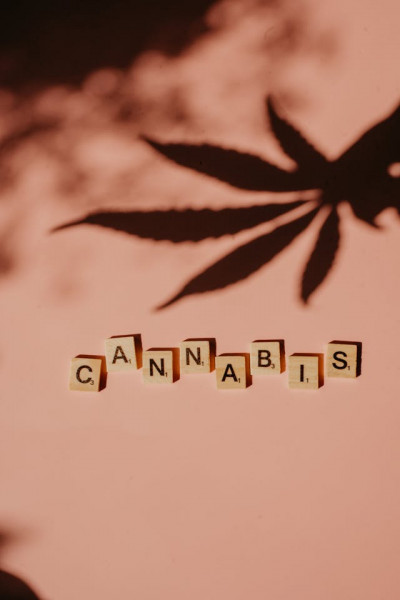
Legalization of cannabis: is that a smart idea?
On Easter Monday I read Germany was going to legalize cannabis. For a brief while I thought it was an April Fool's Joke. After all, Germans are known for being quite strict about legalizing anything. It soon appeared that this wasn't am joke, but a fact.
Quite a surprise when you realize cannabis has been semi-legal in the Netherlands for the longest time, but never actually became legal as it may be legal to smoke it, but it's not yet legal to grow it commercially! So, each and every seller has the problem of being allowed to sell cannabis, but not being able to buy it in largish quantities.
Don't think it is going to be so straightforward in Germany either: you will be required to be a resident of Germany as well as a 'cannabis club member' in order to buy.
Plus, there are several restrictions about where and when you will be allowed to smoke weed.
Yet, most regular cannabis users in Germany are extremely happy about the development, and Dutch citizens are looking forwards to more relaxed rules in our country as well. Which begs the question? Should marihuana be legal, as it has always been considered to be a dangerous 'gateway' drug.
Well, if cannabis is a gateway drug, then the still legal alcohol and tobacco can be seen as truly dangerous gateway drugs. Besides, cannabis has been known to mankind for about as long as alcohol! Let me tell you more about the history of cannabis!
This blog article explores the recent legalization of cannabis in Germany, contrasting it with the historical context of cannabis use worldwide. It outlines the plant's extensive history, from its ancient origins to modern medical applications. Additionally, it reflects on the implications of Germany's new laws and predicts a broader trend towards cannabis legalization in Europe.
The history of cannabis
Cannabis is one of humanity’s oldest cultivated crops. Its use is dated back as far as 12,000 years ago among hunter-gatherers.
The Chinese adopted both industrial hemp and psychoactive marijuana thousands of years ago.
None of the cannabis plant’s part was thrown away, the Chinese used the root for medicinal purposes and made fabric, paper, and rope from the stems. The leaves and THC-rich flowers, were used as intoxicants and as medicines. Cannabis was useful as a surgical anesthetic while it was also used for rheumatism and gout.
Hemp seeds were both eaten as food as well as crushed for oil. In ancient China, cannabis seeds were used as food grains, and the individuals often filled sacrificial vessels inside tombs with hemp to send friends and family off into the afterlife.
The old Egyptians also used cannabis; historians learned this from deciphering historic scrolls from around 2000 BC. In Egypt, cannabis was useful as a medical treatment for sore eyes and cataracts.
Cannabis dust (also known as kief) was also found in Ramses II, perhaps one of the most famous mummies in antiquated Egyptian history.
Around 2000 BC, cannabis showed up in Korea and between 2000 BC and 1000 BC, it advanced toward India. It was so revered there that it has a reference in one of the old Sanskrit Vedic poems as denoting one of “the five kingdoms of herbs, which liberate us from ailment problems.”
People were using marijuana for its medical benefits in the Middle East in 700 BC in the Vendidad. An old Persian religious text by Zoroaster noted the same in his book.
It was the Scythians, a group of Eurasian wanderers who brought cannabis from the Altai mounts into Europe. The Scythians weaved clothes from marijuana fibers and bathed in its aromatic smoke.
The Greek roots of cannabis take the source as right on time as 200 BC. There, it was useful as a solution for edema, ear infection, and inflammation. Around the fifth century, cannabis began appearing in Britain.
In 1799, marijuana history took a detour to France, where Napoleon introduced it after bringing it back from Egypt. His troops had discovered hashish after being unable to find alcohol since Egypt was a Muslim country. In Egypt, marijuana was mainly used for its sedative and pain-relieving properties.
The French troops took a supply of it back home to France. Psychoactive THC-rich marijuana quickly became an important cash crop in France.
Cannabis use in Europe
It is clear that cannabis has been a critical component of most old cultures. It could be used as a medicine, for religious reasons or because of its ability to be used for sustainable clothes as well as topical cream.
Marijuana was quite mainstream in the nineteenth century. It was generally used for medical purposes before eventually facing backlash and refusal. In the UK even Queen Victoria used cannabis to mitigate menstrual pain as her doctor prescribed it to her.
Until the invention of fast acting medications that could be injected and the advent of aspirin, marijuana was widely recognized as a medicinal herb for pain relief.
Finally, in 1928, the UK officially outlawed marijuana as a result of a 1928 international drug conference held in Geneva. There, an Egyptian delegate set forth a convincing argument that cannabis equaled opium in being a menace to society.
While recreational use of cannabis continued in jazz clubs in the 1950s throughout the flower power time of the 1960s, it did as such under cover of criminality. During the sixties’ flower power years, it also soared in popularity, despite remaining illegal.
Hemp, an attractive commercial crop
Over time, the cultivation of hemp became more important both for domestic and industrial purposes. It even became so important, farmers in the UK were required to grow hemp on 25% of their arable land.
It is surmised the armada of ships which set out to discover the Americas may not have sailed if it wasn't for the versatile hemp plant as it was used to produce hemp oils, whereas the fibers were used for oakum, rigging, sails, and ensigns.
Just like in Europe, colonists adopted the habit to grow hemp in the new colony, and were even required to do so or face prison when they didn't!
However, because hemp was mainly grown in a moderate climate for industrial purposes the plant had little or no psychoactive properties.
However, with the British Empire’s rise in the mid-1800s, more doctors, scientists, botanists, and herbalists traveled the globe and rediscovered medicinal cannabis.
In the late 1800s the use of psycho-active cannabis in Europe started to rise. Thanks to advanced distribution and colonies, cannabis usage spread quickly from one country to another as well as from Europe to Latin America and beyond.
A considerable lot of the first individuals to advocate the use of cannabis were doctors, explorers, and influential authors. But as cannabis culture began to spread, artisans and slaves were frequently enjoying it as well.
However throughout the last part of the 1800s and early-mid 1900s, various forms of prohibition were introduced. Quite a bit of this legislation came for preventing workers from using cannabis.
The use of medical marijuana and discovery of cannabinoids
William Brooke O’Shaughnessy was a young Irish surgeon who travelled all over India in the 1830s, researching numerous natural plants’ therapeutic characteristics.
He almost immediately noticed the therapeutic qualities of marihuana and noticed the indigenous people had been using cannabis for medicinal and recreational purposes for thousands of years.
Eager to test the locals’ claims, he began experimenting, initially on animals, then having acknowledged how safe cannabis was, humans. He uncovered these experiments on the preparation of the Indian hemp, their effects on health, and theirs efficacy in tetanus and six other convulsive ailments.
O’Shaughnessy’s research was groundbreaking, and his impact on modern-day use of CBD is enormous. He was successful in preventing muscle spasms in a tetanus patient. He also ended febrile seizures in an infant kid. Though he had only inadequate success in handling other ailments, the calming and pain relief effects were visible.
On his return to London in 1841, O’Shaughnessy took back not just his research articles but also cannabis and its seeds.
Together with a pharmacologist named Peter Squires, a wide array of cannabis tinctures were made that were available at local drugstores. His tinctures were generally available and very famous from around 1840 to mid-1900 up to the point where even Queen Victoria used his tinctures.
Overall, O’Shaughnessy has had a quite noteworthy influence on the progression of the history of cannabis.
It took until 1963 when the direct relationship between the THC and its euphoric effects were discovered. Nowadays, we can isolate and identify numerous cannabinoids. We also have a better knowledge of their properties and applications. See also our previous article on CBD.
Much earlier though, CBD was discovered and isolated as the first of over a hundred cannabinoids. It took so long before THC was isolated, because the amount of THC in industrial hemp is almost negligible.
Mid-20th century — the war on drugs begins
As the usage of marijuana started to intensify between 1950 to 1970, concerned authorities began to clip down massively on cannabis. The United Nations pushed from the front, with various representatives targeting marijuana and those that enjoyed using it.
Perhaps the misplaced illegality made some individuals more interested in cannabis. But one lesson from the UN hostile to cannabis conventions is that they simply didn’t work.
Cannabis use detonated from the 1960s onwards in Europe and the rest of the world. Individuals didn’t appreciate others’ concerns in their leisure time, and they certainly didn’t care for other people’s judgments.
Numerous Europeans felt that the restrictions on cannabis use were inappropriate over-reaction from the caretaker state. But the ban wasn’t working for one reason – individuals enjoyed the plant and didn’t care for others telling them not to do it.
In 1972 the Dutch Government started differentiating among dangerous and less dangerous drugs. Tolerance had shown up, and the coffee shops began supplying personal amounts of cannabis to citizens (and a lot of tourists).
Millions of Europeans were currently safely enjoying cannabis. They didn’t accept the counter cannabis propaganda from their Governments and still don’t. And what’s more, a considerable lot of the new cannabis users were reporting some profound observations. They claimed that cannabis had some astounding properties for diseased people.
The acknowledgment that cannabis has medical benefits
Claims of therapeutic applications for marijuana were not taken seriously for some years. The UK just legalized medical cannabis in 2018, and even then didn’t do an especially good activity if it. The counter cannabis propaganda had sunk in and wasn’t easy to undo.
However, medical cannabis quickly turned into a hotly debated issue in places such as the USA and was legalized in California in 1994. The proof was easy to shove aside but impossible to ignore totally.
Cannabis varieties rich in CBD further strengthened the medical case for cannabis use.
After some countries, like the Netherlands decriminalized marijuana possession in coffee shops, Portugal was the first European country to remove criminal penalties for personal possession of cannabis in 2001.
Canada legalized marijuana in 2018 for recreational purposes, and a growing number of US states have legalized its use. Numerous strong laws remain in place, especially for the cultivation and distribution of cannabis in all its forms.
Punishments in some countries range from cautions to fines and even prison sentences in some cases. Still, the final part in the book of marijuana history seems to be one of increasing legalization, with the final pages still unknown.
The future of cannabis in Europe
History shows us that medical cannabis tends to lead the way. When medical cannabis became legal, political dread diminishes, and they can discuss recreational cannabis with less hysteria. Such a significant number of US states’ decisions, with Canada and Uruguay to legalize cannabis, show Europe’s probable arrival.
The following decade or so should see the first European countries legalize recreational cannabis. Europe may also soon see legal, business cannabis cultivation for both medical and recreational users.
Legal high: Germany’s cannabis law comes into effect
Germany's new law legalizing recreational cannabis use came into effect on April 1.
Germany is the third country in the European Union to legalize recreational use of cannabis, after Malta in 2021 and Luxembourg in 2023.
Medical associations, police organizations and judges have misgivings about the law, arguing that marijuana can have a negative effect on the brain, which is still developing up until age 25 — or that the rules are not clear enough.
The legislation was part of an agreement by the country’s three-party coalition government. It allows the possession of cannabis possession (up to 25 grams) and home cultivation for adults (up to three plants).
Further parts of the legislation will allow “cannabis social clubs” to supply up to 500 members with a daily maximum of 25 grams and a monthly maximum of 50 grams. Members will have to have been residents of Germany for at least six months.
Those clubs won't be fully operational before summer, however, as the part of the law that regulates cultivation in cannabis clubs will come into effect on July 1.
Consuming marijuana remains forbidden in a radius of 100 meters around schools, child care facilities and playgrounds.
Conclusion
Cannabis has played a significantly more crucial role over the past 10,000 years than most people would ever imagine.
After a century of being kept under wraps, cannabis could once again play an important role when it is legalized like it should be.
To the main pageNext article
