

Fall prevention tips for elderly people
Oct 5, 2025ir. Yvana van den HorkHair, nails & skin, Glutathione level, Eyes & vision, Nutrition, Brain, Joints, Lifestyle & fitness, Bones & teeth
Fall prevention tips for elderly people
"Hey Yvana, can you recommend nutritional supplements for when you've broken a bone", was the question posed to me last week.
It turns out the dear wife from one of our customers had a nasty fall when she went to the bathroom while being sleep groggy.
After some thinking and consulting my 'walking medical reference' aka husband I recommended to take a bone-building supplement along with a multivitamin containing both vitamin K1 and K2, since play a role in bone composition.
By chance this question arose on the very same day I was listening to a Dutch podcast mentioning how there are twenty casualties every single day as a consequence of a fall, sometimes lying in their homes for hours without anyone noticing. The podcast wasn't medical though, but highlighted what is called a 'phone circle' in which a group of elderly citizens that live on their own call each other every day, so as to make sure that someone alerts the police or doctor when a phone call isn't answered.
Apparently the podcast was dedicated to 'fall prevention week", so let's dive into the reasons why elderly people fall more often and what to do about it.
Falling is taking a toll on elderly brains
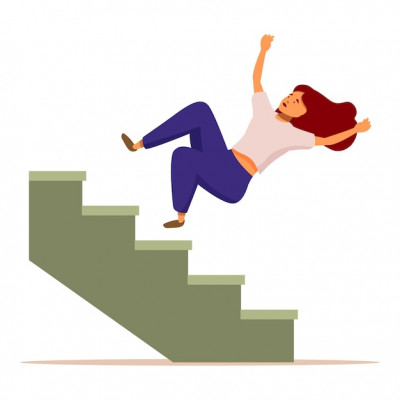
Falls are a leading cause of injury among elderly citizens aged 65 and over, with 1 in 5 leading to a serious injury such as a broken bone or head injury. More than 1 in 4 older persons falls every year, and such falls are the most common cause of traumatic brain injuries (TBI) among this population.
Among those 75 and older, 1 in 45 suffered from a brain injury that led to an emergency room visit, hospitalization or death with the primary cause being falls.
While brain injuries due to motor-vehicle accidents decreased during the study period, and considerable attention has been given to concussions in youth as a result of sports, far less attention has been given to the risk of brain injury in older citizens due to falls.
In the last decades the number and rate of older adult fall-related traumatic brain injuries have increased substantially. TBIs attributable to older adult falls, many of which result in hospitalization and death, should receive public health attention."
Urgent need for fall prevention efforts
There´s an urgent need to increase fall prevention efforts in older adults, given the concerning increase in fall-related brain injuries. Adding to the risk, once a person has fallen, their likelihood of falling again doubles. Risk factors that increase a person's risk of falling include:
- lower body weakness
- vitamin D deficiency
- difficulties with balance and walking
- use of certain medications, such as tranquilizers, sedatives or antidepressants
- vision problems
- foot pain or poor footwear
- hazards in the home, such as clutter, throw rugs or uneven steps
- health conditions, including Parkinson's disease, Alzheimer's disease and arthritis, as well as recent surgery, such as hip replacement
- lack of physical activity increases fall risk
One of the many reasons why exercise is so important for older adults is that doing so can significantly lower your risk of falls and all of the health risks that go along with them. Not only that, but if you do fall, if you're a regular exerciser you're less likely to get hurt.
Older adults who took part in an exercise program were 37 percent less likely to be injured during a fall compared to non-exercisers.
This included a 61 percent lower risk of having a fall-induced broken bone and 43 percent lower risk of sustaining a fall-related injury serious enough to require admission to a hospital.
The exercises included an emphasis on balance training along with strength and functional training and even Tai Chi. As you get older, your muscle and bone mass decrease and the senses that guide your balance — vision, touch, proprioception — may all start to deteriorate, and this can make you unsteady on your feet.
However, eight weeks of balance training reduced slips and improved the likelihood of recovery from slips among the elderly.
Balance training has also been found effective in improving functional and static balance, mobility and falling frequency in elderly women with osteoporosis.
Since exercise strengthens both your body and your mind, it's likely that regular exercisers are not only physically more able to prevent falls but also may be quicker mentally, perhaps allowing them to reach out and grab a railing for support before succumbing to a fall.
Easy strength training exercises to reduce your fall risk
Strength training is also important for older adults, as it helps you maintain healthy bone mass, prevent age-related muscle loss and strengthens your connective tissues, tendons and ligaments, which help hold your body in the upright position.
Strength training also helps with functional movements — the ones you do every day — which will make activities like climbing stairs and getting out of a chair easier. This, in turn, will lower your risk of falls. Even if you're new to exercise, there are options that can lower your fall risk, including the two that follow.
Knee extension
Knee extension exercises will help strengthen your knees, which will improve your balance and reduce your risk of falling. Strengthening your knees will also allow you to walk and climb stairs with greater ease and comfort.
- Sit on a chair with your back straight and knees bent
- Slowly extend your right leg out in front of you and hold for a few seconds before lowering it back to starting position
- Repeat with your left leg
- Do 10 repetitions on each leg
For a more advanced version, strap an ankle weight around each ankle. Aim for a weight that is heavy enough to where you cannot do more than 15 repetitions per leg. As you get stronger, you can add more weight to keep it challenging.
Partial squat
Squatting exercises increase hip flexibility and strengthen your hip flexors and quadriceps, which will improve both your walking ability and your ability to stand up from a seated position. They also improve your overall balance and stability, reducing your risk of falling.
For the beginner's version, stand up using a chair for support, and perform a standing partial squat. Remember to push your buttocks out as you bend to maintain a straight back posture.
Nutrition for healthier bones
Prevention is key when it comes to healthier bones, and the food you eat can go a long way toward building and maintaining strong, healthy bones. Important nutrients for bone health include:
1. Vitamin D — Vitamin D plays a regulatory role in the absorption of calcium and phosphorous, which are important for healthy bones.
2. Vitamins K1 and K2 — Vitamin K1, phylloquinone, is found in plants and green vegetables. Aside from playing a crucial role in blood clotting, it's also important for bone health. Osteocalcin is a protein produced by your osteoblasts and is utilized within the bone as an integral part of the bone-forming process.
However, osteocalcin must be "carboxylated" before it can be effective. Vitamin K1 functions as a cofactor for the enzyme that catalyzes the carboxylation of osteocalcin.
Vitamin K2, menaquinone, which is synthesized by intestinal bacteria, works synergistically with calcium, magnesium and vitamin D to build strong, healthy bone. Vitamin K2 directs calcium to your bones and prevents it from being deposited in your soft tissues, organs and joint spaces. Vitamin K2 also activates the protein hormone osteocalcin, produced by osteoblasts, which is needed to bind calcium into the matrix of your bone.
The pooled evidence of seven Japanese trials assessing vitamin K2’s (menaquinone-4) ability to prevent fracture rates found hip fractures reduced by 6%, vertebral fractures reduced by 13%, and all nonvertebral fractures by 9%.
3. Calcium — Calcium works synergistically with vitamin K2, magnesium and vitamin D, and needs all three of those to function properly. Vitamin D aids calcium absorption, while vitamin K2 makes sure the calcium ends up in the right place — your bones and not your arteries.
4. Magnesium — Magnesium works synergistically with calcium, vitamin K2 and vitamin D, and aids calcium absorption.
5. Collagen — Collagen has been shown to strengthen bones and improve osteoporosis.
Sleep disturbances affect bone health
Sleep disturbances influence bone turnover and muscle strength, which is why getting proper sleep is so important for bone health. Both short and long sleep duration have been indicated as risk factors for osteoporosis, for instance, and a study of older adults revealed that long sleep (eight hours or more a night) was the best predictor of osteoporosis risk.
In fact, when 10 men had their sleep restricted and their circadian rhythm disrupted for three weeks, it led to an “uncoupling of bone turnover wherein bone formation is decreased but bone resorption is unchanged.” Lack of sleep is also problematic for bones.
Among postmenopausal women there was an intriguing correlations between sleep duration and bone density. Women who reported sleeping only five hours or less per night had, on average, 0.012 to 0.018 g/cm2 lower bone mineral density than those who slept seven hours or more.
Bone density was checked in four sites: whole body, hip, femoral neck and spine. Short sleepers had lower bone density in all of these areas and were at increased risk for osteoporosis of the hip and spine.
Take care of your vision health
Being able to see clearly is important to avoid tripping hazards and avoid dizziness. Your diet is key to protecting your vision, including eating plenty of vitamin-C-rich foods, which may lower your risk of cataracts. Bioflavonoids, which may have a complementary effect when consumed along with vitamin C, are also important.
Excellent dietary sources of bioflavonoids include dark-colored berries, dark leafy greens, garlic and onions. Other notable nutrients for vision health include:
- astaxanthin
- animal-based omega-3 fat (found in wild-caught Alaskan salmon).
- anthocyanins (found in blueberries, bilberries, and black currants)
- vitamin D
- lutein and zeaxanthin (found in green leafy vegetables and pastured egg yolks)
- bioflavonoids (found in tea, cherries, and citrus fruits)
Besides eating plenty of the nutrients above, carotenoid-rich vegetables, organic pastured egg yolks, omega-3 and astaxanthin-rich wild-caught salmon are beneficial for vision health. Another important dietary aspect is to normalize your blood sugar, as excessive sugar in your blood can pull fluid from the lens of your eye, affecting your ability to focus.
It can also damage the blood vessels in your retina, thereby obstructing blood flow. To keep your blood sugar in a healthy range, avoid processed foods as they tend to be loaded with processed fructose. Exercise will also help protect your vision.
Block blue light to protect your vision, especially at night
Many people are unaware of the importance of avoiding exposure to blue light after sundown, including from light-emitting diode (LED) lighting and electronics. Near-infrared light is important as it primes the cells in your retina for repair and regeneration, which explains why LEDs — which are devoid of infrared — are so harmful for your eyes.
There are cells in your retina that are responsible for producing melatonin in order to regenerate your retina during the night. If you use LED lights after sunset, however, you reduce the regenerative and restoring capacities of your eyes and with less regeneration you end up with degeneration.
In this case, the degeneration can lead to age-related macular degeneration (AMD), which is the primary cause of blindness among the elderly and can also contribute to falls.
So, to summarize, the main problem with LEDs is the fact that they emit primarily blue wavelengths and lack the counterbalancing healing and regenerative near-infrared frequencies. They have very little red in them, and no infrared, which is the wavelength required for repair and regeneration.
Because of this, it is recommended to useblue-blocking glasses after sundown and swapping out your LEDs for clear bulb incandescents or even candle light. For your computer, reduce the correlated color temperature down to 2,700 K — even during the day, not just at night. Among computer programs that are able to do this, we recommend using the free f.lux program.
How to make your home safer to avoid falls
Home hazards can be a significant contributor to falls, as it's estimated that one-third of falls in the elderly may be due to environmental hazards that could easily be addressed.
Here's a comprehensive list of tips to make your home safer in order to prevent falls.
- Install safety bars and grab bars where necessary, such as in the shower/bath and near toilets
- Stairwells should be well lit, with sturdy railings that extend beyond the first and last steps
- Remove loose throw rugs and tack down all carpeting/rugs
- Put anti-slip mats into the bottom of the bathtub or consider a shower chair
- Use a stool riser seat when using the toilet
- Remove clutter from the home
- Adjust electrical cords so they are not stretched across the floor
- Wear shoes or slippers with non-slip soles
- Keep items used daily in easily accessible locations
- Avoid the use of chairs or stepladders to reach item; use a grasping tool instead
- Install adequate lighting in the home
In addition, fall mats, which are cushioned surfaces that help reduce injuries in the event of a fall, can be placed in frequented areas, such as next to a bed, chair or toilet. Some people may find added support from the use of a cane or walker, but be aware that some research has linked the use of walking aids to an increased risk of falls.
It's important to understand that falls are not inevitable and oftentimes are preventable. By making sensible changes to your home, eating right, exercising and taking care of your vision health, you can significantly lower your risk of suffering from a debilitating fall and related brain injury.
To the main pageNext article
