



Early detection of dementia : amyloid plaques and tangled tau proteins
Early detection of dementia : amyloid plaques and tangled tau proteins
One of the biggest fears of people is to either develop cancer and/or to develop dementia later in life. One of the most commonly known forms of dementia is Alzheimer's disease.
To raise awareness about Alzheimer’s and dementia, World Alzheimer’s day was launched in 1994 by Alzheimer Disease International (ADI) association, which empowers other organizations with research and updated knowledge about Alzheimer’s and dementia.
One of the effects of World Alzheimer Day is more attention in the mainstream or social media for Alzheimer and other forms of dementia. One such news item was about early detection of so-called tau proteins in a very specific area of the brain. While I had heard about amyloid plaques, tau proteins were new to me. And no, it is not related to taurine, abbreviated as tau!
Over 50 million people around the world suffer from dementia. Alzheimer's disease is the most common form of dementia and is characterised by an accumulation of the proteins beta-amyloids, commonly known as amyloid plaque and tau in the brain, followed by a continuous progression in memory decline.
The pathological progression can take different forms and it is difficult to predict how quickly the symptoms will develop in any particular individual.
For a long time, researchers focused on detecting amyloid plaques in the brain. It was discovered the presence of beta-amyloids in a person's brain does not necessarily mean that they will develop Alzheimer's dementia.
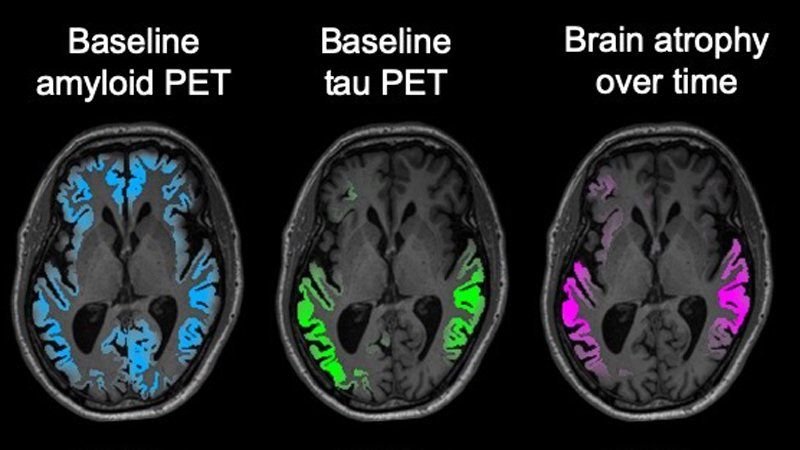
Researchers at the Karolinska Institute in Sweden discovered that measuring early accumulation of tau proteins by PET scanner was more effective at predicting memory decline and dementia such as Alzheimer’s disease than measuring amyloid plaques.
The results from the Karolinska study show that the presence of tau in the brain measured by a PET scanner is linked to a rapid decline, especially of the episodic memory, which is often affected at an early stage of the disease.
Therefore a Tau PET should be recommended for the clinical assessment of cognitive decline in Alzheimer's patients.
Therefore a Tau PET should be recommended for the clinical assessment of cognitive decline in Alzheimer's patients.
What are tau proteins?
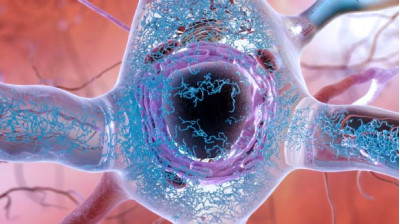
The tau protein is predominantly found in neurons of brain cells. Among tau’s multiple functions in healthy brain cells, a very important one is stabilization of the internal microtubules. Tau is a small protein with a short name but a large reputation because of its association with multiple brain diseases.
When mice are genetically designed to lack tau protein, their brain cells do not function properly, and tau dysfunction has been identified in a number of very severe human brain diseases.
Different forms of tau
Tau proteins in the brains of people with Alzheimer’s disease are misfolded and abnormally shaped. The normal tau protein forms part of a structure called a microtubule. One of the functions of the microtubule is to help transport nutrients and other important substances from one part of the nerve cell to another.
The abnormal tau proteins found in these neurodegenerative diseases are not identical, although they are related.
After tau has been created from DNA, chemical activities in the brain further modify it in several ways.
These chemical alterations of tau change its properties. No longer fit to carry out its usual job, it takes on characteristics that are potentially very damaging. This form of tau no longer sticks together in the same way. Instead, the fabric of connected tau proteins comes apart and reassembles in a disorganized, messy tangle that accumulates in brain cells and is not effectively disposed of through the cell’s usual ways of removing “trash.”
Besides the microtubular form, which is composed of many tau molecules, tau also exists in smaller versions, called oligomers, which are made up of a few tau proteins. The smaller forms of tau circulate among the neurons, interfering with cellular function. They are found in brains that are developing Alzheimer decades before the disease blossoms clinically.
What causes buildup of tau proteins?
Scientists have long pointed to the importance of tau in Alzheimer because of evidence linking the spread of tau with disease progression. The accumulation of beta amyloid in the brain of a person with Alzheimer is largely completed at an earlier clinical stage known as mild neurocognitive disorder.
However, tau accumulation continues throughout the course of the disease. Beginning in the parts of the brain called the entorhinal cortex and hippocampus, brain tau continues to accumulate as Alzheimer progresses. Recent evidence suggests that tau spreads through the brain by means of oligomer “seeds” that travel across a structure, called a synapse, which allows a nerve cell to pass an electrical or chemical signal to another nerve cell. The total amount of abnormal tau in the Alzheimer brain is linked to disease stage and severity.
Can brain inflammation be the missing trigger of Alzheimer?
The difference between people with amyloid brain plaque who develop Alzheimer’s disease and those who don't appears to be inflammation.
An excessive activation of the brain’s microglial cells encourages the growth of tau protein tangles that characterize the disease.
A study suggests combination therapies addressing both amyloid plaque buildup and neuroinflammation may prove effective against Alzheimer’s disease.
Doctors regard amyloid plaque lodged between the brain’s nerve cells and tangled tau protein fibers forming within the cells as the hallmark of Alzheimer’s disease.
However, amyloid plaque (consisting of broken pieces of protein that clump together) is also present in the brains of older adults who do not develop Alzheimer’s, suggesting another factor is triggering the disease.
A new study finds that inflammation in the brain drives the progression from the presence of amyloid plaque and tau tangles to the onset of dementia and Alzheimer’s disease.
Many older adults have amyloid plaques in their brains but never progress to developing Alzheimer’s disease. We know that amyloid accumulation on its own is not enough to cause dementia, but it is assumed now that it is the interaction between neuroinflammation and amyloid pathology that unleashes tau propagation and eventually leads to widespread brain damage and cognitive impairment.
Neuroinflammation
While scientists have observed neuroinflammation in people with Alzheimer’s before, but a new study reveals its critical role in the development of the disease.
Activating the brain’s immune (microglial) cells promotes the spread of tangled tau proteins that comprise amyloid plaque.
Inflammation has an important role in fighting off infection and other pathogens in the body, including in the brain and central nervous system. Microglia help clear debris (damaged neurons, infections) from the brain.
However, a sustained inflammatory response, or a change from acute to chronic neuroinflammation, may contribute to the underlying biology of several neurodegenerative disorders.
Inflammation is not by itself associated with cognitive impairment.
However, when neuroinflammation converges with amyloid pathology, the interaction potentiates tau pathology. As a consequence, the coexistence of these three processes in the brain (amyloid, neuroinflammation, and tau pathology) determines cognitive deterioration.
Living evidence
While experiments using cultured cells and laboratory animals have previously implicated microglial activation in the spread of tau fibers, the new study is the first to document their relationship in living people.
PET scans were used to observe the presence and extent of microglial activation, amyloid plaque, and tau tangles.
Successfully controlling neuroinflammation as a means of treating Alzheimer’s disease will be the next challenge.
Warning signs of Alzheimer
Precious few people will be able to undergo a PET scan to determine whether they are developing Alzheimer, but it is possible to detect the warning signs. Those may be :
- forgetfulness to recent memories
- misplacing of the things
- mood changes
- challenges with completion of familiar tasks at home or work
- difficulty in judgment and solving problems
- difficulty in remembering time or place
- social withdrawal
How to manage Alzheimer?
- engage yourself in leisure activities like reading, writing, playing musical instruments, or taking education courses.
- play indoor games like chess, solving crosswords, and puzzles
- try proven brain supplements which improve memory function such as fish oil, phosphatidyl serine, citicoline, ginkgo, etcetera
- refrain yourself from stress
- have a healthy nutritious diet with plenty of antioxidants while avoiding inflammatory foods
- practice daily exercise, walking, and meditation like yoga as a 'healthy mind resides in a healthy body'
- have a regular adequate sleep
- avoid drinking alcohol and tobacco
To the main pageNext article
