



09-03-2026
Being a grandparent doesn't just bring joy but also rejuvenates your brain
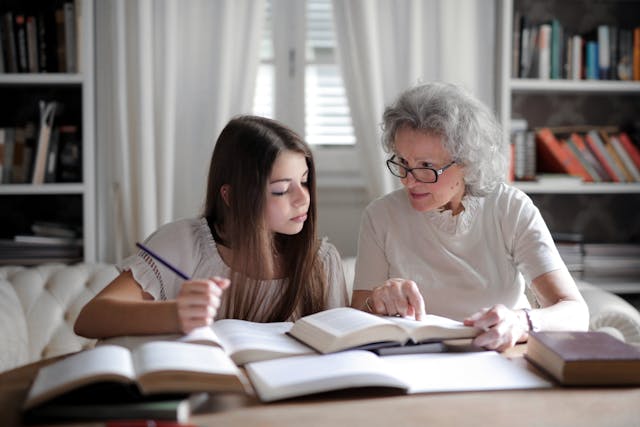
Being a grandparent doesn't just bring joy but also rejuvenates your brain
Last Saturday, my partner and I went to an event organized by Marianne Zwagerman and many volunteers: "Save the Countryside." The event focused on preserving rural culture. Because it was also a political event,the well-known pollster Maurice de Hond was invited as a speaker to discuss polls on how people view the countryside.But that wasn't all. He was also present with Vincent Evers (a Dutch trendwatcher) to promote the possibility of a parent or grandparent who knows they will die soon leaving a tangible legacy for their (grand)children in the form of a video and/or book.
You should know that I'm a big fan of Maurice de Hond because of his determination during the covid pandemic to raise awareness that coronavirus infection occurs via microscopic air particles.
Recently, he also played a role in reversing the "disappeared" heat waves at the Royal Netherlands Meteorological Institute (KNMI). It's also impressive that, while approaching 80, he enthusiastically talks about AI developments.
Another striking characteristic is that he still speaks relatively fast, which makes you think he's younger.
It's probably a character trait of his to be and remain curious, but I'm convinced it also helps that he has young children in addition to his grandchildren.
So, besides young children being a source of (grand)parenting happiness, they also ensure that you stay young mentally (and perhaps physically as well).
That's why I wanted to share with you a recent article about the effects of grandparenthood on mental well-being. Despite using a grandfather figure as an example, the effect appears to be greatest in women.
Active grandparenting linked to better memory
Your brain doesn't have to fade with age. While most people accept memory lapses and slower thinking as inevitable, a recent study reveals something surprising: one of the most powerful tools for maintaining sharp cognition isn't found in a bottle or prescribed by a doctor. It's hidden in plain sight, in the everyday interactions many grandparents already have with their grandchildren.Research published in Psychology and Aging tracked over 1700 older adults and found that grandparents actively caring for grandchildren showed measurably stronger thinking skills than those who didn't — and the advantage persisted over time. But here's what makes this finding different: it wasn't about logging more hours or exhausting yourself with childcare duties.
The quality of engagement mattered far more than quantity. Mental challenge, variety, and meaningful interaction drove the cognitive benefit, not sheer time spent. This matters because cognitive decline builds gradually — misplaced words here, slower recall there — until independence starts slipping away. Most conventional approaches wait until decline is already underway. What if you could support your brain health earlier, when it's still flexible and responsive? This research shows how.
Grandparenting ties daily life to brain strength
The study explored whether caring for grandchildren relates to how well older adults think and remember as they age. Instead of guessing based on anecdotes, the researchers compared grandparents who provided care with similar grandparents who did not. Participants lived independently, reported no dementia diagnosis, and represented typical older adults.Researchers measured two core cognitive skills: episodic memory, meaning the ability to remember words and events, and verbal fluency — how easily you retrieve and use words under time pressure. These skills strongly predict everyday function, communication, and independence. The study found that caregiving grandparents scored higher on both measures than matched non-caregivers.
• Caregiving status mattered more than time spent caregiving — Simply being a caregiver aligned with stronger thinking skills, while the number of caregiving days per year did not. Grandparents who provided care showed better memory and verbal fluency than those who didn't, regardless of whether they helped occasionally or frequently. Mental engagement, not burnout, drove the benefit. Logging endless hours didn't lead to extra gains.
• Grandmothers enjoyed the strongest protection against cognitive decline — When researchers tracked changes over time, caregiving grandmothers not only started with higher cognitive scores but also declined more slowly in both memory and verbal fluency.
Caregiving grandfathers also showed higher baseline scores, but their rates of decline didn't differ consistently from non-caregiving men. This gender difference suggests that how the role is experienced and carried out shapes brain outcomes. The benefit followed engagement style, not family title.
• Engaging in a variety of activities resulted in greater brain benefits — Researchers broke caregiving into concrete actions, such as playing with grandchildren, helping with homework, preparing meals, transporting them to school, and being available when needed.
Activities that involved conversation, planning, and problem-solving aligned most strongly with higher memory and verbal fluency. Passive supervision didn't show the same relationship. Your brain responds to challenge and interaction, not idle presence.
Grandparents who engaged in a wider mix of caregiving tasks also performed better on memory and verbal tests than those who repeated the same task over and over. Researchers compared variety directly against caregiving frequency and found that variety predicted cognition even when time spent caregiving was held constant.
Think of it this way: reading the same bedtime story every night exercises one neural pathway. But when you alternate between reading, building Lego castles, baking cookies, and helping with math homework, you're running your brain through completely different challenges. One week you're using spatial reasoning, the next you're retrieving vocabulary, then you're sequencing steps in a recipe. Your brain stays nimble because it can't predict what's coming.
• Helping with homework and shared leisure stood out — Among all activities measured, playing together and assisting with homework showed the strongest links to better scores in both memory and verbal fluency. These tasks require switching attention, recalling information, explaining ideas, and responding in real time.
That combination mirrors cognitive training exercises used in formal brain training programs, but here it happened naturally inside daily life. Mentally stimulating social roles increase neural activity across language, memory, and executive control networks. Your brain cells communicate through connections called synapses.
Regular activation supports synaptic strength — stronger communication between brain cells — which translates directly to faster recall and clearer thinking in daily life. Over time, that activity slows age-related decline.
Caring for grandchildren also provides social bonds, sense of purpose, and emotional connection. These release neuroprotective compounds like brain-derived neurotrophic factor (BDNF), which acts like fertilizer for brain cells, and lower cortisol, which otherwise damages memory centers.
Practical ways to strengthen your brain through everyday roles
The research is clear, but most people don't think about grandparenting — or any relationship — as a brain health tool. They see it as love, duty, or family obligation. That mindset shift matters. When you understand that certain interactions literally reshape neural architecture, you stop treating mental engagement as optional and start building it intentionally into your week.If you're a grandparent, or even someone who fills a similar role in a younger person's life, you already have access to one of the strongest tools for long-term brain strength: active, varied involvement. Here's how to apply these findings.
1. Center your week around mentally active interaction — If you spend time with grandchildren, activities that require talking, explaining, remembering, and responding matter most. Homework help, storytelling, games with rules, shared projects, and problem-solving conversations force your brain to retrieve words and organize thoughts.
If you don't have grandchildren nearby, the same rule applies to mentoring, tutoring, or structured time with younger people. Your brain strengthens when ideas are explained out loud and adjusted in real time.
2. Build variety into your role on purpose — Repetition dulls your brain. Rotating what you do week to week keeps mental circuits active. One day might involve helping with schoolwork. Another might involve cooking together, planning an outing, or playing a game that requires strategy. Different tasks activate different cognitive systems, which keeps thinking flexible instead of rigid.
Try this simple approach: keep four activity categories in rotation —
(1) physical movement (park visits, dancing, active games),
(2) creative tasks (drawing, building, cooking),
(3) learning challenges (homework help, reading, explaining how things work),
(4) social-emotional activities (storytelling about family history, discussing their day, problem-solving friendship issues).
Aim to hit three different categories each week. You don't need elaborate planning; you just need to notice when you're defaulting to the same thing repeatedly.
3. Limit passive supervision and increase participation — Sitting nearby while a child watches a screen does nothing for cognition. Presence without engagement keeps your brain idle. Asking questions, narrating actions, and inviting conversation raise mental demand. Engagement, not proximity, drives the benefit.
4. Keep it joyful, not draining — Time with grandchildren should leave you energized, not exhausted. If you find yourself dreading visits or feeling resentful, something's off. The cognitive benefits only show up when the relationship feels good for both of you. Quality wins over quantity every time — an hour of genuine connection where you're both laughing and engaged beats an entire afternoon where you're just counting down the minutes.
Pay attention to how you feel afterward. If you're smiling and already looking forward to next time, you've found the sweet spot. If you're depleted and need days to recover, it's time to adjust. Maybe shorter visits work better.
Maybe you focus on one meaningful activity instead of trying to fill an entire day. The goal isn't to be the perfect grandparent who does it all — it's to show up in a way that's sustainable and genuine. When the relationship feels right, your brain benefits naturally, and so does your grandchild's experience with you.
5. If you don't have grandchildren, choose meaningful, cognitively demanding pursuits — The same brain-building effects occur when an activity feels purposeful and personally important.
Musical instruments work for some, but they're not the only option.
Craft-based activities such as quilting or knitting are linked to lower rates of mild cognitive impairment, and learning cognitively demanding skills like digital photography improves memory in older adults.
What matters is meaning. When a task captures your focus, challenges you to learn, and feels worthwhile, your neurological system activates more fully — the same mental engagement that shows up in the grandparenting research — and long-term cognitive resilience improves. These steps work because they address the root issue: loss of mental challenge and meaningful engagement with age. When daily life gives your brain a reason to stay active, it responds by staying sharper.
Afterthoughts
The benefits of grandparenting aren't universal or guaranteed for everyone. Some studies (including prior ones referenced in related research) have found mixed results, where intensive or custodial grandparent caregiving (e.g., full-time raising grandchildren) can sometimes lead to stress, higher cortisol, or even negative cognitive/mental health impacts, especially if it involves high demands or lacks support.The article focuses heavily on positive, moderate engagement but doesn't deeply address potential downsides like physical strain, emotional burnout, or scenarios where caregiving becomes overwhelming (common in cases of parental absence or family crises). Moderation and boundaries are key—the study itself stresses that the advantages appear tied to enjoyable, non-exhaustive involvement.
Causation isn't fully proven; while the research controls for factors like age and health, grandparents who choose or are able to engage actively might already have higher baseline cognition, education, or socioeconomic advantages that contribute to the effect (reverse causation or selection bias).
Cultural/contextual variations: Much of the cited evidence comes from Western or other samples; in some cultures with more routine multi-generational caregiving, patterns might differ.
Broader brain-health context: Grandparenting is one valuable factor, but it's most effective alongside other known protectors like physical exercise, social connections beyond family, diet, sleep, and managing conditions like hypertension or diabetes.
In short, the piece offers an uplifting, evidence-based perspective on how meaningful intergenerational time can support brain health—especially for grandmothers—but a fuller picture includes ensuring the role remains sustainable and positive to maximize benefits.
Summary
The article discusses how being a grandparent, particularly one actively involved in caring for grandchildren, can help maintain and even rejuvenate brain function as we age.Key findings highlighted:
The benefit comes more from the quality and variety of engagement (e.g., playing, helping with homework, conversing, problem-solving, preparing meals) than from the sheer amount of time spent caregiving. Passive supervision shows little to no benefit.
Activities requiring mental challenge, conversation, and switching tasks (like explaining concepts or planning) are particularly effective, as they stimulate multiple brain networks, strengthen synapses, and may boost neuroprotective factors like BDNF while reducing stress hormones.
Gender differences appear: Grandmothers who provide care not only start with higher scores but also show slower cognitive decline over time in both memory and verbal fluency. Grandfathers benefit with higher baseline scores, but the protective effect against decline is less consistent or pronounced.
The piece emphasizes that variety in activities (rotating between physical, creative, learning, and emotional tasks) keeps the brain nimble, contrasting with repetitive routines that may not challenge cognition as much.
Practical advice includes intentionally building varied, joyful interactions; focusing on engagement over passive presence; ensuring the time feels energizing rather than draining; and, for those without grandchildren, pursuing other meaningful, challenging activities (e.g., learning new skills, crafts, or mentoring).
Overall, the article frames grandparenting as a natural, enjoyable way to combat age-related cognitive decline through social, purposeful mental stimulation—shifting it from mere family duty to a proactive brain-health strategy.
Recent posts
- Daylight Saving Time: tips and tricks for a smooth adaptation
- Being a grandparent doesn't just bring joy but also rejuvenates your brain
- Wide awake at night but tired in the morning? How to cure insomnia!
- Fall prevention tips for elderly people
- How Heart Rate Variability can be an indicator of your well-being
- Biting insects, what causes them to be attracted to you and what can you do to repel them?
- How can athletes beat the heat with heat adaptation training?
- Health benefits of infrared light therapy
- How do you prevent a sunstroke or heatstroke?
- How to become super strong and muscular in a responsible way!
Contents
Language for this blog

- Vestiging: Wageningen | Julianastraat 99 | 6707 DC | NL
- Telefoon: +31 (0)6 5107 9358
- Mail contact: orders@pasioonline.com
- Bestellingen worden gereed gemaakt voor verzending maandag t/m vrijdag tussen 9.00 en 16.00. Zaterdag tussen 10.00 en 14.00 uur. Bij verzending maken wij gebruik van PostNL en DPD. Afhalen alleen na afspraak en vooruitbetaald. Probiotica worden niet retour genomen.