


Are you a fast or slow drug metabolizer? Tailor-made drugs thanks to your genetic profile
Are you a fast or slow drug metabolizer? Tailor-made drugs thanks to your genetic profile
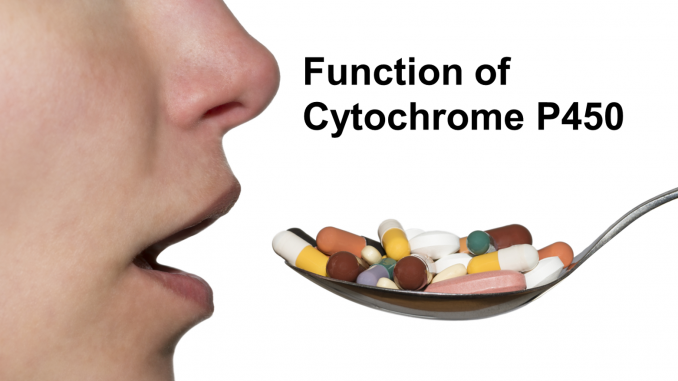
For the longest time one of the staples in our household has been grapefruit juice. Not even so much because the slightly bitter taste is pleasing but since it magnifies the effect of most nutritional supplements.How is that possible? Active ingredients in grapefruit juice have a profound effect on the most important enzymes in our body, which goes by the name 'cytochrome P450 complex which reside mostly in the liver. These enzymes will eventually metabolize every single drug or supplement which enters our body.
The speed at which each of us metabolize those drugs, differs drastically between individuals. Oftentimes this doesn't really matter that much since most drugs are safe at higher dosages.
There are exceptions though, which holds true most of all for chemotherapy drugs. Recently there's been a breakthrough when it comes to knowing what's the best dosage to use.
Tailor-made drugs
Every person is different, and every person reacts differently to drugs. Nevertheless, the 'one-size-fits-all' principle still applies to pharmaceutical manufacturers. For one drug your doctor may adjust the dose when you react adversely or when it doesn't seem to work.But now it has been made possible to predict in advance how much of a drug to use.
"Matching drugs to someone's DNA reduces serious side effects by 30%"
Since the unveiling of the human genome , precision medicine has advanced to the point where it's now integral to clinical drug development.Equally important is the use of genetic information to diagnose disease and tailor treatment. Dutch researchers at the Leiden University Medical Center may have arrived at a breakthrough in precision medicine. They used a so-called DNA medication pass to custom fit treatments across a wide range of disease areas. Adjusting the dosage of medications based on patients’ DNA profiles led to 30% fewer serious side effects.
In many areas of medicine, a one-size-fits all approach for prescribing medicines is becoming obsolete. This especially holds true in oncology. Due to variations in our genetic make-up, patients often respond differently to certain cancer drugs.
In its simplest form, precision medicine reveals which patients are likely to benefit or experience adverse events from taking a drug.
But, it’s often more complicated that. Due to differences in metabolism, for example, some patients may process certain drugs faster than others and consequently require a higher dose to achieve benefit.
Researchers at the Leiden University mapped the DNA of 7,000 participants in 7 European countries. They received drugs for the treatment of cancer, heart and vascular disorders and psychological complaints, among other things.
For the DNA medication pass, the researchers looked specifically at 12 genes that altogether have 50 variants that are known to influence the effect of 39 medicines.
Once provided with their medication pass, the patients were being treated with drugs by doctors and pharmacists who could use the pass to determine the optimal dose for the individual patient.
After 12 weeks, the patients were questioned about side effects, such as diarrhoea, anemia, nerve pain or loss of taste. To the surprise of the researchers, adverse side effects diminished by no less than 30%.
"We knew there would be a positive effect, but never expected to see a decrease of thirty percent, which is a lot. Therefore we think that this should become part of routine care," said the lead researcher Guchelaar.
Guchelaar advocates mapping the DNA of every patient who comes to the pharmacy. "Only in this way can we make the treatment more effective and safer for every patient."
Not only did the test subjects suffer less side effects, they also felt the pass gave them a sense of empowerment, because they were actively involved in their own treatment.
This raises questions such as whether in future - if the pass becomes a mainstay - it should be reimbursed by payers and be considered part of standard care and therefore an essential benefit. The pass would cost between 300 and 600 euros per patient. But, it may deliver cost savings in the healthcare system.
The work being carried out by Guchelaar’s team is contributing to the personalization of medicine, which is part of the broader precision medicine trend in healthcare. This involves more than just DNA profiling. Gender differences and ethnicity play a role. And things like body size, differences in people’s intestinal microflora, drug-drug interactions, and other non-genetic factors can also lead to different people taking the same drug having markedly different responses.
Influence of grapefruit on drug metabolization
Grapefruit has a high volume of compounds called furanocoumarins, which are designed to protect the fruit from fungal infections. When you ingest grapefruit, those furanocoumarins take your cytochrome P450 enzymes offline.The body basically throws up its hands, and starts producing entirely new sets of cytochrome P450s. This can take over 12 hours.
This rather suddenly takes away one of the body’s main defense mechanisms. If you have a drug with 10 percent bioavailability, for example, the drugmakers, assuming you have intact cytochrome P450s, will prescribe you 10 times the amount of the drug you actually need, because so little will actually make it to your bloodstream. But in the presence of grapefruit, without those cytochrome P450s, you’re not getting 10 percent of that drug. You’re getting 100 percent. You’re overdosing.
And it does not take an excessive amount of grapefruit juice to have this effect: Less than a single cup can be enough, and the effect doesn’t seem to change as long as you hit that minimum.
None of this is a mystery, at this point, and it’s shockingly common. Here’s a brief and incomplete list of some of the medications that research indicates get screwed up by grapefruit:
- benzodiazepines
- amphetamines
- anti-anxiety SSRIs
- cholesterol-lowering statins
- erectile-dysfunction drugs
- various over-the-counter meds
.... and about a hundred others.
In some of these cases, the grapefruit interaction is not a big deal, because they’re safe drugs and even having several times the normal dosage is not particularly dangerous. In other cases, it’s exceedingly dangerous. “There are a fair number of drugs that have the potential to produce very serious side effects,” says Bailey. “Kidney failure, cardiac arrhythmia that’s life-threatening, gastrointestinal bleeding, respiratory depression.” A cardiac arrhythmia messes with how the heart pumps, and if it stops pumping, the mortality rate is about 20 percent. It’s hard to tell from the statistics, but it seems all but certain that people have died from eating grapefruit.
This is even more dangerous because grapefruit is a favorite of older Americans. The grapefruit’s flavor, that trademark bitterness, is so strong that it can cut through the decreased taste sensitivity of an aged palate, providing flavor for those who can’t taste a lot of other foods very well. And older Americans are also much more likely to take a variety of pills, some of which may interact with grapefruit.
This interaction, by the way, seems to affect all of the bitter citruses—the ones that inherited the telltale tang from the pomelo. Sour orange. Lime, too. But it’s unlikely that anyone would drink enough sour orange or lime juice to have this effect, given how sour it is. Grapefruit, on the other hand, is far more palatable in large doses.
There’s nothing inherently wrong with the fruit. There’s plenty of really helpful, healthy stuff in a grapefruit, especially vitamin C, which it has in spades. He just makes the case that in a time when more than half of Americans take multiple pills per day, and 20 percent take five or more, grapefruit-drug interactions are just something everyone should know about.
You may wonder, when grapefruit potentiates drugs or supplements, are there other foods that make them weaker?
Yes there are, most noticeably the well known mood-enhancing herb St. John's Wort.
St. John's Wort speeds up metabolic rate
St. John’s wort can weaken the effects of many medicines, including crucially important medicines such as- antidepressants
- birth control pills
- cyclosporine, which prevents the body from rejecting transplanted organs
- some heart medications
- some HIV drugs
- some cancer medications
- anticoagulants (blood thinner)
- certain statins
Conclusion
In general we deem it to be exciting news we are able to discover so much about our own body.
Some people worry though whether this may be another infringement of their privacy especially since the medication pass uses a QR-code to be scanned, which gave Dutch citizens nasty reminders of the time during the covid lockdown when people were banned from entering public facilities such as restaurants and gyms.
In the meantime, you would also like to try to speed up or slow down the breakdown of medicines.
Remember how not just medicines but also toxic substances from food are broken down in this enzyme complex. In the case of mild food poisoning, you may want to take the help of specific detoxifying supplements such as milk thistle, NAC, SAM-e, or artichoke.
In case you are intereted in grapefruit, read this
Recent posts
- Daylight Saving Time: tips and tricks for a smooth adaptation
- Being a grandparent doesn't just bring joy but also rejuvenates your brain
- Wide awake at night but tired in the morning? How to cure insomnia!
- Fall prevention tips for elderly people
- How Heart Rate Variability can be an indicator of your well-being
- Biting insects, what causes them to be attracted to you and what can you do to repel them?
- How can athletes beat the heat with heat adaptation training?
- Health benefits of infrared light therapy
- How do you prevent a sunstroke or heatstroke?
- How to become super strong and muscular in a responsible way!
Contents
Language for this blog

- Vestiging: Wageningen | Julianastraat 99 | 6707 DC | NL
- Telefoon: +31 (0)6 5107 9358
- Mail contact: orders@pasioonline.com
- Bestellingen worden gereed gemaakt voor verzending maandag t/m vrijdag tussen 9.00 en 16.00. Zaterdag tussen 10.00 en 14.00 uur. Bij verzending maken wij gebruik van PostNL en DPD. Afhalen alleen na afspraak en vooruitbetaald. Probiotica worden niet retour genomen.