
City:
Your city
- Office: Wageningen | Julianastraat 99 | 6707 DC | NL
- Phone: +31 (0)6 5107 9358
- Business hours: Mon-Sun 09.00 - 16.30
- Mail contact: orders@pasioonline.com
- All orders ship Monday through Friday from 9am-16pm. Saturday 10am-14pm. We ship via PostNL and or DPD. Pick-up orders only pre-paid. Probiotics are subject to a no-return policy.
Categories
Categories
Categories

+31 (0)6 5107 9358
+31 (0)6 5107 9358
Mon-Fr 9a.m.-6p.m.
AddressNetherlands, Wageningen, Julianastraat 99
Are foods really less nutritious than in the past? On soil depletion and micronutrients
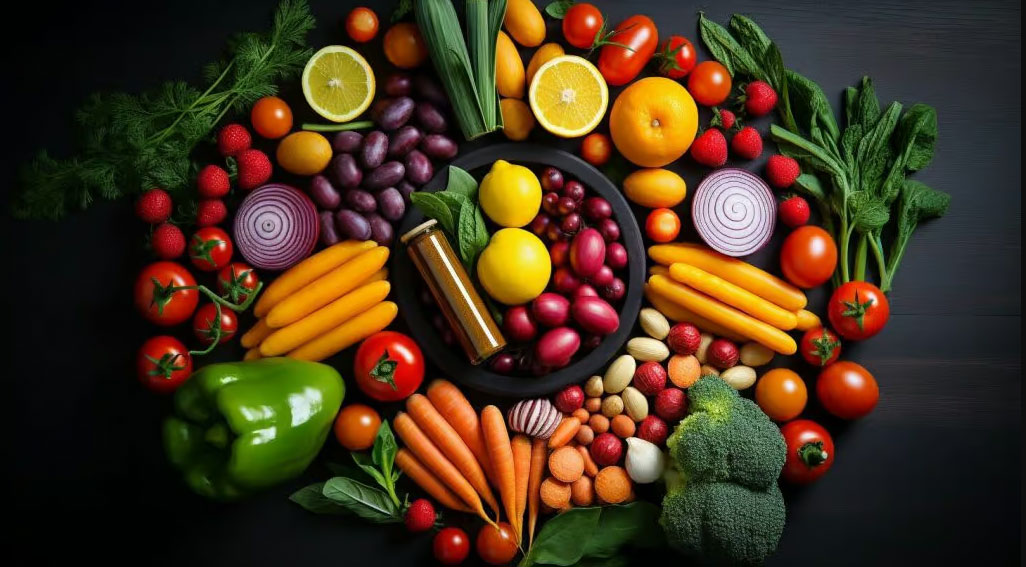
Are foods really less nutritious than in the past? On soil depletion and micronutrients
Quite a lot of fitness enthusiasts are very focused on their calorie intake in an effort to gain muscle mass or lose body fat. If anything they will then focus mainly on upping protein intake by adding protein powders to their daily menu.For the remainder, those who want to lose body fat will focus on removing 'junk' sugars and starches while adding nutrient-rich fruits and vegetables which are more satiating.
Very little attention is given to micronutrients, especially since it's been the mantra of most national health services you should just eat healthy foods and everything falls into place, except for a few crucial micronutrients like iodine , folic acid for pregnant women and vitamin D3 in winter.
Apart from difficulties to get in enough valuable micronutrients from your food, there is an ongoing debate whether or not the foods on our table contain fewer micronutrients than they once used to and what to do about this.
While a few sources present very convincing evidence how foods are less nutritious now than they ever used to, others claim the difference is negligible.
What is soil depletion?
Soil depletion refers to removal of nutrients from the soil. Usually, we use this term to refer to changes caused by intensive agricultural use of soil. It also refers to structural changes of soil. Soil depletion also results in loss of biological diversity.How does soil depletion affect nutrition? Soil is a non-renewable resource, and its conservation is essential for food safety and our sustainable future. Soil is the ultimate resource for food and heavily affects our nutrition.
Fertile soil encourages the growth of plants by providing nutrients. It acts as a water tank and serves as a foundation for the plant roots. In turn, vegetation, trees and greenery prevent soil decay and depletion. They stabilize it, maintaining the water and nitrogen cycle, as well as cycle of other nutrients. Plants also assist in reducing the negative effects of water and wind erosion.
As we use the soil for intensive agricultural production, we erode the nutrients. This is especially true if the soil is used to produce the very same type of plants, all the time and there is no proper crop rotation.
When new crops cannot extract sufficient nutrients to grow properly, farmers decide to use chemical fertilizers – to improve the soil condition.
Excessive exploitation of agricultural soil has led to increasingly pronounced soil degradation and depletion. Today, we can recognize this as a serious ecological problem. As a result, nutritive values of foods we produce today have drastically changed over the past 50-70 years.
This is why more and more eco-conscious scientists and agriculture experts emphasize the importance of organic farming. The philosophy of organic farming is based on sustainable exploitation of natural resources (mainly soil and water).
It is also based on reducing degradation, environmental pollution, and soil depletion through implementation of natural soil enrichment methods. Such measures will significantly improve the nutrient content of the food we produce and consume.
Sounds alarming , right? Enough to make you go and start eating organic foods in a hurry, isn't it? Not so fast!
Soil depletion isn't as bad as is claimed
Most articles stating that today’s crops are less nutritious seem to assume that plants ‘make nutrients’ or absorb nutrients simply for our benefit. As if this process is divorced from the development of the plant itself. We breed vegetables and fruits to grow bigger and faster and they do this despite what we do to the soil. However, breeding for faster growth and higher yield is only one part of the strategy. Another part is enriching the soil with fertilizers and to use soil testing to ensure the mineral content of the soil.Further analysis shows that when changes occur in mineral content over the decades, there is virtually no difference in the balance of minerals between the old and new crops. This would mean that either all the minerals are being depleted at the same rate, which seems hard to fathom, or that none are being depleted and other variables are responsible for this change in mineral balance.
This is not to say that soil depletion does not happen, but that it does not resemble the broad soil depletion of all nutrients as we are made to believe.
The dilution effect
It is true that some samples of modern vegetables show lower amounts of some nutrients than available nutrient data on older ones. One reason stated for this is the dilution effect. Modern high-yield and larger growing varieties are bread for more carbohydrates. This carbohydrate increase is not accompanied by a proportional increase in micro-nutrient composition.However, when single crops are studied, research fails to find consistent decreases of certain nutrients. In order to get these significant changes, you have to group a bunch of vegetables, fruits, or grains together into a broad group. As soon as you look at one crop, the changes become insignificant because of the natural variation of nutrients in the vegetable or fruit, which can be quite broad, especially in the case of nutrients like copper.
Some modern varieties even have higher concentrations of certain nutrients. Regardless, calling something scientifically significant and practically significant are two different things.
Research does not show that today's food is not nutritious enough
Whether or not a change is statistically significant within the confines of a certain piece of scientific research has nothing to do with whether it is significant in terms of human health. This is very important!Despite statistically significant decreases in the nutrient content of fruits, vegetables, or grains, none of these changes can be claimed to have any significant impact on human health.
Those making such claims would be a lot better off using the raw data for food nutrient composition to better inform people as to how to make healthy choices in their diet than to comb through nutrient data comparisons so as to alarm people and fool them into thinking that today’s food is not nutritious.
Today’s food is quite nutritious. Might there be trends in soil depletion, breeding, etc. that causes these small changes to become more significant over time? Yes.
Do we have evidence that our food is, at this time, almost devoid of nutrients or so much lower in nutrients that we should all run and scream and seek a return to the good old days of being hunter-gatherers? NO.
You can rest assured that the fruits, vegetables, and grains you buy from your supermarket or farmer’s market contain more than enough nutrition to keep you healthy, provided you eat a healthful amount of them, but not an excessive amount. In other words, go forth and eat.
Down to the nitty gritty details
Ultimately, not eating enough already very nutritious fruit and vegetables is much more of a problem than any minor changes in nutritional composition that may (or may not have) occurred over time.But if you don't believe me, you may be interested in obtaining a very detailed book 'Voedingswaardewijzer' which was recently published by Dutch health writer Juglen Zwaan. His book gives the nutritional value of a wide range of foods available in the Netherlands. Even when Dutch isn't your first language, it is still worthwhile to take a look at it, since numbers are universal and its presentation is very intuitive.
However, by eating a diet predominantly comprised of whole-foods, high in vitamins and minerals, and taking a high-quality multivitamin, you are giving yourself the best chance of good health without having to micro-manage every little detail!
Recent posts
- A case of overreach and hubris: dare to face reality
- We are moving to a new store!
- Living with less stress by adopting a slow-living lifestyle
- Christmas and New Year's Greetings
- How to separate chaff from the wheat: can we trust mainstream media and bought scientists?
- About the emotional bond with your pet, a memoriam for Birgit
- Wind turbines and health: how unhealthy are they and how can you prevent a wind farm from being built in your neighborhood?
- Freedom of speech: 20 years after the assassination of Theo van Gogh, censorship is worse than ever.
- Normalcy, or how not to worry too much about the measles
- The WHO and its Pandemic Treaty: how will it affect our freedom?
Author
Yvana van den Hork
Rank: Senior Editor
Position: Director
She holds an MSc in Toxicology and Biology of the Wageningen University
All author posts
Contents
Language for this blog
Pasio ingredients

- Vestiging: Wageningen | Julianastraat 99 | 6707 DC | NL
- Telefoon: +31 (0)6 5107 9358
- Mail contact: orders@pasioonline.com
- Bestellingen worden gereed gemaakt voor verzending maandag t/m vrijdag tussen 9.00 en 16.00. Zaterdag tussen 10.00 en 14.00 uur. Bij verzending maken wij gebruik van PostNL en DPD. Afhalen alleen na afspraak en vooruitbetaald. Probiotica worden niet retour genomen.
My account
Customer Service
Klantenservice
© 1998 - 2026 Mungotedo LLP.