

The true danger of COVID-19 vaccines : why we should avoid leaky vaccines
The true danger of COVID-19 vaccines : why we should avoid leaky vaccines
Two weeks ago I wrote in my blog on how I did not want a vaccine out of madness because governments won't allow the use of HCQ or ivermectin, both of which are both safe and cheap treatments against COVID-19.
However, I said to not see anything wrong in the vaccine itself. By now I've changed my mind. No, I don't actually deem mRNA vaccines to be unsafe, nor am I too worried about the very rare side-effects of clotting.
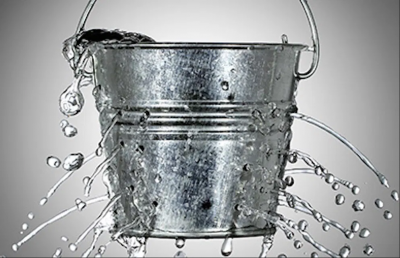
What truly spooked me is the fact these are 'leaky' vaccines, which allows viruses to still infect people despite being vaccinated. They just won't get sick, but can become hosts of viruses that may still infect unvaccinated people. Who , in the end no longer will have any other choice but to get vaccinated when a virus has mutated into a too dangerous variant.
At least this is the theory from e.g. dr Geert Vanden Bossche, a prominent virologist who spoke out against massive vaccination.
Why is the fact those vaccines are leaky so scary? Let me explain with an article on Marek's disease in chickens.
‘Leaky’ vaccines can produce stronger versions of viruses
By studying chickens, researchers say they have proven the theory that more virulent viruses can evolve from so-called “leaky” vaccines.In a debate whether or not to vaccinate due to fear possibly dangerous ingredients or 'gentech' methods, those concerns are unimportant compared to the potential risks of using “leaky” vaccines to prevent disease.
According to a 2015 study published in the scientific journal PLOS Biology, some types of vaccines could allow more virulent versions of a virus to survive, putting those who are unvaccinated at greater risk of severe illness.
To understand this, it’s necessary to examine the difference between “perfect” vaccines and “leaky” ones.
Perfect vaccines are perfect because they mimic the perfect immunity that humans naturally develop after having certain childhood disease.
When a vaccine works perfectly, as do the childhood vaccines for smallpox, polio, mumps, rubella and measles, it prevents vaccinated individuals from being sickened by the disease, and it also prevents them from transmitting the virus to others.
Over the past fifty years, Marek’s disease—an illness of fowl—has become fouler. Marek’s is caused by a highly contagious virus, related to those that cause herpes in humans. It spreads through the dust of contaminated chicken coops, and caused both paralysis and cancer. In the 1970s, new vaccines brought the disease the under control. But Marek’s didn’t go gently into that good night. Within ten years, it started evolving into more virulent strains, which now trigger more severe cancers and afflict chickens at earlier ages.
It is thought that the vaccines were responsible. The Marek’s vaccine is “imperfect” or “leaky.” The vaccine protects chickens from developing disease, but doesn’t stop them from becoming infected or from spreading the virus. Inadvertently, this made it easier for the most virulent strains to survive. Such strains would normally kill their hosts so quickly that they’d die out. But in an immunised flock, they can persist because their lethal nature has been neutered. That’s not a problem for vaccinated individuals. But unvaccinated birds are now in serious trouble.
This problem, where vaccination fosters the evolution of more virulent disease, does not apply to most human vaccines. Those against mumps, measles, rubella, and smallpox are “perfect” . They protect against disease and stop people from transmitting the respective viruses.
These vaccines are very successful, highly effective, and very safe. They have been a tremendous success story and will continue to be so.
However, this is not the case for the next generation of vaccines that are being developed against diseases like HIV and malaria. People don’t naturally develop life-long immunity to these conditions after being infected, as they would against mumps or measles. This makes vaccine development a tricky business, and it means that the resulting vaccines will probably leak to some extent.
This isn’t an argument against developing those vaccines, but it is an argument for ensuring that we carefully check for transmission.
At the time in 2015, a vaccine for Ebola was the first candidate to be developed. If a vaccine for such a dangerous virus would leak, and vaccinated individuals would pass on Ebola, that might lead to the evolution of very dangerous pathogens.
In animal vaccines, this is already the case. Animal vaccines against Newcastle disease in poultry, Brucella in livestock, and especially avian flu are leaky.
When bird flu outbreaks hit American and European farms, the birds are culled. But in Southeast Asia, they’re often vaccinated, and those vaccines are leaky, which creates an analogous situation to Marek’s disease.
The birds might survive more lethal forms of the virus, which they could then spread to each other—and potentially to people.
The “imperfect vaccine hypothesis” was first proposed in 2001 by Read, but it took until 2015 until evidence for his idea was finally supported by proof from experiments done on chickens.
Both vaccinated and unvaccinated chickens were infected with five different strains of Marek’s virus of varying virulence. When unvaccinated birds are infected with mild strains, they shed plenty of viruses into their surroundings. If they contract the most lethal strains, they die before this can happen, and their infections stop with them.
In the vaccinated chicks, this pattern flips. The milder strains are suppressed but the lethal ones, which the birds can now withstand, flood into the environment at a thousand times their usual numbers.
The “lethal” strains could spread from one vaccinated individual to another, and that unvaccinated chickens were at greatest risk of disease and death if they were housed with vaccinated ones.
All of this is consistent with the imperfect vaccine hypothesis. It doesn’t prove that imperfect vaccines drove the evolution of today’s extra-virulent strains, and we may never know for sure why those evolved in the first place.
Other factors, like the fact that modern chickens are genetically similar or raised in dense, crowded conditions, may have also played a role. Still, it’s at least clear that vaccines can keep virulent strains in circulation.
For the chicken industry, these results are actually an argument for getting the vaccine. Any chicken that doesn’t get it is at even greater risk than it would be in the 1950s when a vaccine still did not exist.
This work may drive change in the way that vaccines are developed and tested, so that there is much greater emphasis on their ability to prevent infection and transmission, rather than only on their ability to prevent clinical disease.
In 2015 it was observed by Katherine Atkins from the London School of Hygiene and Tropical Medicine how "researchers need to look beyond how vaccines curb epidemics, but should also consider the long-term evolutionary consequences of new vaccine introduction.
The big question is whether or not leaky vaccines allow virulent viruses to evolve into more dangerous mutant variants?
Some people such as dr. Geert Vanden Bossche believes they do, while others are confident they don't.
What would it look like?
If SARS-CoV-2 evolves in response to a COVID vaccine, there are several directions it could take. The most obvious is what happens with the flu virus. Immunity works when antibodies or immune cells bind to molecules on the surface of the virus. If mutations in those molecules on the surface of the virus change, antibodies can’t grab on to them as tightly and the virus is able to escape. This process explains why the seasonal flu vaccine needs updating each year. If this happens, a COVID vaccine would need frequent updating.But evolution might head off in other directions such as going into stealth mode by reproducing slowly or hiding in organs where immunity is less active. Many pathogens such as Lyme disease that cause barely noticeable chronic infections avoid detection because they do not cause acute disease.
A more dangerous avenue would be if the virus evolved a way to replicate more quickly than the immunity generated by the vaccine. Another strategy would be for the virus to target the immune system and dampen vaccine-induced immunity.
Many microbes can survive inside the human body because of their exquisite ability to interfere with our immune systems. If SARS-CoV-2 has ways of even partially disabling human immunity, a COVID vaccine could favour mutants that do it even better.
Evolution-proof vaccines
Truly evolution-proof 'perfect' vaccines have three features.First, they are highly effective at suppressing viral replication. This stops further transmission. No replication, no transmission, no evolution.
Second, evolution-proof vaccines induce immune responses that attack several different parts of the microbe at the same time. It is easy for a single part of the virus to mutate and escape being targeted. But if many sites are attacked at once, immune escape requires many separate escape mutations to occur simultaneously, which is almost impossible. This has already been shown in the laboratory for SARS-CoV-2. There the virus rapidly evolved resistance to antibodies targeting a single site, but struggled to evolve resistance to a cocktail of antibodies each targeting multiple different sites.
Third, evolution-proof vaccines protect against all circulating strains, so that no others can fill the vacuum when competitors are removed.
Will a COVID vaccine be evolution-proof?
It is important to pursue those that will keep working. Vaccines that provide only temporary relief leave people vulnerable and take time and money to swap out. They may also negate other vaccines should viruses evolve that are resistant to several vaccines at once.Today, the world has insecticide-resistant mosquitoes and crop pests, herbicide-resistant weeds, and an antibiotic resistance crisis. No need for history to repeat itself and use vaccines that allow SARS-COV2 to mutate into more dangerous variants.
To the main pageNext article
