


How to separate chaff from the wheat: can we trust mainstream media and bought scientists?
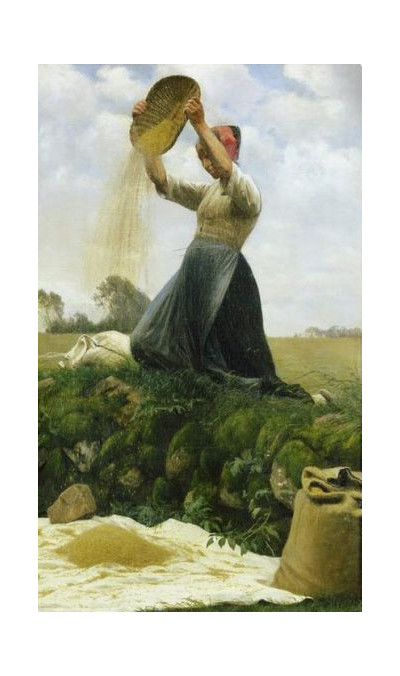
How to separate chaff from the wheat: can we trust mainstream media and bought scientists?
We live in very turbulent times, where it seems that what we were told last week as the absolute truth is suddenly being seen in a different light. At least, that is how it is increasingly seen on the other side of the 'pond' where Elon Musk and his team are scrutinizing one ministry after another to see where money is being wasted.
The biggest surprise turned out to be at the ministry where money is being transferred abroad under the heading USAID.
Billions of dollars were spent on influencing public opinion, with even the BBC World Service receiving substantial financial donations.
The same turned out to be the case within the EU, with the European Commission appearing to have spent at least a few billion on paying media and influencers. Even in the Netherlands, Minister Kaag has spent at least 1 billion under the heading 'Power of Voices', with Milieudefensie (Environmental Defense), for example, receiving a generous 10 million in subsidies from this pot in 2023. This proved Udo Ulfkotte right when he published a book in 2014 called "Gekaufte Journalisten". At the time, it did not receive much attention, but recently it has been referred to more and more often in the wake of these successive scandals.
At the same time, they reminded me strongly of the state of affairs during the pandemic, when the so-called 'mainstream' media actually all turned out to be in line and the only contradiction came from the so-called 'alternative' channels.
Doctors and scientists who spoke in these alternative channels were criticized as 'crazy people'. Unfortunately, only a few dared to go against the 'establishment': the vast majority of scientists kept their mouths shut for fear of losing subsidies and worse, their jobs. In short, just as journalists can be corrupted, so can scientists.
It is not surprising that the loudest contradiction came from retired professors such as Pierre Capel, who had nothing left to lose. Those who were not yet retired paid dearly for this: they lost their jobs and some emigrated. In addition to his collected protest blogs, I now also have the well-considered Wuhan Trilogy by the incomparable Jan Bonte, in which he explains in great depth, yet still understandable to laymen, how things really were. The trilogy is now in its second edition, in which recent developments have also been incorporated. In the future it might get translated to English.
That scientists were bought became clear after the USAID cesspool was opened. USAID also financed Gain of Function research in biolabs abroad, and in particular that in the Wuhan Institute of Virology (WIV) where SARS-CoV2 broke out and where it is still stubbornly maintained that this was an outbreak caused by the contamination of animals to humans (the so-called zoonosis) at the Wuhan animal market.
If you want to learn more about USAID, I recommend the interview Joe Rogan recently had with Mike Benz (podcast 2272)
Discussion on excess mortality
The same applies to the ever-continuing excess mortality, which was debated in the Dutch House of Representatives last week.
Unfortunately, this turned out to be disappointing: the scientists and statisticians who pointed out that the official analysis carried out by NIVEL was flawed on all sides were pushed aside by the State Secretary of VWS as being irrelevant because the RIVM and NIVEL were considered more reliable than the critics. It simply came down to saying: "We blindly trust the judgment of the officially appointed experts".
You may not have followed the entire discussion, but I would like to inform you of the analysis by one of the best Dutch statisticians who dared to speak his mind, Maurice de Hond.
He explains why the NIVEL study was not properly conducted in several articles, which amounts to the researchers placing all anonymous participants in the group 'unvaccinated'.
Since the vast majority of older people in particular were vaccinated, the group of anonymous participants is quite small compared to vaccinated people, but quite large compared to unvaccinated people.
In addition, there was the so-called 'healthy vaccinee' effect, which means that people who were known to be dying soon were no longer vaccinated. The bizarre result was that vaccinated people subsequently died statistically significantly less from the most diverse diseases in the following three months! A vaccin as the elixir of life!
It would take us too far to post his articles in their entirety here, but I refer you to respectively
https://www.maurice.nl/2024/09/03/sterftecijfers-onder-de-loep-misleidende-conclusies-in-nieuw-nivel-onderzoek/
https://www.maurice.nl/2024/09/07/nivel4x317/
https://www.maurice.nl/2024/09/07/de-enorme-data-problemen-van-het-nivel-rapport/
https://maurice.nl/2024/09/07/deel-2-nivelrapport-coronavaccin-als-levenselixer/
https://maurice.nl/2024/09/19/het-nivel-onderzoek-is-nog-vreemder-dan-ik-al-dacht/
https://www.maurice.nl/2024/11/01/nivel-onderzoek-3-personen-van-120-jaar-oud/
https://www.maurice.nl/2024/11/09/nivel-amateurisme/
https://www.maurice.nl/2024/11/15/klachtenbrief-wegens-integriteitsschending-nivel-bij-zonmw/
https://www.maurice.nl/2024/11/28/de-nivel-zonmw-nwo-klachtencaroussel/
https://www.maurice.nl/2024/11/29/de-ultieme-oversterfte-van-het-nivel-onderzoek/
Obviously they are written in Dutch, but fortunately this isn't a problem anymore with a translating app, as shown for the first article
Sterftecijfers onder de loep: Misleidende conclusies in nieuw Nivel Onderzoek / Mortality rates under the microscope: misleading conclusions in new Nivel Research
Is there a connection between Covid-19 vaccinations and the excess mortality that hit our country during and after the corona pandemic?
The House of Representatives will discuss this question this Thursday, partly on the basis of a report that is also flawed in the eyes of physician Prof. Dr. Armand Girbes. "Better research is needed to arrive at more robust conclusions.""The House of Representatives will reflect on the continuing important subject of excess mortality on Thursday. The Nivel report, subsidized by ZonMw, will undoubtedly be reviewed. In this report, the authors describe the results of their research into a difference in excess mortality between people with and without Covid-19 vaccination in 2021 and 2022.
The first version of the report was published on September 2, 2024. The authors claimed that their data confirmed that Covid-19 vaccination prevented deaths, something that everyone naturally wanted to know. And that was especially true for the fact that vaccinations played a causal role in this. Unfortunately, the report turned out to confuse associations with causality. The causal role of vaccinations could not be demonstrated at all with the available data. That was already clear to the experts in advance.
Corona vaccination report has many shortcomings
In addition, the report contained calculation errors. After criticism, a revised version was published on October 2. And although the authors had clearly made a lot of effort to collect as much data as possible, the new version still had many shortcomings. To a large extent, this was due to missing data and the fact that approximately 7% of vaccinated people did not give permission for registration, while this group was wrongly included in the 'unvaccinated'. This has a major impact on the composition of the groups that are compared, especially among the elderly, because the proportion of unregistered vaccinated people is high among them.It is important that the House critically examines the Nivel report and insists on better research into excess mortality, to the extent that this is scientifically possible, Girbes believes.
Another problem is the so-called selection bias. This means that the groups that you want to compare are already very different before you start the research. For example, people who were in very poor health chose not to be vaccinated, while relatively healthy people did get vaccinated. If you now compare vaccinated people with unvaccinated people, you are in fact comparing people with poor and good health.
Factors that were not measured
A further problem is the influence of what we call confounders. In this case, for example, these are factors that have a major influence on the risk of death, but that were not measured, such as the severity of underlying diseases.An alarm bell that something was seriously wrong with the design of the study should have rung when the authors saw the results. The results themselves are difficult to explain from a medical-biological perspective: an extremely high excess mortality in groups of unvaccinated people of up to 300%.
At the same time, the figures in the tables suggest undermortality in the vaccinated group in almost all age groups, as if Covid-19 vaccination would also protect against other causes of death.
Reliability
Although the report offers valuable insights, such as that – with a few caveats – excess mortality due to vaccination is not very likely, the methodological limitations raise questions about the reliability of the extreme differences in excess mortality that are reported. It is therefore important that the House critically examines these results and insists on better research into excess mortality, to the extent that this is scientifically possible. Only in this way can we arrive at more robust conclusions about the effects of Covid-19 vaccination and the policy pursued.”
The comment of physician-researcher Jona Walk after the extremely disappointing parliamentary debate was as follows
Comment on the parliamentary debate
As a scientist, I watched with vicarious shame this answer from State Secretary Vincent Karremans about the excess mortality research by Ronald Meester and Bram Bakker, among others - to which I was allowed to contribute. It is characterized first of all by the lack of any substantive argument why our excess mortality research would be less correct than the studies by RIVM/CBS/Nivel/UMCU. The State Secretary even says that he "disregarded" our research. Why?
* ZonMw is said to have chosen not to fund Prof. Meester. Over the years, I have seen ZonMw fund the biggest nonsense, and reject research that later shifted paradigms. The subsidy says nothing about the quality of the work that was done later. The funny thing is that a considerable part of the research did result from a ZonMw subsidy, so the State Secretary is also misinformed.
* Our research has not (yet) been published in a peer-review journal. First, the research by Nivel and UMCU that the State Secretary does rely on has not been published in such a journal. Second, the State Secretary shows an absurd lack of knowledge about the duration of the peer review process.
* We are going against the scientific consensus. That is true. But that is all the more reason that the State Secretary should take a serious look at the work. Only someone without any knowledge of philosophy of science or history would reject scientific research just because the majority of scientists claim otherwise. If he had read our work, he would have seen that we clearly explain how all the other groups make the same mistake. We have now spoken to both the RIVM and the Nivel.
Behind closed doors, they admit that
1) there are no errors in our analysis, and
2) the underlying data are so distorted by bias and confounding that their conclusions are not hard either.
You could organize an entire course in philosophy of science around this blunder by the State Secretary. The only good thing is that it is here, on camera, irrefutably, the government cannot later say that it did not know our work. And everyone can see how the State Secretary admits to ignoring it without any substantive treatment.
Government-sponsored disinformation amplified COVID-19 spread
Other research published in Social Science & Medicine unveiled the profound impact of government-sponsored disinformation on the severity of respiratory infection epidemics, including COVID-19. The research analyzed data from 149 countries between 2001 and 2020, revealing a significant positive association between disinformation campaigns and the incidence of respiratory infections.Specifically, countries with higher levels of government-driven misinformation experienced more severe outbreaks of COVID-19. This correlation underscores how deliberate dissemination of false information seriously undermines public health efforts, leading to increased transmission rates and higher case numbers.
The study also highlights the detrimental effects of internet censorship on the reporting and management of respiratory infections. Governments that actively censor information limit the public’s access to accurate health data, worsening outcomes as occurred during the pandemic. As Dr. Robert Malone put it, "Both the background summary and the study findings are prophetic, and almost completely aligned with the Energy and Commerce committee report."
The path forward — ensuring transparency and trust in public health
It’s evident that the COVID-19 public health campaign was fraught with hidden dangers and systemic challenges. In the aftermath of these revelations, the need to advocate for transparency, accountability and evidence-based policies is clear. Only by addressing these foundational issues will we ensure more effective responses in future health emergencies.
The lessons learned from these failures should drive a fundamental rethinking of how public health campaigns are managed and communicated, prioritizing scientific data over propaganda to better serve and protect the public.
Conclusion
Mainstream media and government-funded science have lost credibility due to financial influence and bias, exemplified by billions spent through USAID, the European Commission, and Dutch ministries to shape public opinion, fund outlets like the BBC, and support questionable research, such as gain-of-function studies in Wuhan. It critiques the silencing of dissenting scientists and doctors during the COVID-19 pandemic, the dismissal of independent analyses—like those from Maurice de Hond and Jan Bonte.
