



Cycling safety for road racers : why we are seeing more crashes and what can be done about it?
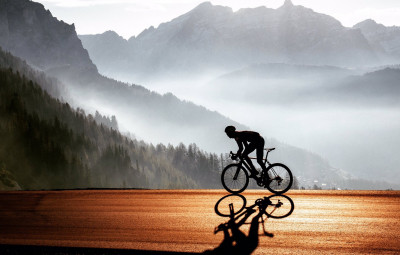
Cycling safety for road racers : why we are seeing more crashes and what can be done about it?
Sport-wise, July is the best month of the year for cycling enthusiasts, since soccer season is over, so there's more attention given to the most famous of all road races: the Tour de France. This year it is going to be even better with the Giro d'Italia for women being held at the same time.While we cry for joy to see the best man win and cross the finish-line , there's sorrow when accidents happen.
Unfortunately accidents are prone to happen in many road races, and sadly sometimes there's a very tragic end, just like happened with Gino Mäder in Switzerland during the last big race before the Tour de France.
Mäder crashed into a steep ravine while descending a steep mountain at a relatively short distance from the finish line.
His death sparked emotional tributes but also raised concerns about the safety measures around elite cycling.
Some of the suggestions ask addition of safety nets on high speed corners in an effort to catch cyclists falling over a precipice while others focused on how reckless cyclists attain even higher speeds than usual when a finish line is so close to to a steep descent.
As if participating in one of the most dangerous sports isn't bad enough, an alarming research reported how road cyclists share the lowest bone density with swimmers among endurance athletes.
Fortunately many pro cyclists have started doing strength training as a weight bearing exercise and some have also taken to running as an outdoor activity.
I'm sure 99.99% of people reading this article aren't into pro cycling themselves, but you may be curious to know what experts like Chris Carmichael (endurance coach, former pro cyclist) and Joe Lindsay (Bicycling) had to say about it in 2020 when a few horrific crashes happened such as those when Dutch sprinting champion Fabio Jakobsen crashed at the Tour of Poland when the finish line was placed on a road with a downhill slope and faulty barriers were used.
Chris Carmichael : "What are we going to do about rider safety in pro cycling?"
The overall fitness level of the peloton is higher than ever before
With the widespread acceptance and use of power meters, structured year-round training, team physiologists, and year-round nutrition programs even the ninth man on a Tour de France squad is superbly powerful. There used to be a more significant difference between a team’s star and the domestiques, but now everyone on the team is a powerhouse.Riders have also become more specialized in their training and their roles on the team. Some of the guys train all winter and spring to not only be at peak condition for the Tour de France, but be at peak condition for the specific job of sitting on the front of the peloton setting pace on flat stages. Or be the guy for the high-speed chase in the final 30km. Or be the leadout team.
All of this means there’s a lot of horsepower available to keep the speeds high all day long, and over the past few years we’ve heard riders lamenting how hard the racing is from kilometer zero.
Back in the 1980s, the racing was hard but there were periods where the speeds were lower. And not every rider had the strength to go to the front when the going got hard.
When there’s a greater strength gradient across the peloton there’s more of a hierarchy; the riders know who is stronger and sort themselves out accordingly. When there’s less of a strength gradient across the peloton no one wants to give an inch. It used to be that when you saw the peloton stretched all the way across the road the pace was relatively slow. Now the peloton is shoulder to shoulder across the whole road and still hauling at speeds that used to result in a long line.
There’s more stuff in the road
No one debates the fact there are more obstacles in the roadway these days. Traffic-calming infrastructure is great at slowing down cars, but it wreaks havoc for a bike race. There are more roundabouts, traffic islands, pylons, and narrowed lanes than there used to be, and riders are hitting them. But the question is whether reducing the size of the peloton would alleviate that problem.Whether the peloton is 160 riders or 200 riders, the road is only wide enough for 5-10 of them at any one time. Strong riders will still want to be up front and that means you’ll still have high-speed shoulder-to-shoulder racing on narrow roads filled with obstacles. Riders are still going to fight for space, they’re still going to cross wheels, and they’ll still hit traffic furniture.
The average speed is still rising
With stronger riders and more advanced equipment, average speeds continue to rise. Just as when driving a car, the faster you go the more risk you’re taking. Stopping distance increases but reaction time doesn’t get faster. Riding so close together reduces forward visibility, which becomes even more important when there are traffic islands and pylons in the road.Team strategies put riders in dangerous situations
Ostensibly, teams ride at the front to keep their star riders out of danger. But with 5 teams of yellow jersey contenders and another 5 sprinter teams all trying to occupy the front of the race, you end up with a curb-to-curb drag race. However, no one wants to be the team that chooses to ride further back in the peloton and gets caught up in a huge crash. So everyone has the same directive: be up front.What’s the solution?
Before contemplating the solution we have to first ask if there’s a problem to be solved. Are there actually more crashes or do we just see more of them because of wall-to-wall television coverage utilizing an increased number of cameras? And with instant replay, on-demand video clips, and social media we can all watch every crash – from the little bobble to the mass pileup – over and over again. Perhaps someone has compiled data to show there are truly more crashes than there used to be, but if it exists I haven’t seen it.
Data is really the missing link in the discussion about rider safety. When Dale Earnhart died in a crash at Daytona, NASCAR commissioned experts to investigate the crash and NASCAR’s safety procedures and safety equipment. They came back with recommendations and NASCAR implemented a lot of changes, including mandating the use of the HANS device (Head And Neck Support device) to limit head mobility during a crash. Racing is still exciting and dangerous, but they enhanced driver safety. If we’re serious about the safety of professional cyclists, and we most definitely should be, then it’s time to put real research behind the questions of whether there are more crashes, what the top 5 causes of crashes are in pro cycling, and how we can reduce the number of crashes and/or mitigate the riders’ risk of injury.
In the same year Joe Lindsey (freelance writer at Bicycling) wrote up 4 other proposals for changes
Pro Cycling Needs a Safety Reset, Badly. Here Are 4 Suggested Changes
We’ve been sending racers mixed messages. On one hand, we want them to race boldly and aggressively. But when those gambles flame out, we put all the responsibility for safety on them, criticizing them for riding dangerously. That’s an unfair double standard.Listen to and respect riders’ voices when they say conditions are unsafe. And in the thick of the action, let racers race, while creating the safest conditions possible for them to do that.
Riders continue to get most of the blame for big crashes while organizers and authorities escape responsibility. This offseason provides an ideal time to change that, with a commission tasked with creating new procedures and protections for riders. Here are four proposals.
Make organizers responsible
One of the worst crashes in 2020 happened in the first stage of August’s Tour of Poland when Jakobsen hit the barriers, forcing them apart, and then hit the ground, face-first. He was airlifted to the hospital and briefly put in an induced coma.In the aftermath, riders in particular criticized race management. Crashes like Jakobsen’s aren’t actually that unusual; sprinters get squeezed into the barriers on a regular basis and sometimes crash, but the barriers are designed to stay together.
In a nearly identical crash involving Mark Cavendish at the 2017 Tour de France, the barriers held, and Cavendish escaped with just a fractured shoulder blade.
The fix: As a condition of WorldTour status, the UCI should require race organizers to investigate any crash that results in a rider forced from the race due to injury.
How it could work: A panel composed of a race commissaire, race organizer representative, and rider representative studies TV footage, interviews affected riders , and assigns immediate and supporting causes. If any were course-related, the organizer has to outline a fix for the next edition.
The UCI already has this power. This suggested change just makes these incidents an automatic review; over time organizers will use rider feedback to refine courses and remove unsafe sections of road or course features, such as downhill sprint finishes.
Increase course protection
At Lombardia, during a late descent, contender Remco Evenepoel hit a low stone wall on a bridge and flipped into a ravine, breaking his pelvis. As with the Poland sprint finish, the descent off the Muro di Sormano is a regular feature of the race and is known for being treacherous.The fix: If the section of course is essential to the race, borrow from alpine ski racing and action sports and put protection up around higher-risk crash zones.
How it could work: Evenepoel overshot the exit on a corner and hit the wall at a 90-degree corner in the structure, and there was no padding to soften his impact. The wall is also low, so any rider crashing at speed during the descent risked flipping over it and falling into the ravine. There was no fencing, netting or other protective barrier to prevent that.
Ski-type netting would catch a rider’s tumble into the ravine, while lightweight crash pads used in sports like SuperCross would dissipate energy from the initial impact. Can you put that on every bridge and wall? No. But you certainly can and should protect known trouble spots like the bridge on the Sormano.
A designated rider rep for every race
On Stage 1 of the Tour de France 2020, crashes came in bunches as a late-summer rain, the first on the Côte d’Azur in weeks, mixed water with oily vehicle exhaust deposited on the pavement. The riders asked race organizers to neutralize the final descent and were rebuffed. So they did it themselves.In ages past in the sport, pro cycling often had a patron, a particular champion of such stature (like five-time Tour winner Bernard Hinault) that could essentially assert authority over other riders. There hasn’t been a similar patron in some time. Four-time Tour winner Chris Froome never really embraced the role, and one of the last patrons, Lance Armstrong, sometimes used his power for cruel personal vendettas.
Without a patron, it takes time to arrive at a consensus; on a dangerous course, that delay can put riders at risk.
The fix: Teams already have road captains who help protect a leader and execute team tactics. For each race, team captains would collectively designate a “patron” or “matron” of sorts from among their ranks: a rider rep who, during the race, has the authority to speak to organizers on behalf of the entire pack on issues of rider safety.
How it could work: In races with extreme weather or course safety issues, the patron can make the request for the pack to neutralize until conditions improve. There’s a risk teams might abuse this power. But the pack has a habit of self-policing such attempts, and a patron who uses his position to help his team competitively probably won’t get chosen for the role again. This would speed up decision-making by designating one rider as a pack authority to his or her peers, and direct organizers to defer to their safety requests unless there’s a clear reason not to.
A “free lap” for crash victims
When a rider crashes, their first instinct is to remount and chase. That’s because in racing, there are no timeouts for almost any reason, so there’s a perverse incentive to ignore injury and ride on, and sort out the wreckage later.That leads to frightening outcomes. After numerous scary crashes pro cycling now has a concussion protocol, where riders who show signs of a brain injury are not allowed to continue.
For concussions, there are technology solutions that might help. Specialized uses accelerometers to detect a crash and alert a rider’s emergency contact. It’s long past time for teams to outfit riders’ helmets with such an accelerometer or similar lightweight, inexpensive tech, which could help teams detect crashes that TV cameras miss.
On remote roads where radio communication isn't reliable, it’s not a panacea and, obviously, doesn’t address other crash injuries.
The fix: Give all crash victims time to get checked out medically, and a safe tow back to their group.
How it could work: In American criterium racing, participants can get a free lap to get back in the race after a crash or mechanical. Point-to-point racing is harder to manage, but the spirit is similar. Instead of immediately jumping back on and chasing, crashed riders should stay on the side of the road for their team car and race doctor. If they pass a roadside medical check, they remount a spare bike and the team car is allowed to tow them back to the group they were previously in.
There are absolutely some major challenges here, like how to handle crashes inside the last 20km, where it may not be possible to get a rider back to his or her group quickly and safely. One thing I’m not concerned about is riders “gaming” the system. It’s really, really hard to crash in a bike race in a controlled manner. I doubt riders would risk the possibility of actually injuring themselves just to get a shot at a few minutes of rest.
These aren’t perfect ideas, as I’ve noted. In fact, some might not work at all. But what’s clear is that the status quo isn’t either. Pro cycling can and should be safer. The best way to make that happen? Go straight to the people involved, start drawing up solutions, and test them out.
Final remarks
It may now be clear to you why so many crashes happen at road races and what solutions may be available to make road races safer. If I may add a suggestion of my own to increase personal safety when out there on the road by yourself is to attach a small mirror to your helmet in order to scan the road behind you. While nearly all of the fanatical cyclists in the USA was wearing such a helmet mirror, virtually no cyclist in the Netherlands (or Europe for that matter) uses one. Or when they have a mirror, they put it on their handle bars which is much less practical.And of course, when off the bike, it may be a good idea to add more weight bearing exercise,such as strength training as well as running or speed walking. A final suggestion would be to learn how to 'fall safely' by taking judo lessons.
Ride safely and enjoy the Tour de France!
